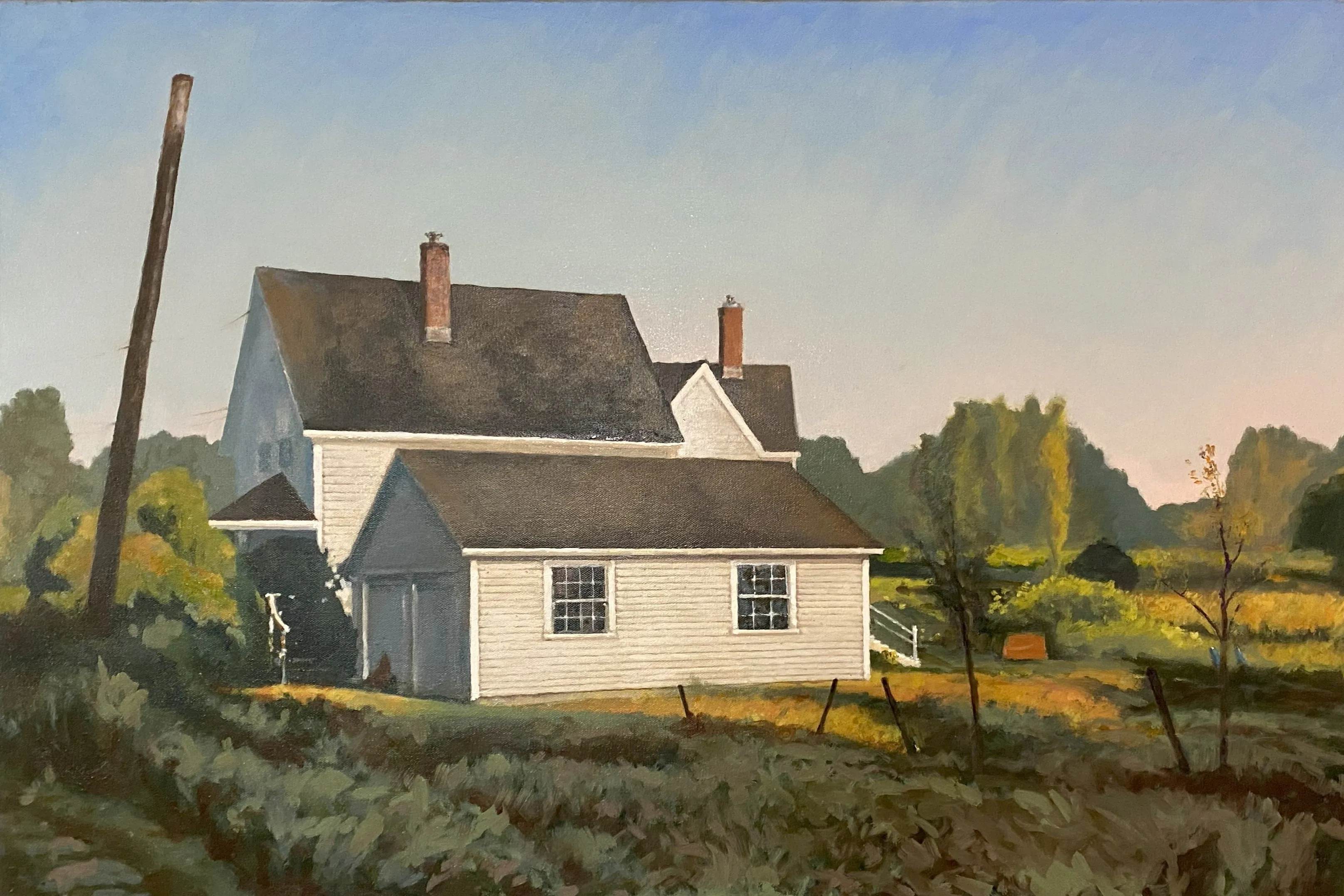
An office is a working room, but it should not feel like a waiting room. The art on its walls is part of the atmosphere you return to between tasks, part of what a client or colleague notices on a call, and part of the quiet character of the space. The most useful choice begins with how you work there, then brings scale, light, and a lasting response into the picture.
1. Start with the work the room needs to do
Before choosing a painting, spend a little time with the office as it is actually used. A home office can be a place for concentrated writing, conversations, creative work, administration, study, or all of those in the same week. A private office may need to feel calm and trustworthy for visitors. A small desk in a spare room may need to feel more intentional without becoming more crowded. Those differences matter more than a generic rule about what belongs in an office.
Try to name the quality you want to feel when you walk in. You may want clarity, energy, breadth, steadiness, warmth, or a sense of distance from the screen. A painting can support that quality through its light, scale, and internal rhythm. An open horizon can give a tight room more air. A work with architecture or a strong road can add structure. A changing sky can bring movement to a room full of straight lines and devices.
Do not begin by trying to match a chair, shelf, or paint color exactly. Office furniture changes, and a painting that only works as a color sample will quickly feel disposable. Instead, choose a work that can hold attention during an ordinary Tuesday afternoon. The studio’s current collection is a useful place to notice whether you keep returning to weather, houses, coastline, roads, or a particular kind of light.
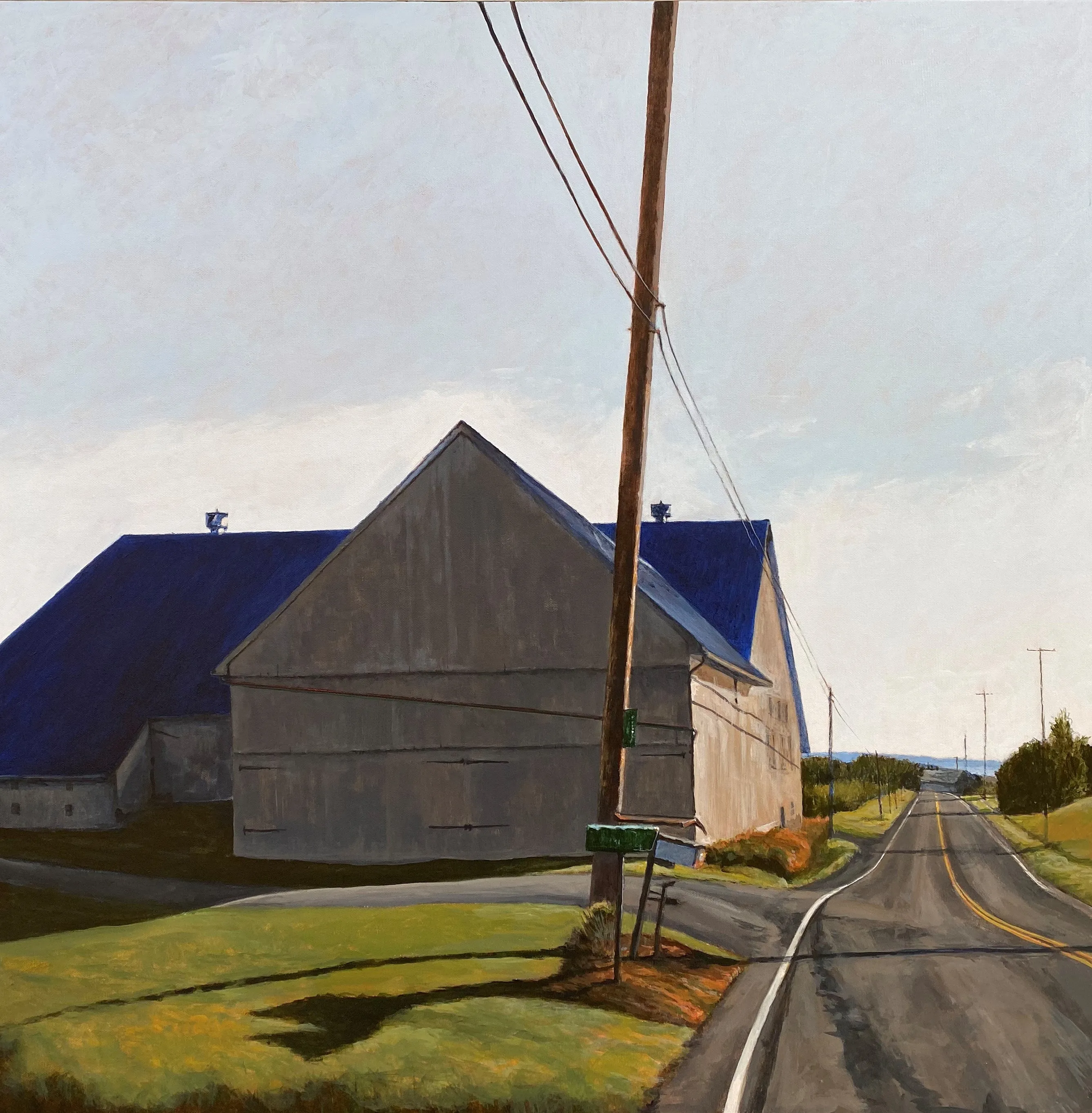
2. Choose the wall from your real sightlines
The largest empty wall is not automatically the right wall. Sit at your desk and look up from the screen. Stand in the doorway. If you take calls, sit where the camera normally sits and look at the wall behind you. These are the views that will shape whether the painting feels present or forgotten.
A wall opposite the desk can give your eyes a place to rest between tasks, particularly when the room has little natural depth. A painting behind a desk may be better for the people you meet with, whether in person or through a camera. A side wall can be ideal when you want the work to be discovered as you turn away from the screen rather than competing with it all day. If the office doubles as a guest room or study, let the room’s second use influence the choice too.
Keep the area around the painting clear enough for it to read. A crowded shelf, a lamp that cuts across the composition, or a tangle of cords below can reduce even a strong work to background clutter. One painting with enough open wall around it often gives a compact office more authority than a busy gallery wall. If you are considering a group, arrange it on the floor first and judge the group as one shape before committing to the wall.
Use a photograph to make this easier. Take one from the doorway, one while seated, and one from the usual call position. Those ordinary viewpoints reveal awkward gaps, low furniture, windows, and glare more accurately than a close-up snapshot of the wall.
3. Test scale before falling in love with the image
Scale is what makes a painting feel placed rather than simply hung. Above a desk, credenza, or filing cabinet, look at the furniture beneath it as a visual anchor. A work should have enough presence to relate to that anchor without turning the wall into a billboard. In a narrow office, a vertical painting can make use of height. On a long wall, a horizontal landscape may create a useful line that counterbalances the desk and monitor.
Mark the outer dimensions of a candidate with painter’s tape, including the frame. Then walk in and out of the room as you normally would. Look at the outline from the desk, from the door, and over your shoulder in the camera preview. If it vanishes from every useful viewing point, the wall may need a larger answer. If it crowds a window trim, cabinet, or lamp, choose a different proportion or a different wall.
Do not assume that a small office requires small art. A single well-proportioned work can make a compact room feel more settled because it gives the eye a clear place to land. Likewise, a large room does not automatically call for a large painting. The deciding factor is the relationship between the work, the usable wall, and the distance from which it will be seen.
When a wall needs a broader focal point, the studio’s large landscape paintings can carry a room with one clear image. For a shelf wall, reading corner, or smaller stretch of space, the small original paintings offer a more intimate scale without losing the physical presence that makes an original satisfying to live with.
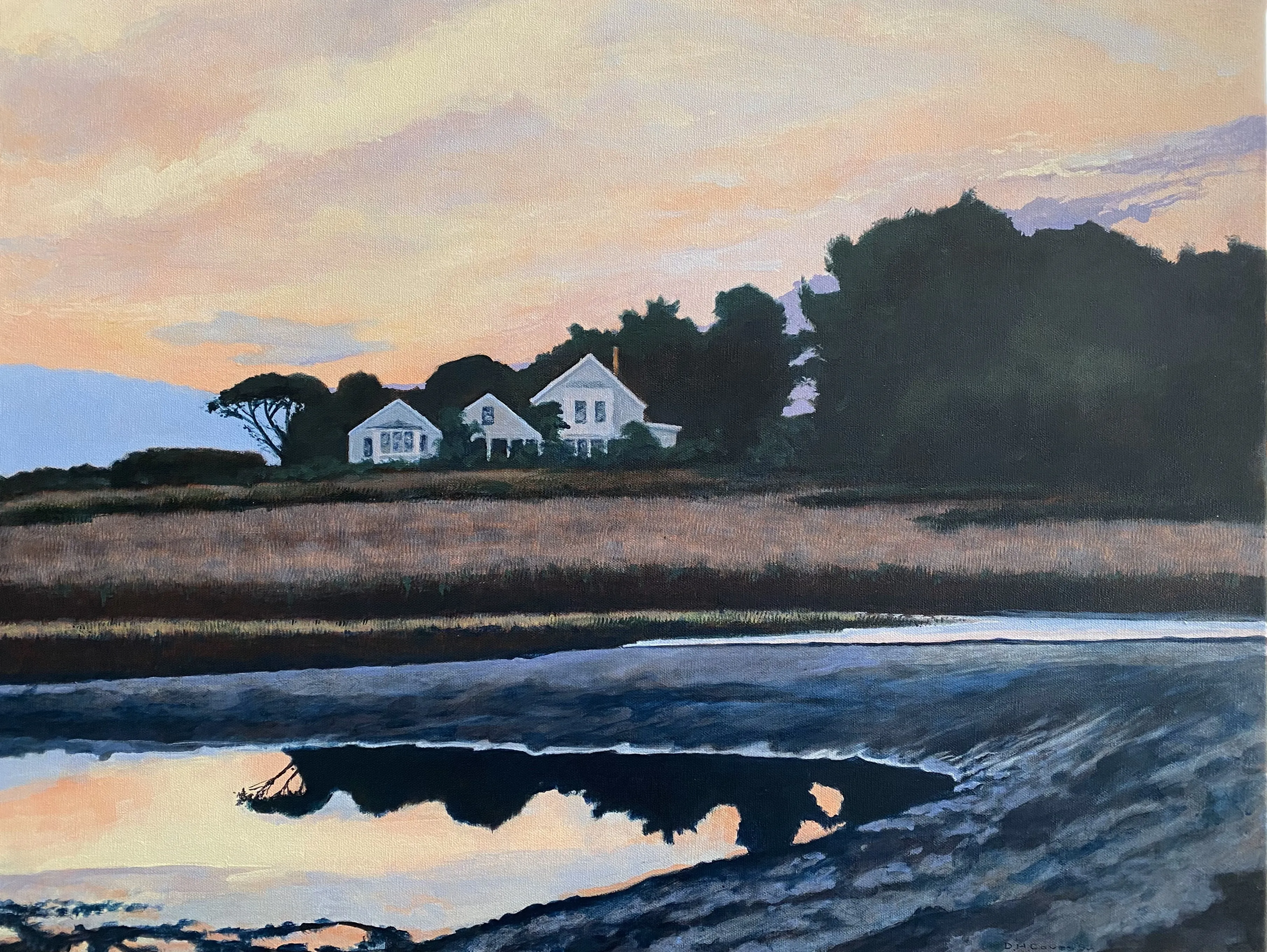
4. Make a video-call background feel like part of the room
For people who work on video calls, the wall behind the chair does a small but real amount of work. It is often the first glimpse a client, collaborator, or friend gets of the room. That does not mean it needs motivational slogans or a carefully staged set. It means the background should look settled enough that people can pay attention to you.
One clear painting usually works better than several small, high-contrast pieces. A camera flattens depth and can turn a complicated gallery wall into visual noise. Choose a work that has a readable overall structure from a distance, then place it with enough margin around the frame that it does not appear to grow out of your head or compete with your face. Sit at your normal distance from the camera and make a test call before drilling holes.
Watch reflections as carefully as composition. A glossy surface, glass-fronted frame, or picture light aimed directly at the work can create a bright patch behind you. Move the light or change its angle before increasing brightness. If possible, use soft room light that lets the painting read without producing a hard glare. The studio’s guide to lighting a painting offers practical help with glare, viewing angle, and gentle illumination.
Keep the choice personal. A painting need not announce your job title or signal that you have mastered office decor. A landscape, a weathered house, or a stretch of water can simply give the room a sense of place. That quiet specificity often creates a more memorable background than something chosen only for an audience.
5. Let color support focus instead of demanding it
An office has plenty of visual pressure already: screens, paper, cables, shelves, task lighting, and often a view through a window. Art can soften that pressure or give the room a necessary counterweight. The aim is not to choose the calmest possible image. It is to choose an image whose color and energy feel sustainable over long stretches of time.
Look at the room’s fixed materials first. Wood tone, rug, desk surface, window light, and wall color will have more influence than a temporary notebook or chair cushion. A painting with open sky or water can bring lightness to dark furniture. A warmer landscape can give a cool, pale office more human warmth. A darker foreground can make a white room feel deeper without making it gloomy.
Exact color matching is rarely necessary. A painting can relate through temperature, value, or the feeling of the light. Cool gray-blue weather can work beautifully with warm wood. Earth tones can steady a room with metal and glass. A work with stronger color can be right in a neutral office when it gives the space a clear center rather than adding another scatter of accents.
View a digital image near a photograph of the room if you need a first check, but treat it as only that. Screens alter color, and they cannot show the painting’s surface or the frame’s presence. Ask for dimensions, close-up images, or another photograph in natural light before deciding. Clear facts are more useful than trying to guess from a thumbnail.
6. Protect the painting from office light and heat
An office can be a surprisingly hard room on a painting. South- or west-facing windows may throw direct sun across the wall at a particular hour. A radiator, vent, printer, humidifier, or fireplace can create conditions that are less stable than they first appear. The safest location for an original is usually an interior wall with secure hanging hardware, away from direct sunlight and active heat.
The Smithsonian’s painting-care guidance recommends a secure wall location away from heat, direct sun, and unstable humidity. That is not an argument for keeping art in darkness. It is a practical reason to watch the proposed wall for a day before choosing it. A room can be bright and still provide a good home for art when the work is not in the path of harsh, sustained sunlight.
Use hardware appropriate to the framed work’s weight and the construction of the wall. If the painting is substantial, if the wall is unfamiliar, or if it will hang above equipment or furniture, ask a qualified installer for help. The studio’s painting-hanging guide can help you plan the center line, measure the hanging point, and understand why the hardware matters as much as the composition.
These few precautions let an office remain a working room. They are not precious rituals. They simply avoid the conditions most likely to create damage or make a painting difficult to enjoy.
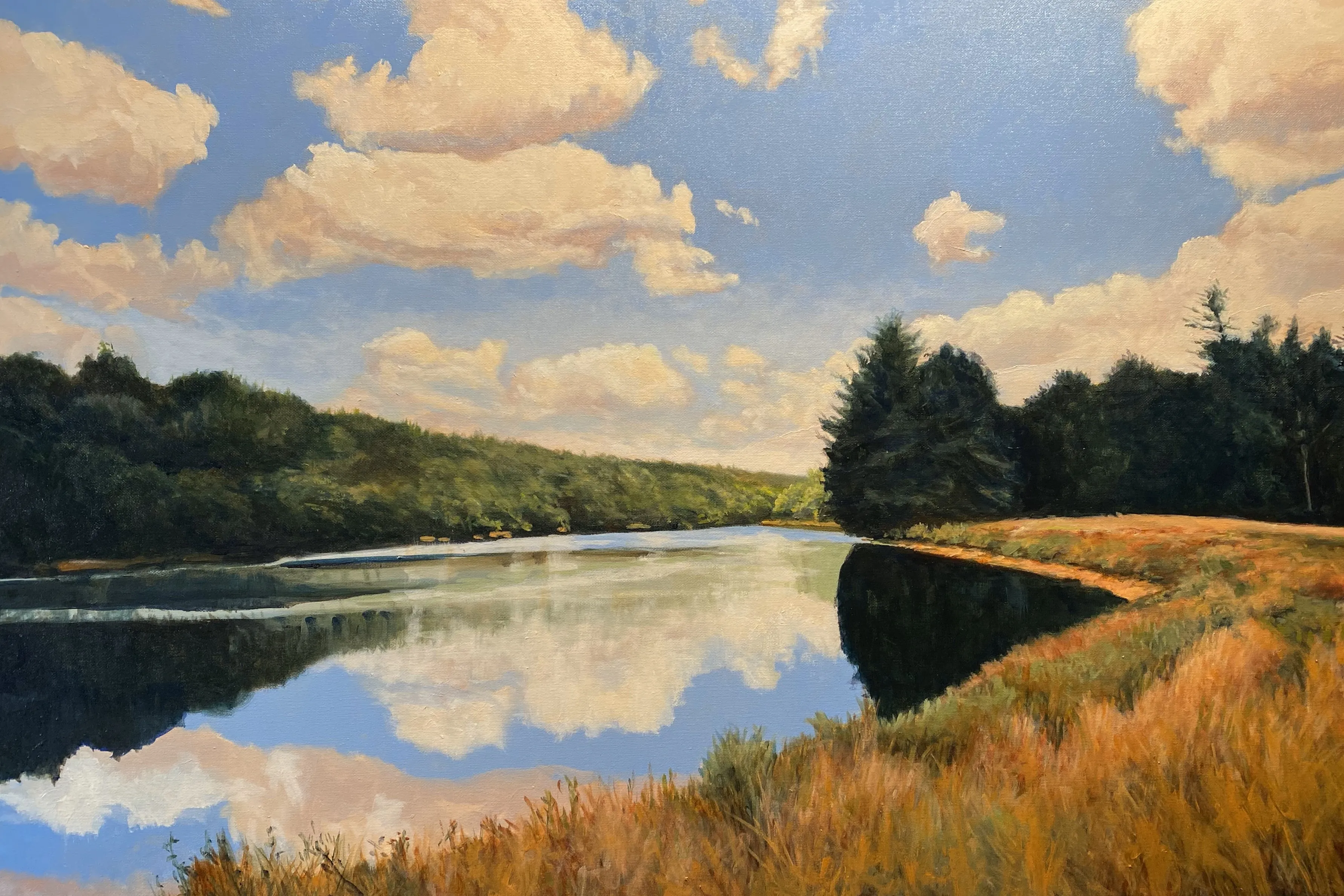
7. Choose work that gives the room a longer horizon
The right office painting should do more than make a background look finished. It should remain interesting when the room is quiet, when a project is difficult, and when you need to look away from a screen for a moment. That is why a personal response matters more than a trend. Give yourself permission to return to the work several times and notice whether it still has something to offer.
Doug Caves’s paintings are rooted in New England weather, coastline, roads, and built places. Their shifting light and sense of distance can bring an office a view without turning the room into a theme. Explore the original landscape collection for available work, or browse the full paintings catalogue by medium, scale, and subject.
For a particular office, the studio can help clarify framed dimensions, availability, additional photographs, and practical questions before you choose. Contact the studio with a room photograph, usable wall measurements, and the paintings you are considering. If the room is connected to a particular view, property, or remembered place, the commissioned landscape process can begin there instead.
Frequently asked questions
What kind of art is best for an office?
The best art for an office is work you can look at often without tiring of it. Start with the mood you want to support, then check the wall, viewing distance, light, and whether the painting will appear behind you on calls. One original with a clear presence is often more effective than several small pieces competing for attention.
What size artwork works above a desk?
There is no single correct size, but the artwork should relate to the desk or furniture beneath it and still be readable from the doorway or camera position. Mark the outside dimensions of a candidate on the wall with painter’s tape, including the frame, then test it while seated and standing.
Should I put art behind me on video calls?
It can make a video-call background feel more considered, provided it does not compete with your face. Choose one clear painting with some visual breathing room around it, avoid reflective glare, and keep the work far enough from the camera that it reads as part of the room rather than a busy backdrop.
Where should I avoid hanging an original painting in an office?
Avoid walls in direct, sustained sun and locations near active heat, air vents, radiators, dampness, or sharp changes in temperature and humidity. A secure interior wall with appropriate hanging hardware is usually the safer long-term choice.