Hanging a painting is one of those household jobs that can feel simple until the tape measure comes out. A work can be beautiful on its own and still look adrift, too high, or strangely small once it reaches the wall. The good news is that a few careful measurements make the decision much easier, and they protect the painting from an improvised hardware choice that does not suit its weight.
Begin with the room, not the hook
Before thinking about a nail, choose the wall and look at it from the way you actually enter and use the room. A painting above a sofa, sideboard, desk, or bed becomes part of that larger arrangement. A work at the end of a hall has a different job: it may need to hold the view from a distance and give the passage a destination. A painting near a window may change character as the daylight moves.
Take a photograph of the wall from the usual viewing distance, then stand in the doorway and look again without the phone. Notice the furniture height, lamps, switches, door trim, and empty space around the intended spot. This quick pause is often enough to show whether the wall wants one substantial work, a smaller vertical, or a grouping. It also keeps you from giving every available inch of wall equal importance.
If you are still deciding which work belongs there, start with the studio’s guide to choosing a painting for your home. It helps with mood, scale, and light before the hanging question becomes a practical one. For a painting you already own, keep the frame dimensions close at hand. Those measurements, not the image alone, determine where it will sit.
Find a height that feels natural
On an open wall, a reliable starting point is to place the center of the painting near eye level. Many decorators use a center point around 57 to 60 inches from the floor. That range is helpful because it gives you somewhere to begin, not because every room should follow the same number. In a room used mainly while seated, a painting can sit a little lower. On a tall wall, a large painting may need a little more room above and below it to feel settled.
Do not confuse the center of the work with the top of the frame. The top of a vertically oriented painting can be well above eye level while the visual center still feels comfortable. Use the painting’s full framed height to find its center. For example, a 30-inch-tall painting has a center 15 inches down from its top edge. If you want that center at 58 inches from the floor, the top edge will land at 73 inches.
There is no prize for hanging a painting high enough to make a cathedral out of a living room. If the work feels disconnected from the furniture or makes you tilt your head upward to see it, lower it. A good placement lets the painting meet the room at the scale where people actually live. The commonly used eye-level range is a useful check, and thoughtful home guides from This Old House offer a practical starting point for matching the setup to the wall and hardware.
Measure the real hanging point
Once you know where you want the center of the painting, the next measurement is not the frame itself. It is the point where the hanging wire, D-rings, or other hardware will actually meet the wall hook. This is the part that prevents the classic mistake of placing the hook at the desired top edge, then discovering the painting hangs several inches lower than expected.
For a framed painting with wire, place the work face down on a clean, protected surface. Pull the wire upward at its midpoint until it is taut, roughly as it will be when resting on a hook. Measure from the taut wire to the top edge of the frame. Call that the drop. Then measure the framed height of the painting, divide it by two, and subtract the drop from the top-edge height you calculated. The result is the position for the hook.
Here is the sequence in plain language: choose the desired center height, add half the frame height to find the top edge, then subtract the drop from the top edge to find the hook. Measure twice before making the mark. It is less glamorous than intuition, but it saves a wall from becoming a record of near misses.
For a work with two D-rings and no wire, use both attachment points when the hardware is designed for that arrangement. Mark the two locations level with one another and check their distance from the top of the frame. The Canadian Conservation Institute notes that hanging devices should be attached to the heaviest suitable element, which is often the frame. Its guidance for displaying paintings is useful when you are assessing an older frame or a heavier work.

Use a temporary outline before making a hole
Painter’s tape is one of the most useful tools in the whole process. Mark the outer dimensions of the frame on the wall, then step back to view the outline from the doorway, the sofa, and the seat where you spend the most time. The outline reveals scale far more honestly than a number on a tape measure.
For a painting above furniture, let the work and the furniture make one visual composition. A gap of roughly 6 to 10 inches is often a good place to start above a sofa, console, or headboard. The painting should not appear to perch on the furniture, but it should not float halfway to the ceiling either. A generous frame or a low piece of furniture may call for a slightly different gap. Look for a relationship that feels deliberate rather than fixed by a rule.
When hanging a painting beside a doorway, window, or lamp, leave enough breathing room for the architecture to remain legible. A work squeezed into a leftover strip of wall rarely gets the attention it deserves. Sometimes the most successful decision is to let a smaller wall stay empty and give the painting a better place elsewhere.
For a group of paintings, begin on the floor. Arrange the works until the spacing feels balanced, then treat the group as one larger shape. Place the group’s visual center near eye level and work outward. This approach is more reliable than hanging one piece at a time and hoping the group solves itself afterward.
Choose hardware for the painting and the wall
Good placement is only half the job. The hardware needs to suit both the framed painting and the wall behind it. Start by checking the actual weight of the work, including the frame. A light, small painting and a substantial framed canvas should not be asked to trust the same tiny hook.
Whenever possible, a hook fastened into a wall stud offers strong support for a heavier painting. If a stud is not in the right location, use hardware that is specifically rated for the painting’s weight and intended wall type. Drywall, plaster, brick, and masonry each call for different approaches. Hardware packaging should state both its wall type and load rating. If it does not, it is not a useful basis for a valuable painting.
For a larger or more important work, consider two contact points rather than one. They can improve stability, help keep a wide frame level, and reduce the chance of the work shifting when a door closes or someone brushes past it. The Smithsonian’s painting-care guidance recommends sturdy, appropriately sized hardware and notes that wall hooks driven into studs provide maximum stability. That is sound advice for a painting you want to live with for years.
Do not rely on adhesive strips for a framed painting unless the manufacturer explicitly rates the product for the work’s actual weight, frame, and wall surface. Do not guess at the frame’s condition either. If the frame feels loose, the wire looks frayed, or the painting is unusually heavy, ask a professional framer or installer to inspect the setup. A short conversation is cheaper than repairing a frame, wall, or painting after a fall.
Protect the painting once it is on the wall
After the painting is hung, take a final look at the conditions around it. Avoid direct, intense sunlight, active heat sources, and places with sudden swings in temperature or humidity. A wall above a working fireplace, a steamy bathroom, or an uninsulated exterior wall can be a hard place for a painting over time.
Leave a little room for air behind the frame and make sure the bottom corners are resting evenly. If the work tends to move when a door closes, small protective bumpers on the back of the frame can help it sit away from the wall without scuffing the surface. Check the hardware occasionally, especially after moving furniture, repainting, or changing the frame.
Once the practical work is done, let the painting have time. Notice it in morning light, evening light, and the ordinary middle of the day. A good placement does not just photograph well. It gives the work a steady place in the room, where it can become familiar without disappearing.
Hanging a Douglas H. Caves Sr. painting
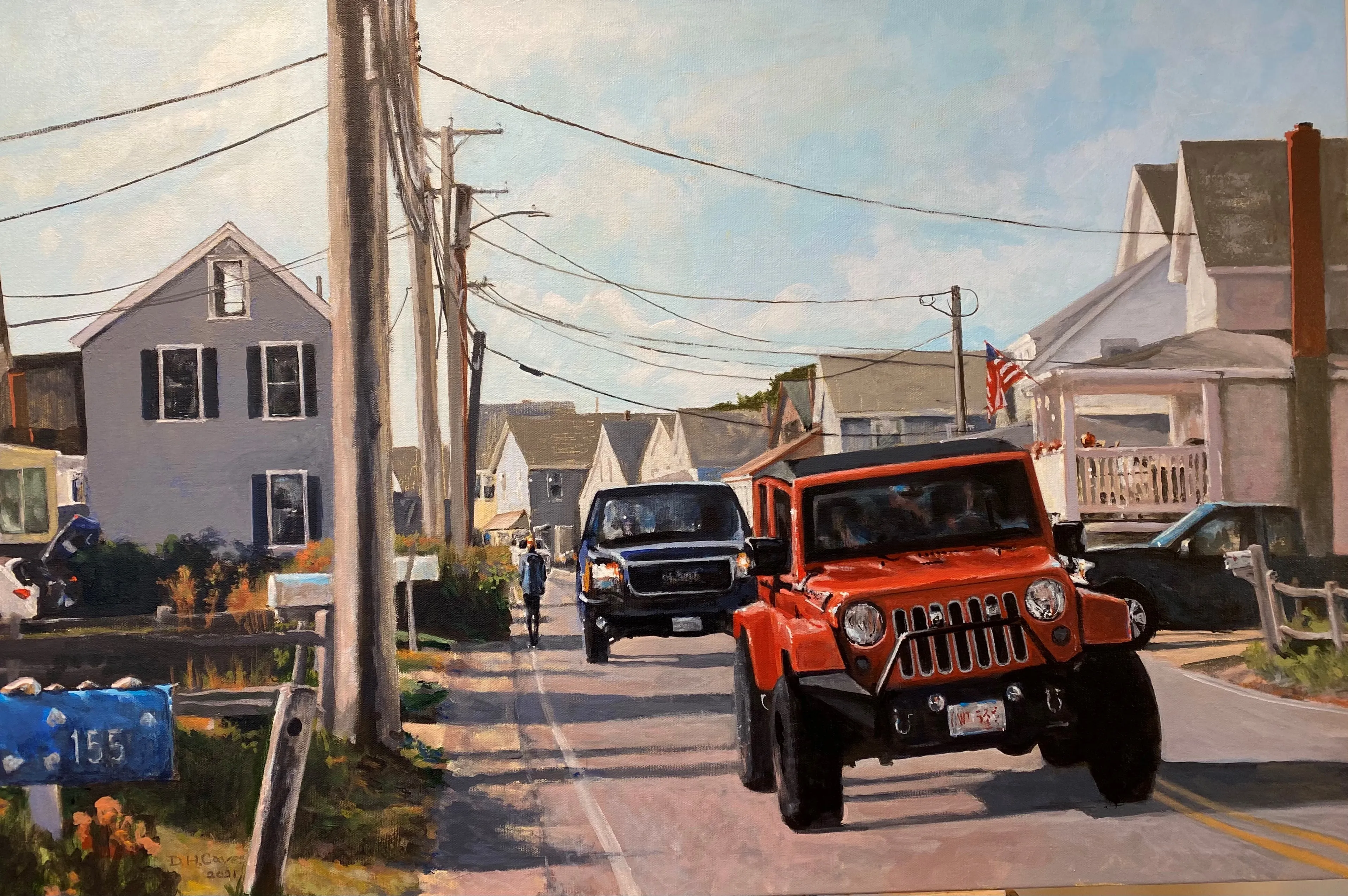
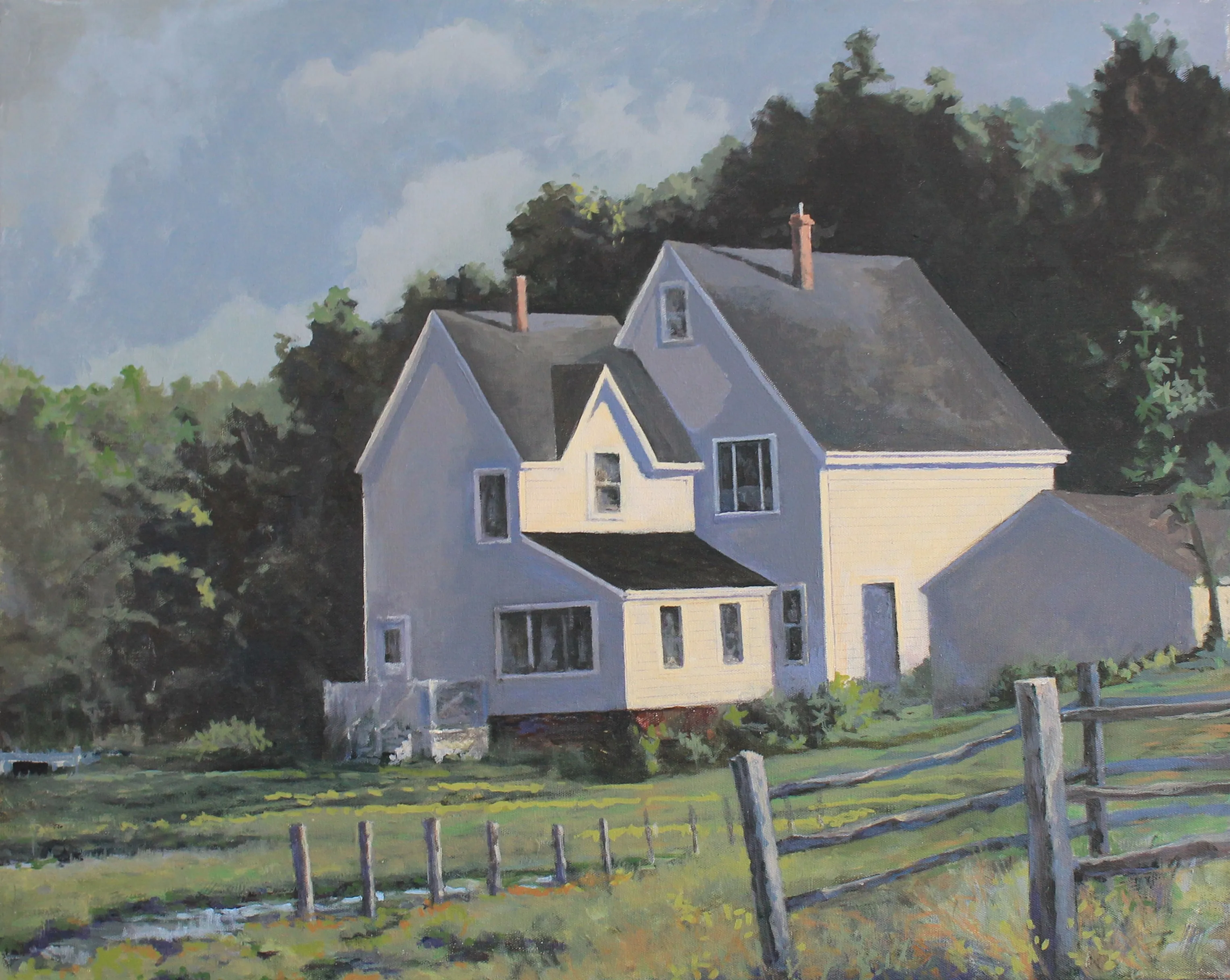
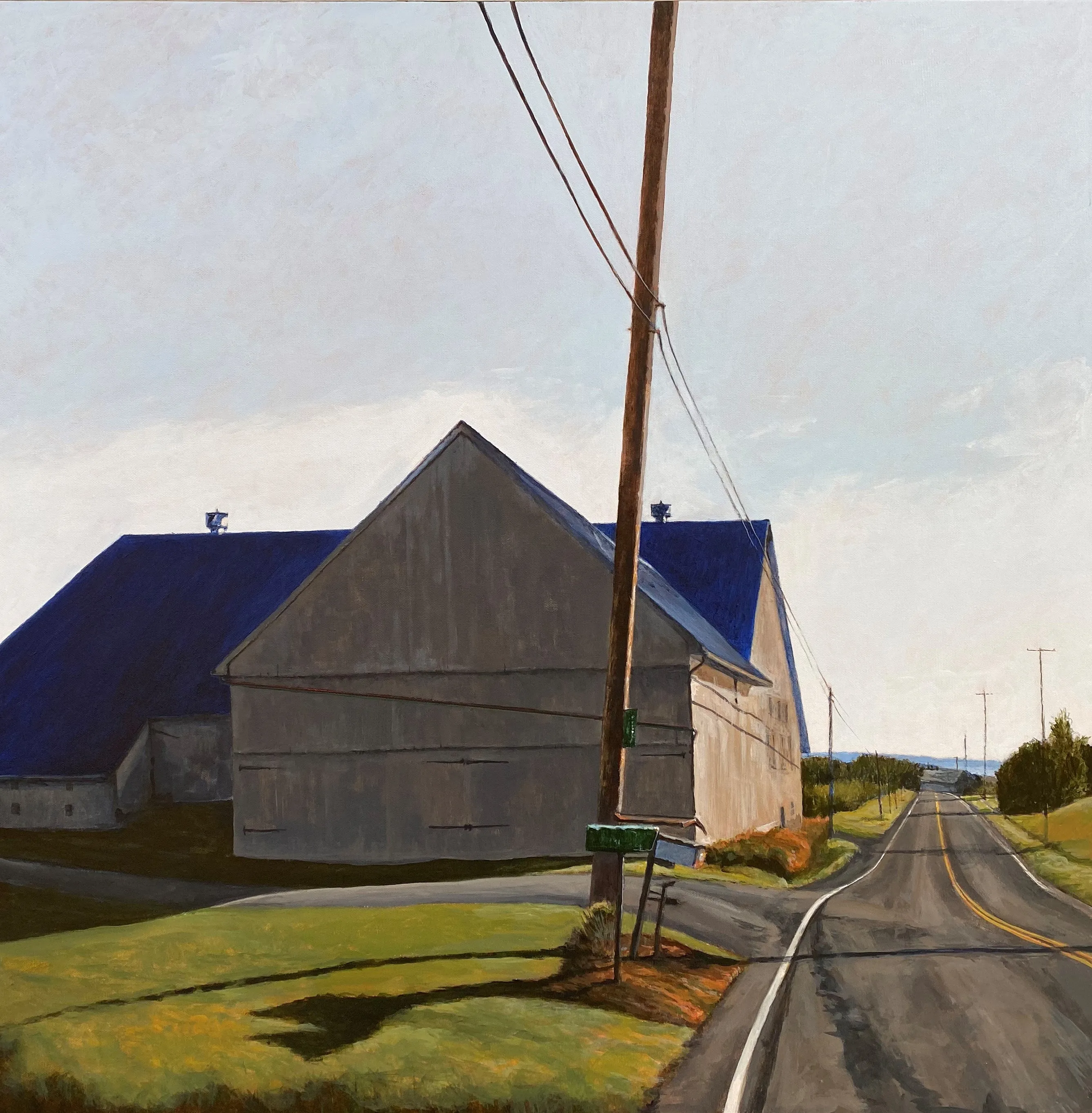
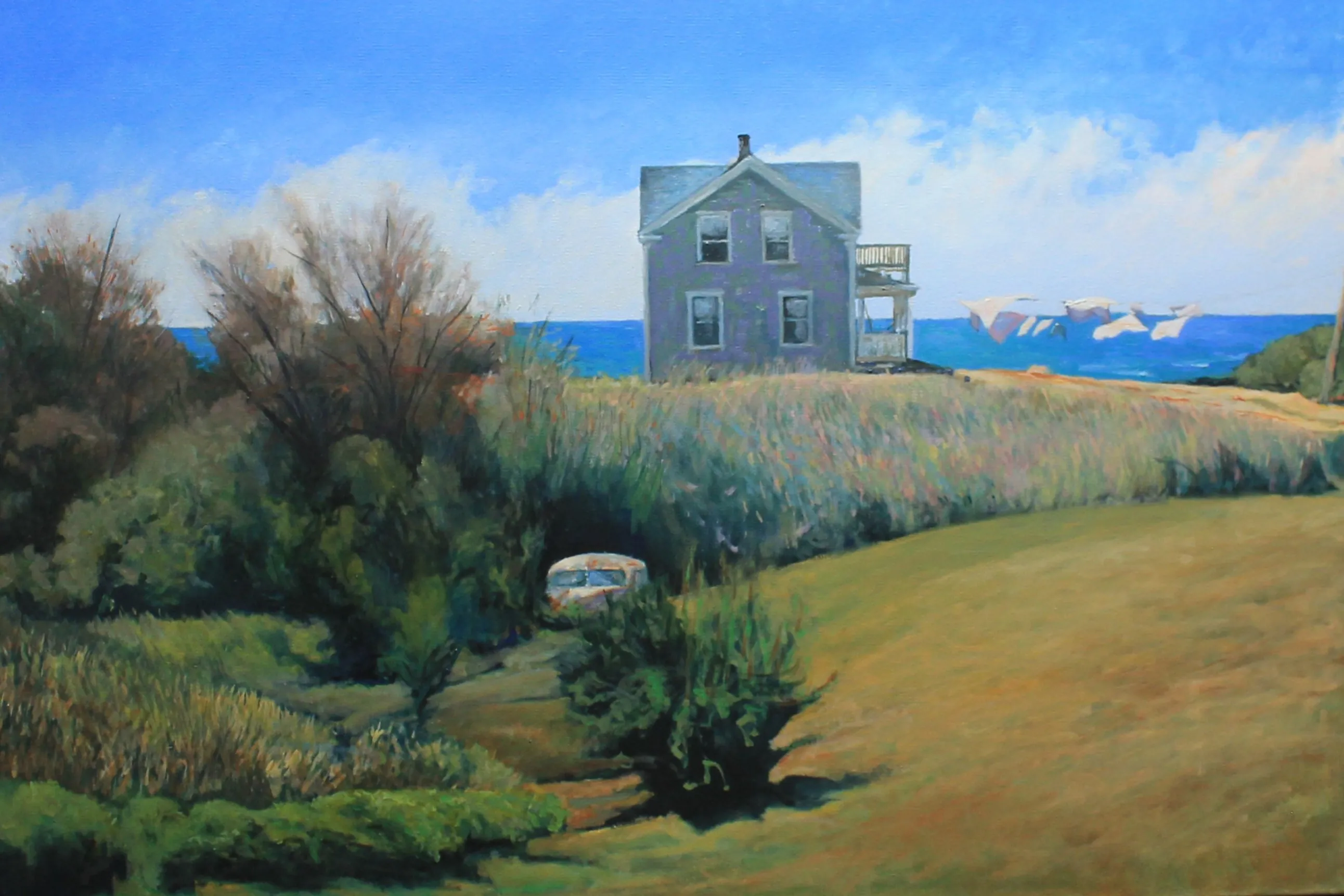
Doug Caves’s paintings carry the weather, architecture, and changing light of New England into a home. A work may sit above a mantel-free wall, give a dining room a horizon, or bring a quieter point of focus to a hall. The right placement lets the image do that work without competing with the room around it.
Browse the available paintings for current originals and signed editions. If you are deciding between works, the studio can help with dimensions, framing, and the questions that matter before a painting travels home. Visit the exhibitions page to see where the work can be viewed, or contact the studio with a wall, a room photograph, or a painting in mind. For a landscape connected to a specific place, the studio’s commission process offers a more personal starting point.
Frequently asked questions
What is the best height to hang a painting?
For a painting on an open wall, begin by placing its visual center near the eye level of the people who use the room. In many homes that lands around 57 to 60 inches from the floor, but it is a starting point rather than a rule. A low sofa, a high ceiling, a tall painting, or a room viewed mostly while seated can all shift the right placement.
How far above furniture should a painting hang?
Leave enough space for the painting and furniture to read as one arrangement, rather than two unrelated objects. A gap of roughly 6 to 10 inches often works above a sofa, console, or headboard, but the final decision should respond to the scale of the artwork, the furniture, and the room.
How do I know where the nail or hook should go?
Measure from the top of the frame down to the point where the hanging wire becomes taut when pulled upward. Subtract that distance from the height you want the center of the painting to sit, then use the result to mark the hook. Check the measurement with painter’s tape or a paper outline before making a hole.
Can I hang a large painting on drywall?
A large painting needs hardware that is rated for its actual weight and suited to the wall construction. When possible, use a stud for the strongest support. If the wall or hardware is uncertain, a professional installer or experienced framer is a better choice than guessing.