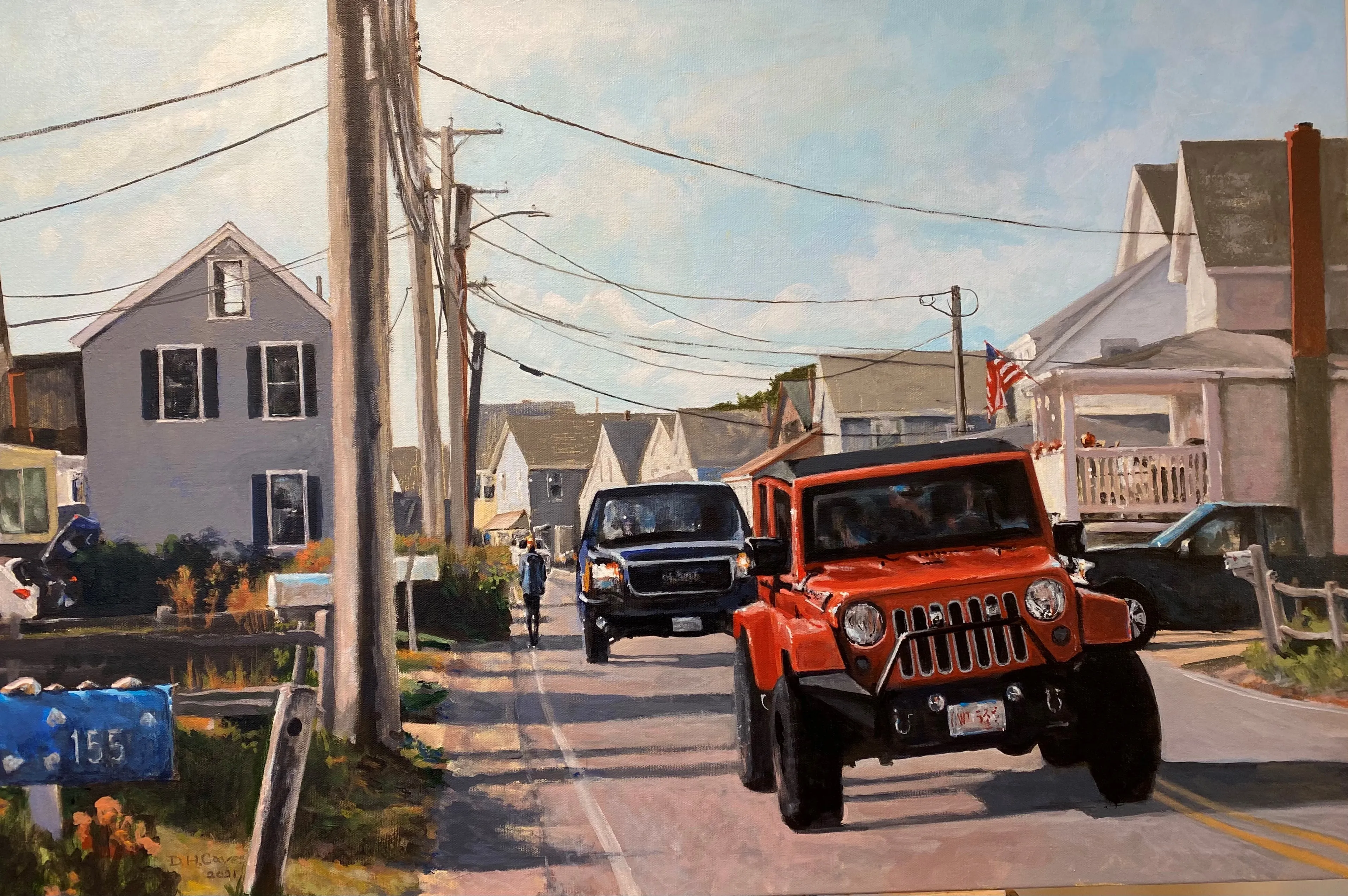
The right painting does more than fill a blank wall. It changes the pace of a room: a view becomes a place to pause, a familiar color becomes more alive, and a home begins to carry more of the people who live there. Art is personal enough to resist a formula, but feeling and practical fit can work together.
Start with the feeling you want the room to hold
Before measuring a wall or matching a color, name the atmosphere you want to come home to. A painting can make a busy living room feel settled, bring warmth to a spare dining room, or give a bedroom a quieter horizon. The strongest choice is usually the work you want to keep looking at, not the one that most closely repeats a cushion or paint sample.
Give yourself a few simple words. You might want the room to feel spacious, grounded, bright, weathered, coastal, calm, or charged. Those words make it easier to notice whether you are drawn to a warm field, a hard-edged house, an open shoreline, or an image with more movement. A painting need not explain itself immediately. It should, however, keep offering something when you return to it.
Original art is especially good at carrying this kind of feeling because surface matters. A brushstroke, an edge left loose, or a layer of color showing through another layer can hold attention differently than a perfectly flat image. When you browse the studio’s available paintings, look past the subject for the quality of light, tempo, and mark-making that you want around you every day.
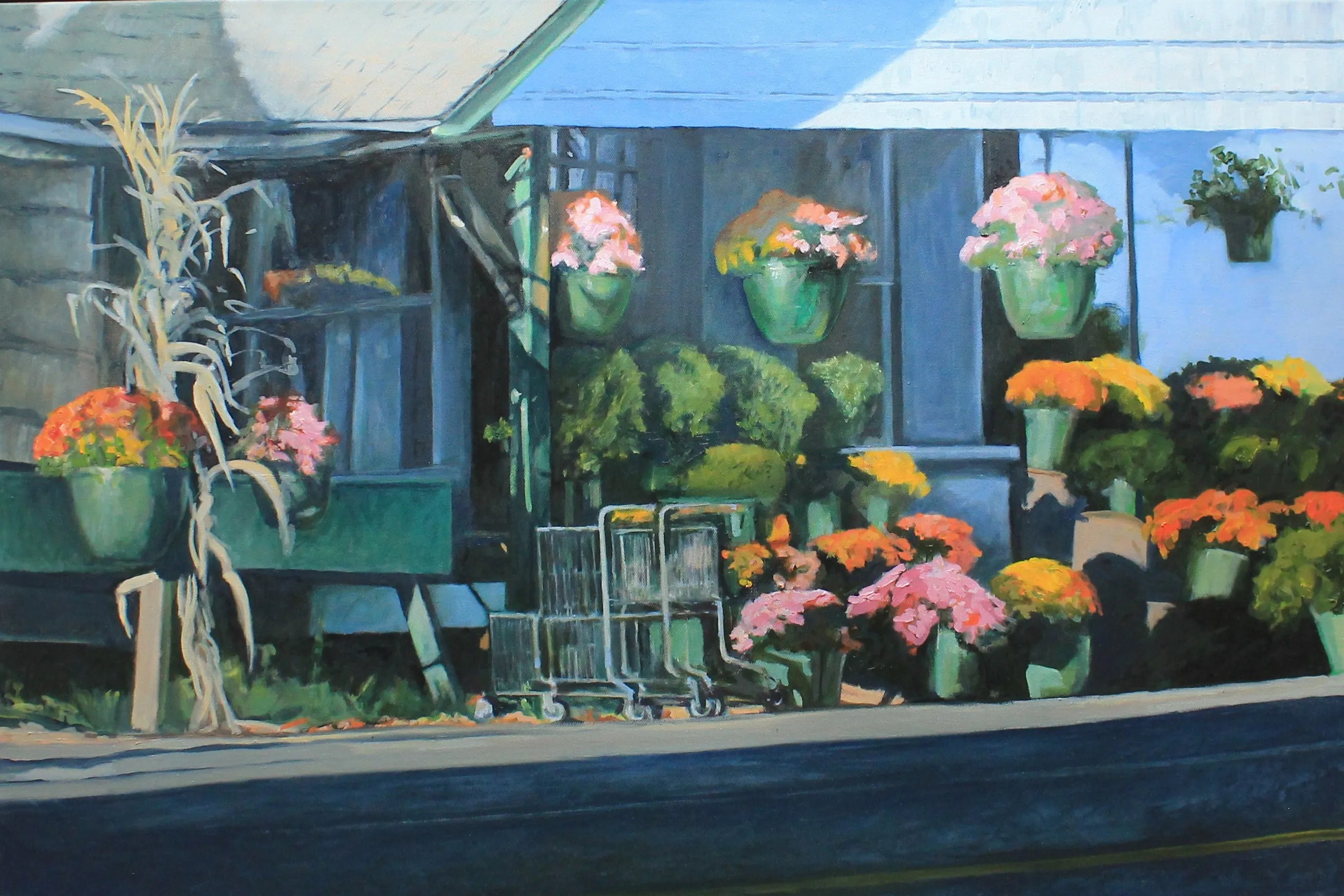
Choose the wall before you choose the size
It is tempting to find a painting first and hope it will fit later. Starting with the wall is less romantic but more useful. Take a clear photo of the room from the usual viewing distance. Note doors, windows, lamps, furniture height, and the wall’s usable space. A work that seems modest in a gallery can have real presence above a narrow console; the same work may look lost over a long sofa.
For a main wall, use the furniture below it as the visual anchor. Above a sofa, sideboard, or bed, a single painting often feels most settled when its width is roughly two-thirds to three-quarters of the furniture width. This is a starting point, not a commandment. A low, wide landscape may want more room to breathe. A tall, vertical work can be the right answer beside a fireplace, at the end of a hall, or between windows.
Make the decision tangible before you commit. Tape out the painting’s approximate dimensions with painter’s tape, or cut a piece of paper to scale and hold it in place. View it while seated and while entering the room. If the outline feels timid from the doorway, the wall may want a larger work. If it crowds a lamp, a doorway, or the furniture line, the painting may need a quieter wall.

Let color relate, rather than match
A painting does not need to match a room’s palette to belong there. In fact, a literal match can make a work feel like decoration instead of a living part of the space. Look for a relationship instead. A blue-gray painting can settle a room with warm woods. A late-orange sky can give a neutral room a point of warmth. A restrained painting can hold its own against patterned textiles because it offers a different kind of energy.
Pay attention to value as much as hue. Value is simply how light or dark a color feels. In a bright room with pale walls, a darker painting can create depth. In a room with darker furniture and a lot of visual weight, a work with open sky or luminous passages can relieve the density. Hold a digital image near the intended wall, but remember that screens are only a preview. The actual surface, frame, and changing daylight will all affect the relationship.
Landscape painting can be particularly flexible because it brings natural color into many kinds of rooms without requiring a theme. A painting of weather, water, trees, or architecture can complement a traditional house, a clean-lined apartment, or a room full of family objects. The question is not whether the subject matches the room. It is whether the painting gives the room the emotional register you want.
Consider how you will live with the work
Art is not a fragile guest that should keep you from using your home, but placement matters. Think about the room’s light, heat, and daily traffic before deciding where a painting will live. The Smithsonian’s Museum Conservation Institute recommends a secure wall location away from direct sunlight and heat sources, with reasonably stable humidity. Its guidance for caring for paintings is a useful reference when you are assessing a room.
That does not mean every painting belongs in a dark corner. It means a bright window wall may need thoughtful placement, a shade during the harshest part of the day, or a different work better suited to the conditions. Spaces directly above a working fireplace, in a steamy bathroom, or on an uninsulated exterior wall can be harder on paintings. For a special piece, ask the artist or a professional framer how the materials and framing should inform the placement.
Hanging hardware is part of the decision too, especially for a larger framed work. The Canadian Conservation Institute advises selecting hardware for the painting and frame’s actual weight and using two wall contact points for moderate-weight paintings. Its painting-care guidance is a sensible checklist for a new collector. When the work is substantial, use hardware anchored to the wall structure and get help rather than relying on a small nail and optimism.

Give yourself time with the actual work
Images make browsing possible, but paintings are physical objects. If you can see a work in person, do. Step close enough to notice the surface and far enough away to feel the composition. Notice whether the frame changes the scale, whether the color shifts as you move, and whether the piece feels different after a few minutes. A painting you like at first glance may not be the one that continues to pull you back. A work that takes a little longer can become the more enduring choice.
Ask the questions that make ownership feel clear: What is the medium? What are the dimensions with and without the frame? Is the work available now? Is it already framed? How will it be delivered? What does it need from its new setting? Straight answers remove uncertainty and let you pay attention to the art itself.
There is no requirement to know art history before buying original work. A collection can begin with one painting that gives you a durable response. The Library of Congress observes that collectors each find their own direction; that is a useful reminder to build slowly enough to hear your own taste. A collector’s reflection in the Library of Congress catalog makes the same point in a different era: the reasons for choosing art are personal, and a collection gains character when it follows them.
Decide what you are buying: an image, an object, or a relationship
A signed edition, an open edition, and an original painting can all belong in a thoughtful home. The difference is not simply price. A print may be right when you want a particular image at a specific scale or when you are beginning a collection. An original brings the unique evidence of the artist’s process: the exact surface, changes of direction, and material choices that exist only in that one work.
For many people, buying directly from an artist adds another layer. You can learn what drew the artist to the subject, ask about framing, and understand the work’s place in a larger body of paintings. That conversation is not a test you have to pass. It is simply another way to decide whether the work belongs with you.
If the image you want is not available, a commission can be a good next step, especially when a particular landscape, house, or remembered place matters to you. The studio’s commission process begins with the subject, mood, size, and timeline, rather than forcing a choice from a shelf. It is a different kind of decision, but the same principle applies: choose the feeling first, then give it the right physical form.
Use a simple final checklist
- Do I want to keep looking at this work after the first impression?
- Does its mood strengthen the room rather than merely fill a space?
- Have I checked the dimensions from the usual viewing distance?
- Does the wall offer sensible light, temperature, and hanging support?
- Do I understand the medium, frame, availability, and delivery plan?
- Am I buying it because it matters to me, not because it seems like the expected choice?
When most of those answers are yes, you are likely close. Trust is part of collecting, but it is stronger when it rests on a few practical checks. The result is a painting that has room to become familiar without becoming invisible.
Finding a painting from the studio
Doug Caves’s paintings begin with places that carry their own atmosphere: coastal weather, old houses, working landscapes, and the changing light of New England. That makes them especially suited to collectors looking for more than a decorative color note. Explore the current collection for available originals and signed editions, visit the exhibitions page to see where the work can be viewed, or contact the studio with the wall dimensions and room you have in mind. A useful conversation can make the final choice much clearer.
Frequently asked questions
What size painting should I choose for above a sofa?
A good starting point is a work that spans roughly two-thirds to three-quarters of the sofa width. Treat that as a visual guide rather than a rule: a room with generous ceilings, strong architecture, or a substantial frame may want more presence. Before deciding, mark the proposed width on the wall and step back from the doorway.
Should a painting match the colors in my room?
Not exactly. A painting can echo one or two colors already present, but its greater job is to bring mood and visual energy. Work that is too perfectly matched can disappear into the room. Look for a relationship in temperature, value, or feeling instead of demanding a literal color match.
Is it better to buy original art or a print?
They serve different purposes. A print can be an accessible way to enjoy an image, while an original carries the artist’s hand, material decisions, and one-of-one presence. Choose the format that suits the role the work will play in your home, your budget, and the experience you want from it.
Where should I avoid hanging a painting?
Avoid direct sun, active heat sources, and places with dramatic swings in moisture or temperature. Bathrooms, uninsulated exterior walls, and areas immediately above a working fireplace deserve extra caution. When in doubt, ask the artist, framer, or a qualified conservator about the specific work and room.