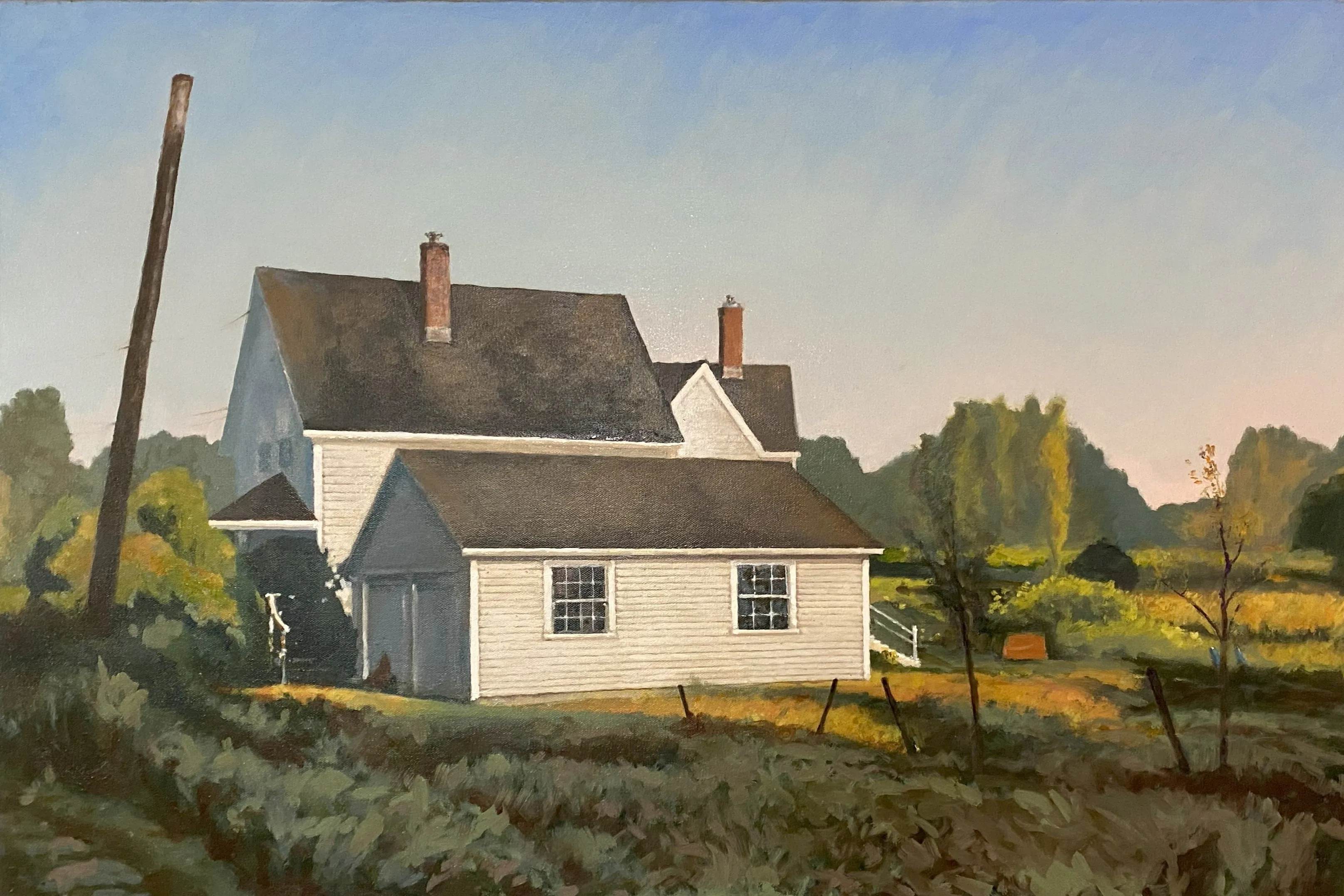
A living room carries more than one kind of day. It is where people settle in after work, where friends gather, where a quiet morning can begin, and where the eye returns again and again to the same walls. The right painting can give that changing room a center of gravity. Choosing it becomes easier when you start with the life of the room, then let scale, sightlines, light, and feeling narrow the field.
1. Start with the moment you want the room to hold
Before measuring a wall, think about the experience you want from the room. A living room may need calm after a busy day, a sense of openness in a compact apartment, warmth around a deep sofa, or a visual counterpoint to a room full of books, objects, and conversation. Those are better starting points than trying to find a painting that repeats the exact color of a cushion.
Give the feeling a few words. You might want the room to feel coastal, quiet, weathered, luminous, grounded, or full of movement. Those words help you notice whether you are drawn to an open horizon, a changing sky, a road that carries the eye inward, or a built place with more structure. The subject matters, but the atmosphere is what you will live with most often.
The first work that catches your attention is not always the one that stays with you. Return to it after looking at several others. Notice whether it still has something to offer beyond the immediate color or familiar subject. When you browse the studio’s available paintings, look for the work that feels more alive on the second and third look. That is often a better sign than a perfect match with the room as it stands today.
2. Choose the wall from the way you use the room
The best wall is not always the largest blank surface. Begin where people actually look. Sit in the place you use most often, then stand in the doorway and walk through the room at a normal pace. Notice which wall stays visible from several positions and which walls are interrupted by lamps, doors, shelves, windows, or a television.
Above a sofa is often a natural choice because the furniture creates a clear visual anchor. A wall across from the seating area can be stronger when you want to see the painting during conversation. In a room with a fireplace, a side wall may be better than the mantel, especially when the fireplace is used often. The goal is not to fill the room’s most obvious gap. It is to give the painting a place where it can be seen comfortably and safely.
Open-plan rooms deserve a wider look. A painting in the living area may also be visible from the kitchen, dining table, or entry. Stand in each of those places before deciding. A landscape is often useful in this setting because it can give the eye a view to travel into without competing with every other element. The studio’s original landscape collection is a good place to begin when the room needs depth rather than another decorative object.
Leave enough open wall around the work for it to register. A painting crowded by a tall plant, a floor lamp, three shelves, and a doorway will not gain importance from all the company. One clear painting with room around it can do more for a living room than several smaller items trying to solve the same wall.
3. Test scale with the furniture beneath it
Scale is usually the decision that makes a painting feel settled or accidental. Over a sofa, console, or low cabinet, the framed work should have a visible relationship to the furniture below it. A useful starting point is a painting that spans roughly two-thirds to three-quarters of a sofa’s width. It is not a rigid formula, but it keeps a single work from looking too timid or too heavy.
Use painter’s tape to mark the outer dimensions of the framed work on the wall. Include the frame, not just the image. Then step back to the main doorway, sit on the sofa, and look from the chair across the room. If the shape disappears from every normal viewpoint, the wall may want more width or height. If it presses too close to a lamp, molding, or window, choose a quieter scale or a different wall.
A generous wall can support a broad landscape with enough presence to organize the whole seating area. The studio’s large landscape paintings bring that kind of visual center to a room without requiring a gallery wall. A smaller original can be exactly right above a reading chair, narrow table, or focused stretch of wall. The studio’s small oil paintings are especially effective where close looking matters more than long-distance impact.
Do not make a small painting carry a wall that needs a larger answer. Equally, do not choose a large work only because the room is substantial. The right scale is the one that allows the furniture, architecture, and painting to read as one deliberate composition.

4. Let color relate instead of trying to match it
A living room is usually full of color already: upholstery, wood, rugs, books, curtains, and daylight all make a palette before a painting arrives. That does not mean the painting has to repeat the dominant color. Exact matching can make original art feel like a finishing accessory instead of a work with its own life.
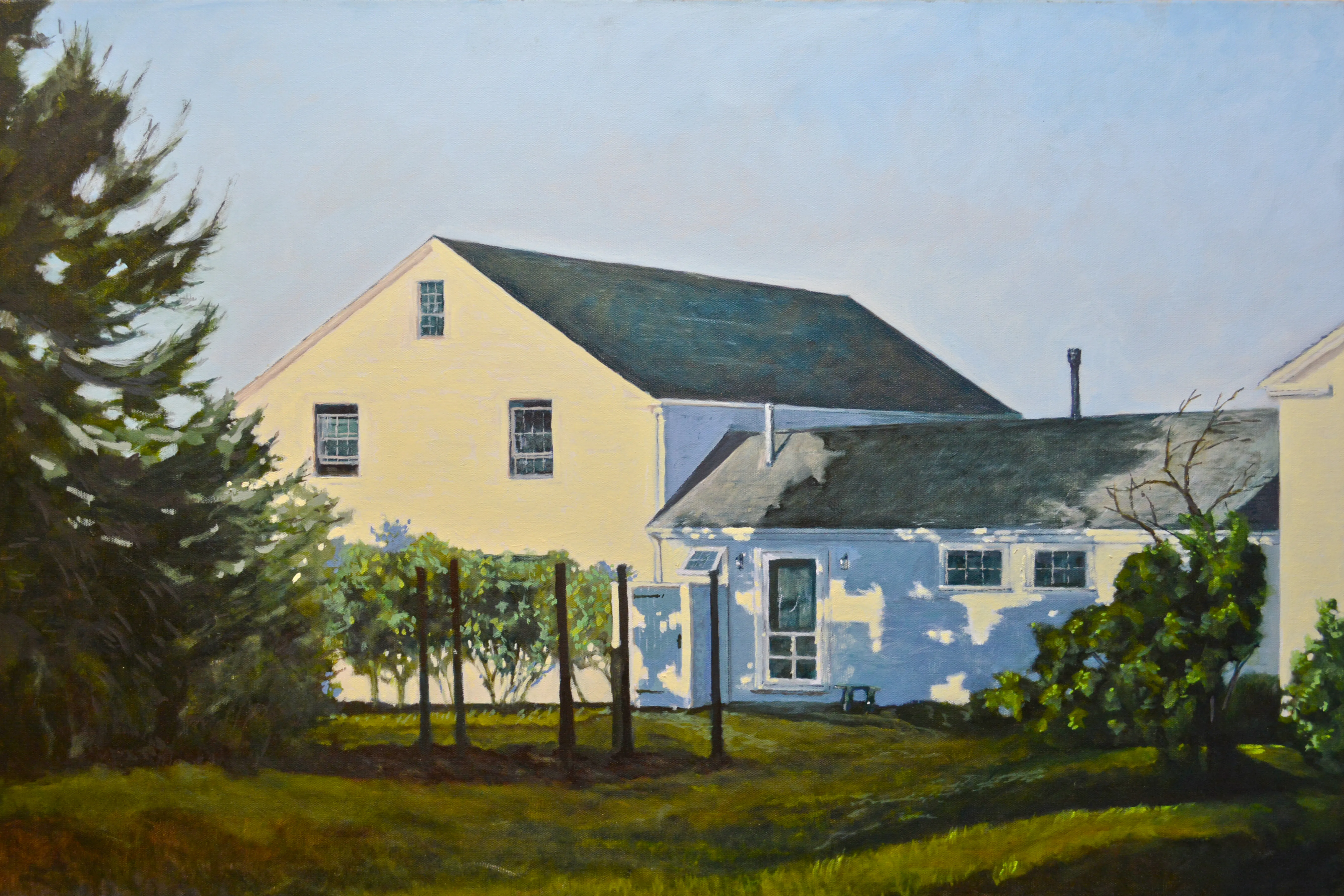
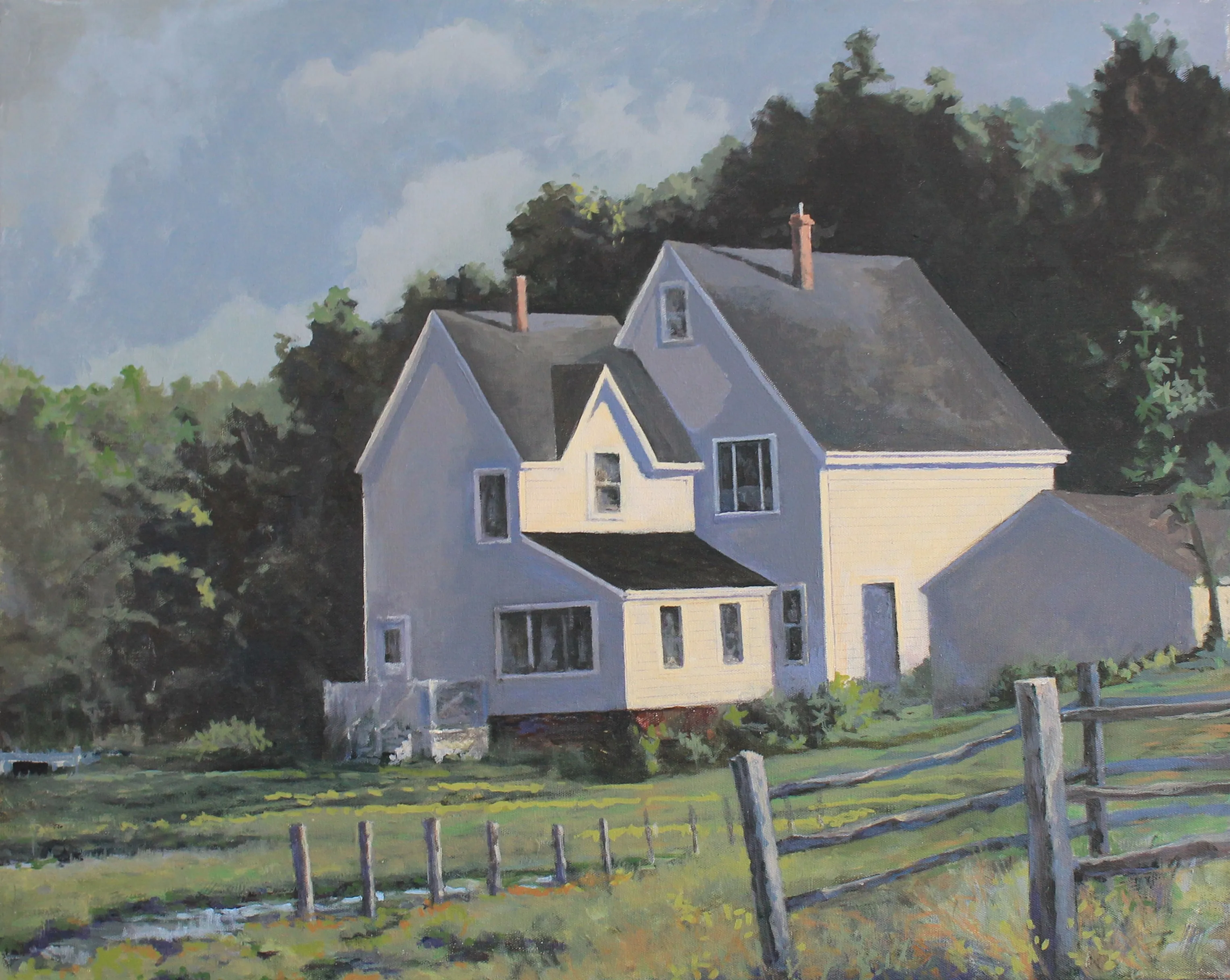
Look for a relationship in temperature, value, or mood. A blue-gray shoreline can cool a room with warm wood and rust-colored textiles. A late field or sunlit house can bring warmth to a room with neutral upholstery. A dark foreground can give depth to a pale wall, while an open sky can relieve a room that already has a lot of visual weight near the floor.
Subject can work in the same way. A painting of weather, water, a road, or a house does not need to echo the architecture of your home to belong there. It can introduce a different sense of place. Doug Caves’s work draws from New England roads, shorelines, fields, and built places, so the paintings bring the room an atmosphere that changes with the light rather than a fixed decorating scheme.
Use a digital image near the intended wall as a preliminary check, but do not mistake a phone screen for the final experience. The actual scale, frame, surface, and room light will change the relationship. Ask for the framed dimensions, more photographs, or a close-up before deciding. A clear conversation with the studio is part of choosing well, not an inconvenience.
5. Look at the painting in day and evening light
Living rooms rarely hold the same light all day. Morning may bring a cool window glow, late afternoon may cast direct sun across the wall, and evening may rely on lamps, a picture light, or a ceiling fixture. Watch the proposed wall at the hours when you are most likely to be in the room. The most flattering spot at noon may create glare or disappear after dark.
Original paintings benefit from thoughtful light, but they do not need to be treated like untouchable museum objects. The practical aim is simple: avoid long periods of direct sun, active heat, and strong glare. The Canadian Conservation Institute advises keeping paintings in a secure, stable environment and reducing unnecessary light exposure. Its guidance on caring for paintings is a useful reference when you are deciding between two walls.
If a painting will be near a lamp or picture light, view it at night from the sofa. Check for a bright reflection that obscures the image or a harsh hotspot that flattens the surface. A softer field of light usually reveals more of the painting than one intense beam. The studio’s guide to lighting a painting explains how to manage glare and preserve the quiet shifts in a painted surface.
Be especially cautious above a working fireplace or beside a source of sustained heat. The Canadian Conservation Institute notes that heat and ultraviolet exposure can contribute to damage over time. If that wall is the only logical place in the room, consider a work on paper behind appropriate glazing or choose a different focal point for the original painting.
6. Decide whether one painting or a group fits the room
One substantial painting can give a living room calm. It creates a clear place for the eye to land and gives the surrounding furniture a center. This is often the strongest answer above a sofa, on a long wall, or across from the main seating area. A single work also leaves room for its changing surface, color, and atmosphere to do their work over time.
A group can be right when the wall has a more intimate role, such as a passage between two seating zones or the space beside a reading chair. The group should have a real connection: related light, a shared subject, compatible frames, a family history, or a collection that has grown naturally. Arrange the work on the floor first, then mark the outer shape and the gaps between pieces before hanging anything.
Do not build a group only because one work feels undersized. That often makes the wall busier without solving the underlying proportion problem. If you want a broader visual field, a larger horizontal landscape may be the clearer answer. If you want a more personal wall, choose a few works that have earned a relationship with one another.
For either approach, hanging height still matters. The studio’s practical hanging guide can help you find a comfortable center line, choose secure hardware, and keep the painting connected to the furniture beneath it.
7. Choose work you will still want to meet on an ordinary day
A living room painting has to work when nobody is visiting. It will be there during a quiet coffee, a busy weeknight, a long winter afternoon, and the first few minutes after you walk through the door. That is why the best choice is rarely the work that feels most impressive in a photograph. It is the work that keeps revealing something when the room is simply being lived in.
Give yourself permission to return to a painting more than once. Imagine it above the sofa when the cushions are rumpled, the books are out, and the room is not arranged for company. Ask whether the scale still feels right, whether the color will remain interesting through different seasons, and whether the subject has a place in your life beyond its immediate style.
Doug Caves’s paintings are rooted in New England weather, architecture, coastline, and everyday landscapes. That sense of place can make a living room feel more personal without asking the room to become themed or formal. Browse the current catalogue for available work, or contact the studio with a photograph of the room, the wall dimensions, and the painting you are considering. If the right work begins with a particular home, shoreline, or remembered road, the commissioned landscape process offers a way to begin with that place.
Frequently asked questions
What size art should I put above a sofa?
Start with the width of the sofa, not the empty wall around it. A single painting often feels settled when its framed width is roughly two-thirds to three-quarters of the sofa width. Treat that as a useful starting point, then test the actual proportions with painter’s tape and view the outline from where you normally sit.
Should living room art match the sofa and rug?
It should relate to the room, but it does not need to match every color. A painting can connect through light, mood, or one repeated undertone while still bringing contrast and a point of view. Work that is too perfectly matched can disappear into the room.
Can I hang a painting above a fireplace?
Sometimes, but only when the area stays cool, stable, and free of soot or smoke. A working fireplace, strong heat, and direct sun can be hard on original art. If the fireplace is active or the wall gets very warm, choose a different location for a painting you want to preserve.
How do I choose art for an open-plan living room?
Look at the wall from the adjacent dining, kitchen, and entry areas as well as from the seating area. Choose work that gives the living room a clear center without competing with every neighboring surface. A landscape can be especially useful because it gives the eye depth from several viewpoints.