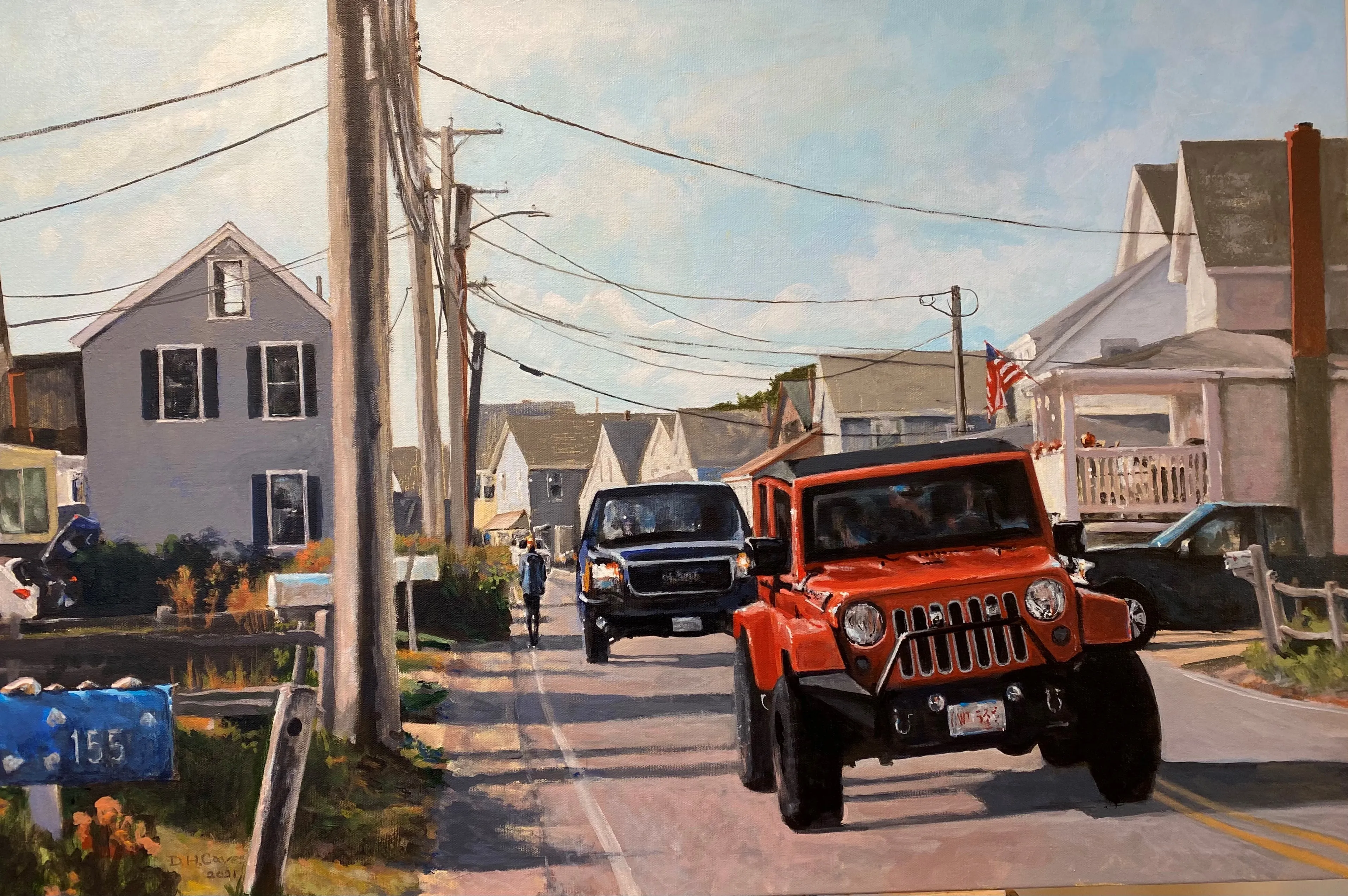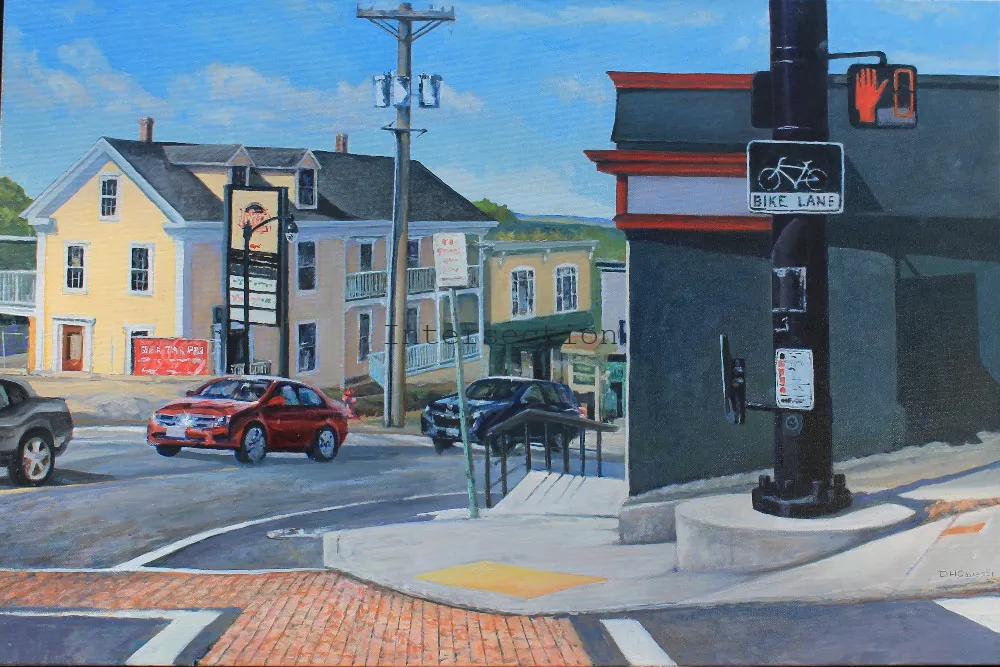
A dining room asks more of art than a pass-through or a spare wall. People sit with it through a meal, catch it from different chairs, and notice it again when the light changes after dinner. The right work can make the room feel more settled and more personal without turning it into a stage set. Start with the experience you want to create, then let scale, sightlines, color, and care help narrow the choice.
1. Decide what you want the room to hold
Before measuring, think about how the room is actually used. Some dining rooms are reserved for holidays and long dinners. Others are the everyday place for coffee, homework, and a quick meal before everyone heads out. The art does not have to announce the room's purpose, but it can give those moments a shared atmosphere.
Try naming the quality you want to feel when you sit down. You may want warmth, openness, quiet, a sense of weather, a memory of the coast, or simply one clear point of attention in a room with a busy table and chairs. Those words are more useful than trying to match a napkin or a paint chip. They help you notice whether a painting feels right before you have talked yourself into it.
A dining room can carry a painting with more presence than a bedroom or hallway because the table gives the eye a place to return to. That does not mean the work must be loud. A calm landscape, a low horizon, or a spare view can bring depth to the room precisely because it gives conversation a visual pause. Look for work that sets the tone, reflects something personal, and works with the architecture rather than fighting it.
When looking through the studio's available paintings, begin with the works that keep your attention after the first glance. Then picture that painting during a normal meal, not only in an empty room. A good dining-room painting gives you something to come back to without requiring a performance every time company arrives.
2. Read the wall from the table first
The main viewing position in a dining room is often seated, not standing in the doorway. Sit in the usual chairs and look at each wall. Notice what a guest sees at the end of the table, what the host sees most often, and which wall stays visible after people have gathered. That wall may be the right place for the painting you care about most.
Look for interruptions before you fall in love with a size. Windows, chair rails, wainscoting, sconces, buffet lamps, doorways, mirrors, and molding all change the usable field. A painting that appears to have room on a blank photograph may feel squeezed once it sits between two formal elements. A narrower vertical can make sense between windows. A wide landscape may be the better answer over a sideboard or along the long wall beside a rectangular table.
Use the wall as a frame, not as an instruction to fill every inch. The space around a painting is part of how it is seen. A work crowded by a chandelier, a tall cabinet, and four small decorative objects loses its ability to settle the room. The most convincing arrangement is usually simpler: one clear work, one useful viewing distance, and enough empty wall for the painting to register.
If you are choosing work for an open-plan home, also check the sightline from the adjoining kitchen or living area. Art in a dining room may be seen from several spaces at once. The studio's guide to choosing a painting for your home can help you weigh the room's mood and architecture before a favorite image becomes a difficult fit.
3. Choose scale in relation to furniture
A sideboard, buffet, or long console is a useful anchor for a painting because it gives the wall a horizontal base. In many rooms, the painting will feel most composed when it has a visible relationship to that furniture rather than floating above it as a small unrelated object. Start by measuring the furniture width, then compare it with the framed dimensions of the work, not the image alone.
There is no fixed formula that suits every room, but proportion is easy to test. Tape out the outer dimensions of a likely painting with painter's tape, including the frame. Step back through the doorway, then sit at the table. If the outline feels timid from both places, the wall may want a larger work. If it overwhelms the furniture or pushes too close to the molding, choose a quieter scale. This small test is much more dependable than trying to judge dimensions from a phone screen.
For a long wall, one substantial painting can make the room feel deliberate and calm. The studio's large landscape paintings are especially useful to consider when the wall needs a clear center of gravity. A grouping can work too, but it needs a real connection, such as related light, subject, frame, or history. A group assembled only because one painting feels too small tends to look like an afterthought.
Small original work belongs in a dining room when the setting supports it. A narrow wall by a doorway, the end of a banquette, or a quiet space near a bar cart may call for an intimate painting rather than a large statement. The studio's small oil paintings can have real presence in those focused spaces. The question is not whether the painting is objectively large or small. It is whether the wall gives it an appropriate job.
4. Let color and subject create a conversation
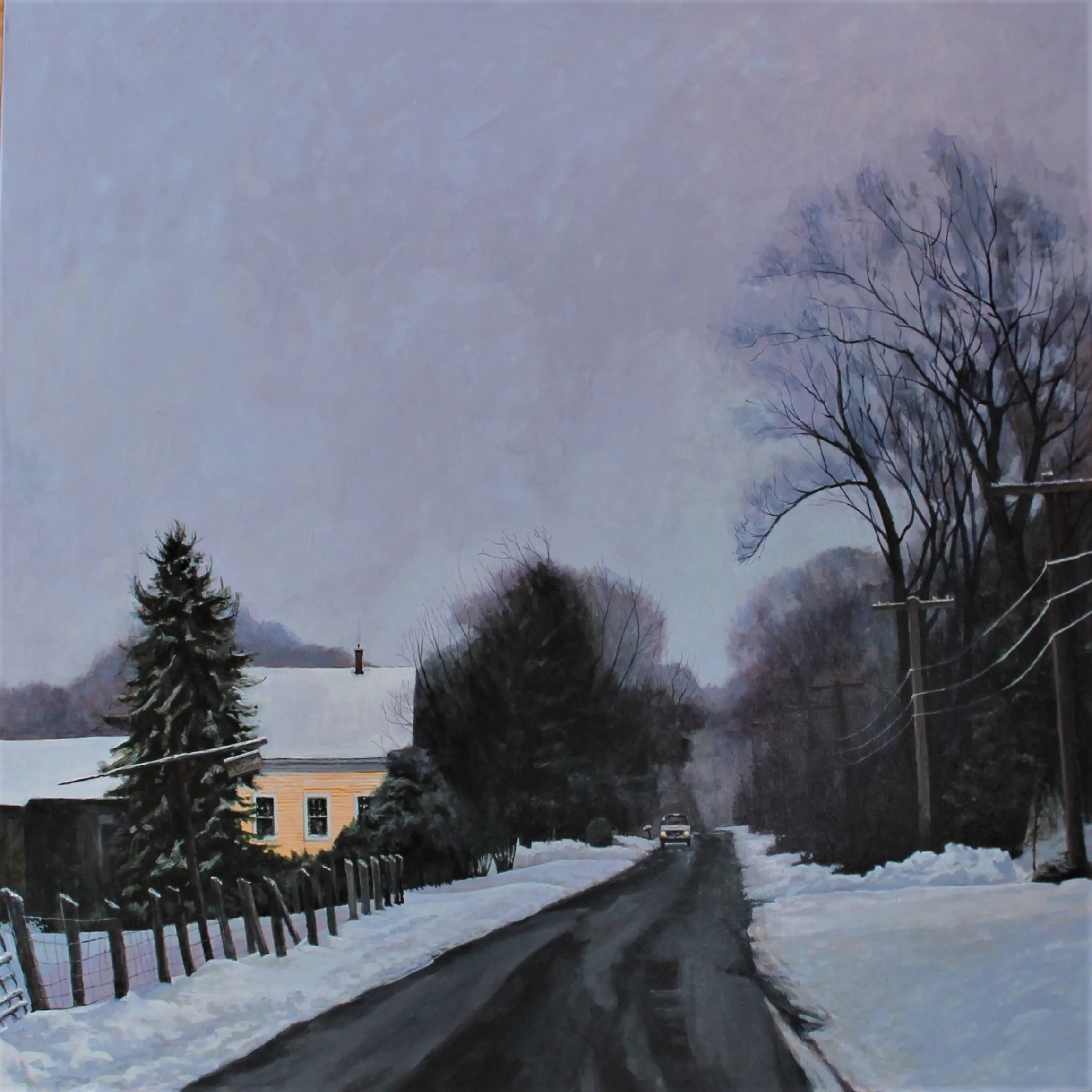
Dining-room art does not need to repeat the colors of the chairs, rug, or curtains. Exact matching can make a painting feel like another furnishing choice instead of something with its own life. A better approach is to look for a relationship in temperature, value, or mood. A cool gray shoreline can steady a room with warm wood. A late sun in a field can give a neutral room a note of warmth. A darker painting can bring depth to a room filled with pale surfaces.
Subject matters because a dining room is a social room. You may want a landscape that opens the wall outward, an architectural view with a sense of structure, or a work that carries a place your family knows. Natural subjects are especially flexible because they can feel at home in both formal and informal rooms. They also give people something to notice without demanding that everyone share the same taste in decoration.
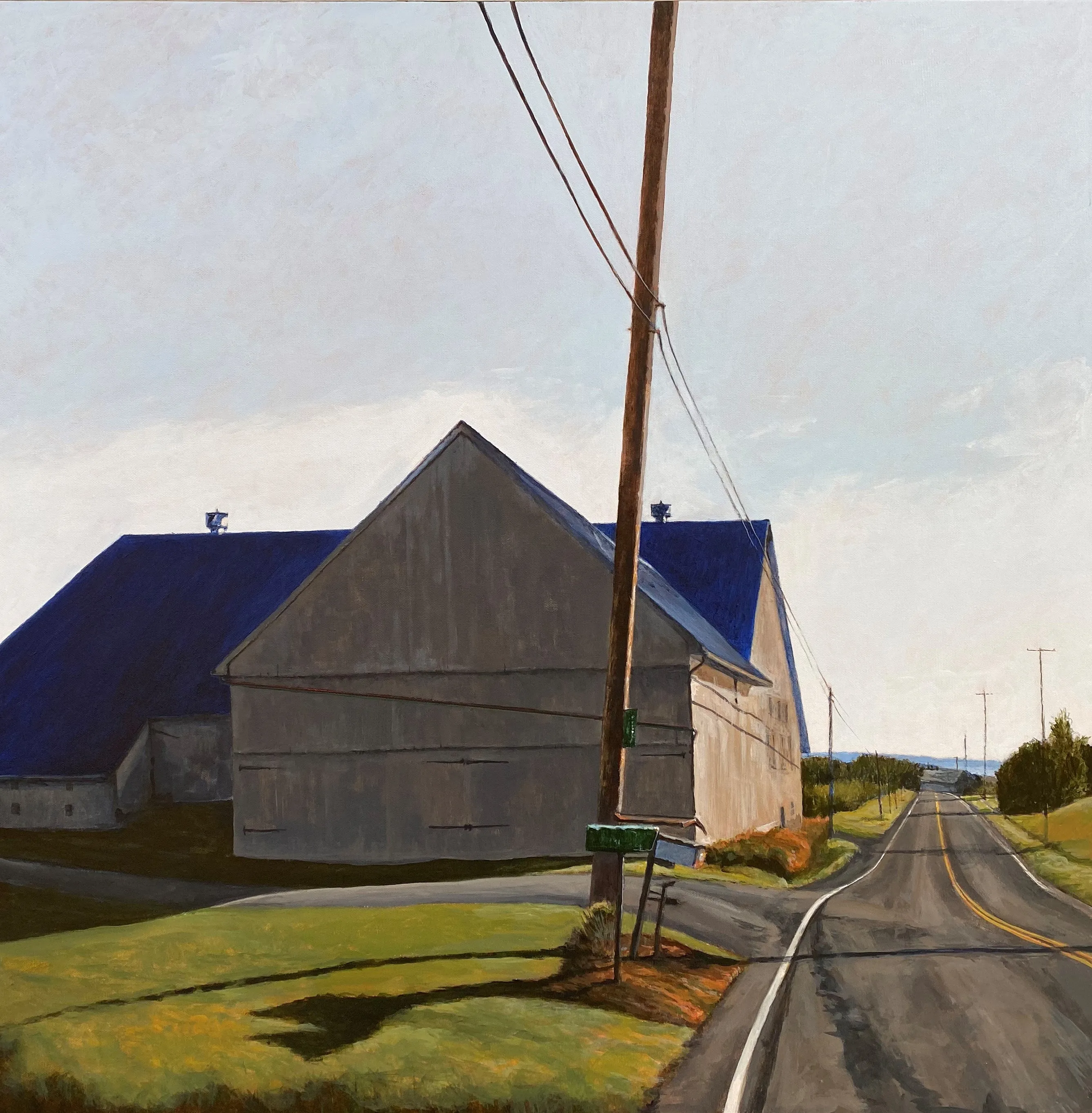
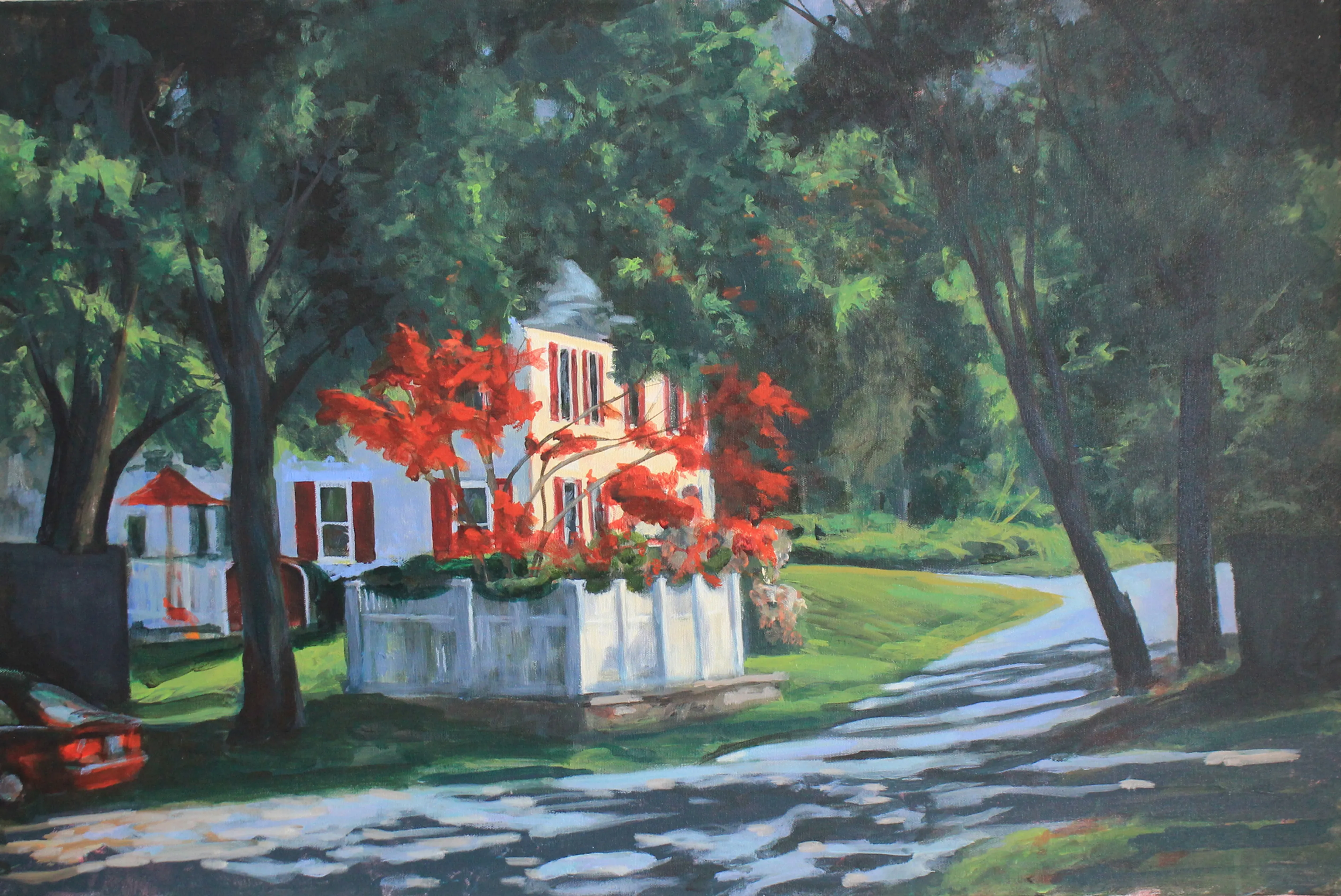
Doug Caves's landscapes draw on New England roads, weather, shorelines, buildings, and fields. That makes them a natural choice for a room where memory and gathering meet. A painting such as a broad coastal view may extend the room beyond its walls; a familiar house or changing sky may make the table feel more rooted. Browse the original landscape collection when you want a work whose sense of place can carry the room without becoming a theme.
Before deciding, put a digital image near the intended wall and look at it beside the existing furniture. This will not replace seeing the actual painting, but it can help you notice whether the work adds light, contrast, or calm. Then ask for the details that matter in real life: the framed dimensions, the medium, the surface, and more photographs if needed. The studio's direct contact page is the right place to ask those practical questions.
5. Give light and daily life equal weight
Dining rooms often have attractive windows, a chandelier, candles, and a great deal of changing light. That atmosphere is part of their appeal, but it should also shape where a painting goes. Watch the wall at breakfast, at midday, and in the evening. A beautiful beam of sun can be hard on original art when it lands directly on the work for long periods, while an evening fixture can create glare that makes a painting difficult to see from the table.
Keep original paintings away from active heat, steam, kitchen grease, and the smoke or soot of a working fireplace. The Smithsonian's painting-care guidance recommends stable conditions and thoughtful placement rather than treating a painting as an ordinary decorative object. The Canadian Conservation Institute likewise emphasizes secure hanging and avoiding damaging light and environmental swings in its guidance for paintings.
This does not mean an original painting must live in a dark, unused room. It means the location should fit the work. A bright dining room may only need a different wall, a shade during the strongest part of the day, or an adjustable light aimed to avoid reflection. If you are considering a picture light or track fixture, the studio's guide to lighting a painting explains how to reveal the image without creating a hot spot or unwanted glare.
Also consider everyday movement. Dining chairs slide, serving pieces get carried around, and family gatherings can make a normally quiet room feel busy. Use secure hardware suited to the framed work, and do not place a painting where a chair back, swinging door, or tall centerpiece repeatedly threatens the lower edge. The studio's painting-hanging guide is a useful companion when you are ready to move from a wall idea to a secure installation.
6. Choose the work you will want to revisit
A dining room is not a showroom. The table will be covered, the chairs will be pulled out, and the room will look different during a quiet Tuesday meal than it does before a holiday gathering. That is exactly why a painting with staying power matters. Choose something that feels rewarding when the room is ordinary, not only when it is arranged for a photograph.
Give yourself a little time before deciding. Return to the work at a different time of day. Look at the whole composition from the far end of the room and at the brushwork from closer up. Notice whether it has more to offer after the initial impression. The best original paintings can keep changing as the room changes around them.
For a painting you find through Douglas H. Caves Sr. Art Studio, the conversation can be as practical as it needs to be. The studio can help you confirm dimensions, framing, current availability, delivery, or a studio visit before you commit. Start with the current catalogue, or contact the studio with a photograph of the wall and a few details about the room. For a place that has its own history, a commissioned landscape painting can begin with the view, memory, or mood you want the dining room to hold.
Frequently asked questions
What size art works best in a dining room?
Start with the wall and the furniture beneath it. A substantial wall over a sideboard, for example, often needs one painting with enough width to relate to the furniture. The right size is the one that can be seen and enjoyed from the table without crowding nearby architecture or making the room feel heavy.
Should dining room art match the table and chairs?
It should relate to the room, but it does not need to match every finish or color. A painting can create balance through light, atmosphere, or one echoed undertone. Choose work you want to live with, then let the room support it instead of treating it as a color swatch.
Can I hang art over a dining room sideboard?
Yes. A sideboard gives a painting a strong visual anchor and often makes a generous wall easier to read. Leave enough breathing room above the furniture, keep the painting clear of serving pieces or tall lamps, and make sure the hardware suits the framed work.
Is a landscape painting right for a dining room?
A landscape can be especially good in a dining room because it gives the eye somewhere to travel beyond the table. Look for a scene, color, and scale that fit the feeling of the room, whether that is calm, open, warm, coastal, or quietly dramatic.