
A kitchen is full of useful things, which is exactly why a painting can matter there. It can soften the hard lines of cabinets and appliances, give the eye a place to rest, and make the room feel less like a work zone. The best choice is not a decorative afterthought. It is a work that suits the way the kitchen is actually used, the light it receives, and the wall that can keep it safe.
1. Start with the way you live in the room
Before looking at a painting, look at the kitchen on an ordinary day. Is it mostly a place to cook, or do people gather at the island, eat breakfast at a table, do homework there, and talk while something simmers? A compact galley kitchen asks different things of art than a spacious kitchen with a dining nook. The room’s real rhythm is more useful than a generic rule about kitchen decor.
Think about the feeling you want the room to hold. You may want warmth around a breakfast table, a quiet view in a busy family room, a bit of weather and distance near an island, or one personal note in a kitchen that otherwise feels very polished. Those qualities will lead you toward a painting more reliably than trying to match a cabinet color exactly.
A kitchen is also a room of repeated glances. You see its art while making coffee, waiting for water to boil, clearing dishes, or sitting down at the end of the day. Choose a work that can reward that kind of return. A landscape, built place, or changing sky can offer a longer view without asking the room to become themed around food or decoration. When browsing the studio’s available paintings, notice which works continue to hold your attention after the first glance.
2. Find the wall that does not have a harder job
The largest blank wall is not always the best wall for art. Kitchens have a lot of competing demands: windows, upper cabinets, open shelves, task lights, switches, stools, doors, and appliances. Instead of forcing a painting into the leftover space, look for a wall that is already part of how people see and use the room. The end of a breakfast table, a wall near a dining nook, a quiet stretch by a pantry, or the view from the island can be stronger choices than a narrow strip between cabinets.
Stand where you normally prepare food, then sit where people eat or talk. Walk in from the adjoining room. Those are the views that determine whether a painting will feel present or forgotten. A work opposite a breakfast table might become part of the first and last minutes of the day. A painting seen from the island can give a cooking task a more spacious horizon. A side wall may be ideal when you want art to be discovered gradually rather than competing with everything in front of you.
Leave some breathing room around the work. A tall lamp, a crowded shelf, or a row of utensils cutting across the painting will make even a strong image feel incidental. One original with enough clear wall around it can do more for a kitchen than several small pieces squeezed into every gap. If you have a group in mind, lay it out on the floor first and consider whether the group has a real relationship in light, subject, scale, or frame.
Keep the practical zones practical. The Smithsonian’s guidance for caring for paintings recommends a secure wall away from direct sunlight, heat, and unstable humidity. That makes a wall beside the range, sink, kettle, or steam-producing appliance a poor home for an original, even if it happens to be empty.
3. Test scale against the kitchen, not a phone screen
Kitchen walls can be deceptively difficult to judge because cabinetry breaks the room into smaller shapes. A painting that looks generous in a product photograph may feel lost above a breakfast bench. A work that seems modest on a screen may be exactly right on a narrow wall beside a table. The solution is simple: test the outer framed dimensions in the actual room before making a final decision.
Use painter’s tape to mark the approximate size, including the frame. View the outline from the doorway, from the table, and from the place where you spend the most time standing. If it disappears from every meaningful view, the wall may need a larger work. If it crowds cabinet edges, molding, or a pendant light, choose a smaller scale or a different wall. The tape test is not glamorous, but it is far more trustworthy than guesswork.
Furniture can provide a helpful visual anchor. Above a banquette, a low sideboard, or a breakfast table, a painting can feel settled when it has a clear relationship to the width and weight beneath it. A long horizontal landscape may suit a generous wall. A vertical work can make use of the height beside a doorway or at the end of a run of cabinets. The studio’s large landscape paintings are worth considering when the room needs one clear focal point, while the small original paintings can bring intimacy to a shelf wall, breakfast corner, or narrow passage.
Do not assume a small kitchen needs only small art. A single well-proportioned painting can make a compact room feel more deliberate because it gives the eye a clear place to land. The question is not whether the work is objectively large or small. It is whether the wall, furniture, and viewing distance give it an appropriate role.
4. Let color create relief, not another matching exercise
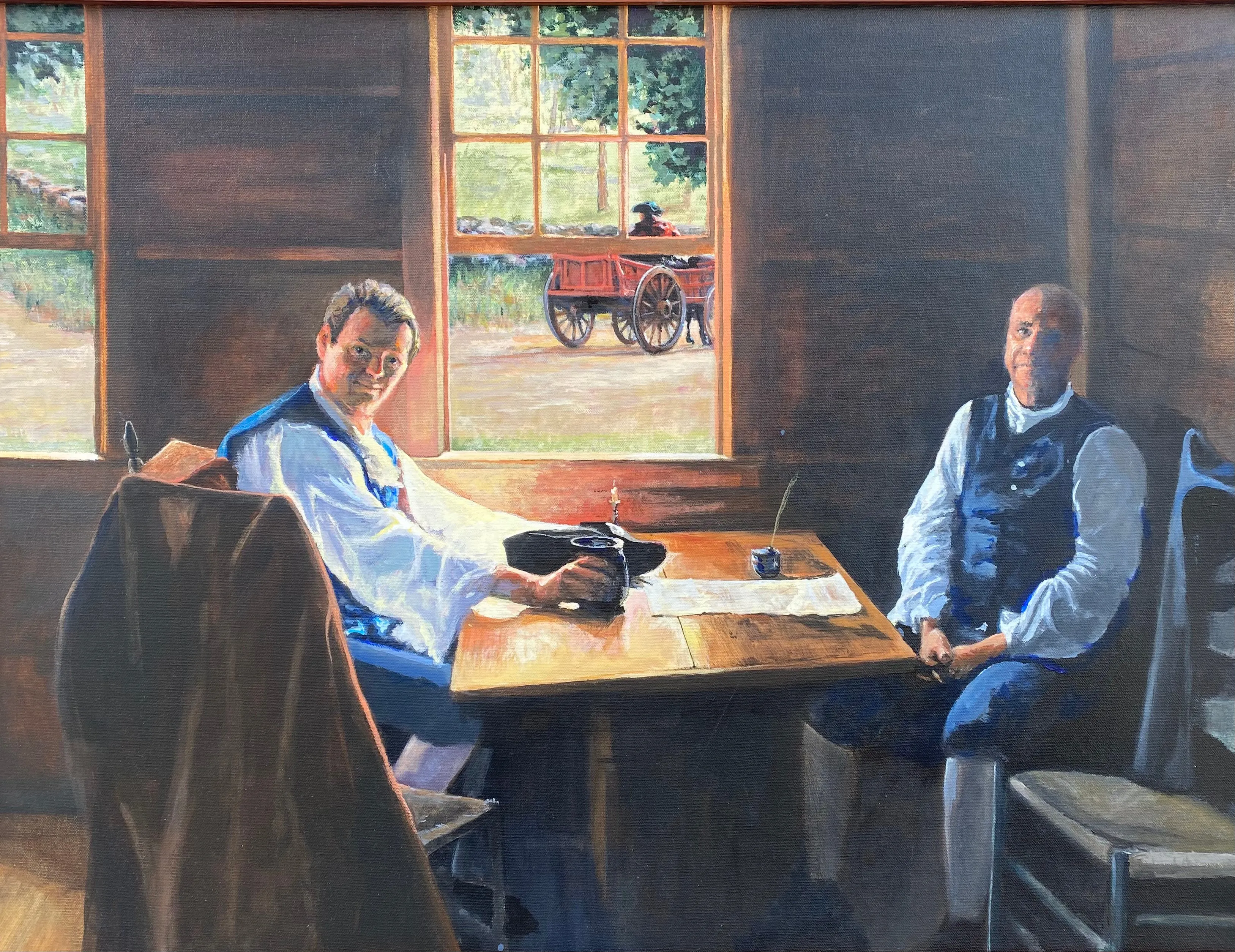
A kitchen already has a strong palette. Cabinetry, stone, wood, tile, metal, cookware, and daylight all make their own claims on the eye. Art does not need to repeat them. In fact, a painting that matches every surface too closely can fade into the room as if it were another decorative accessory.
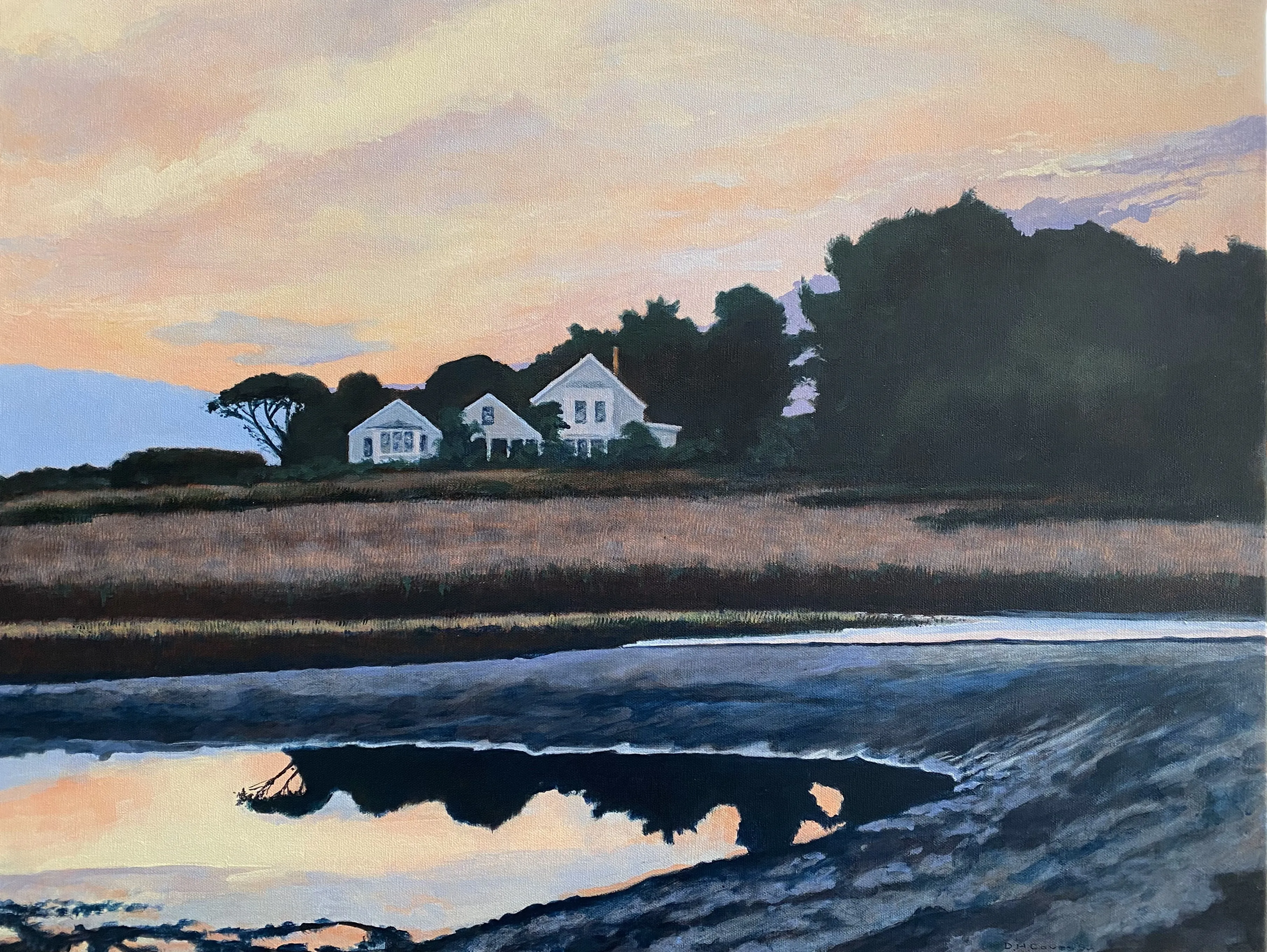
Look for a relationship instead. A cool gray-blue shoreline can steady warm wood cabinets. A painting with late sun can give a pale kitchen a note of warmth. An image with open sky may bring lightness to a room with dark counters and a great deal of visual weight. A darker foreground can give a white kitchen depth without making it feel heavy. What matters is the temperature, value, and atmosphere the painting brings to the room.
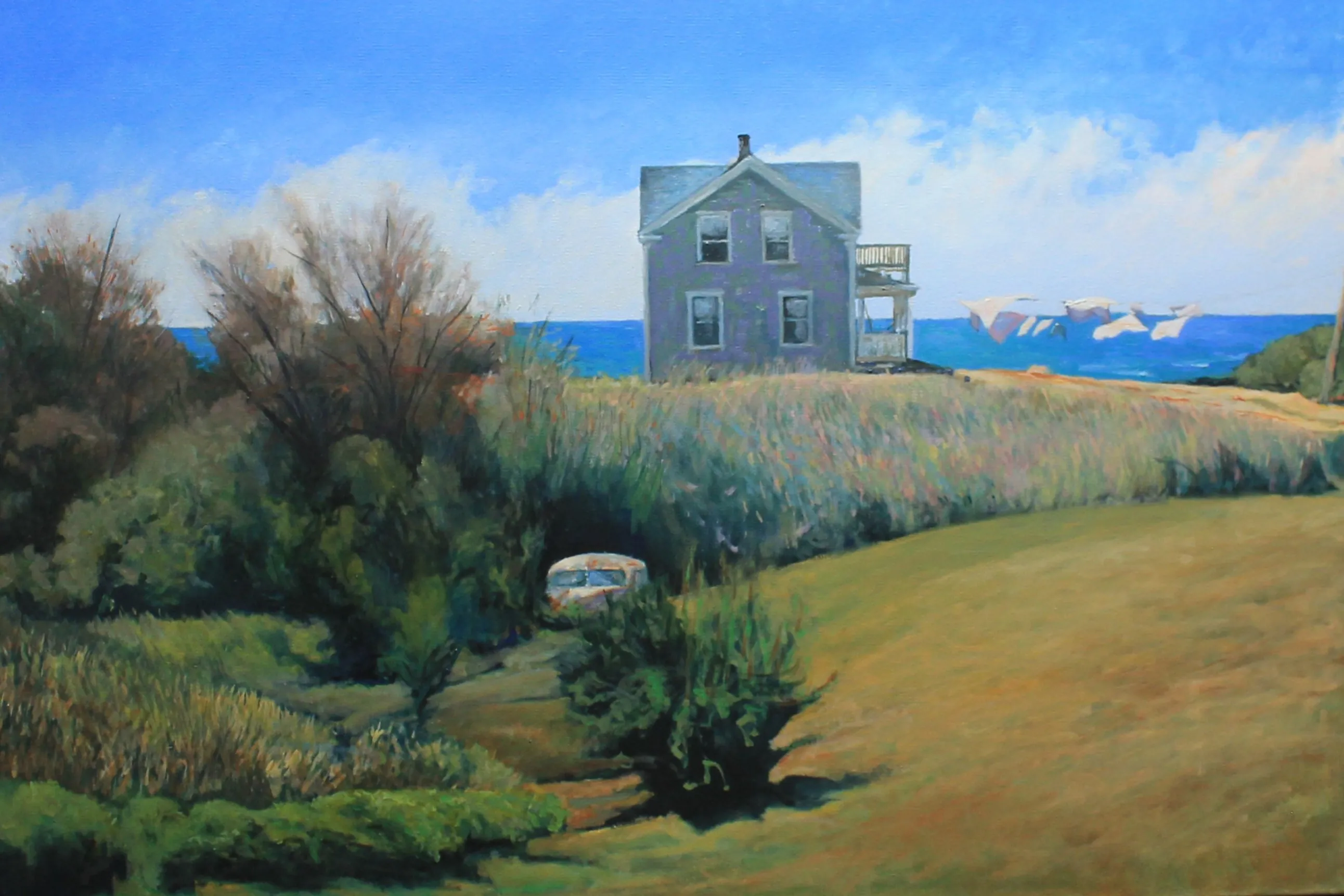
Subject can matter too, but it does not have to be literal. You do not need a bowl of fruit just because the work hangs near a counter. A road, a house, a field, water, or a weathered coast can make a kitchen feel connected to a place beyond its hard-working surfaces. Doug Caves’s paintings of New England weather, architecture, and changing light are especially at home in rooms that need some air and a sense of memory. Browse the original landscape collection when you want to see how different scales and subjects might carry that role.
Use a digital image near a photograph of the room as an early check, but do not treat a screen as a final judge. It cannot show the work’s surface, the frame’s real presence, or the change in color that comes with daylight. Ask for framed dimensions, close views, or additional images when you need them. The studio can help with those questions through the contact page.
5. Give heat, moisture, and light a vote
The kitchen’s appeal comes from activity, but activity also creates conditions that are harder on an original painting. Steam, grease, direct sun, splashes, and active heat can all make the wrong wall a costly choice. This is not a reason to ban art from the room. It is a reason to be precise about placement.
Keep original paintings away from the cooktop, a working fireplace, and walls that receive a regular blast of steam or cooking residue. Do not place a painting immediately beside a sink, dishwasher vent, or boiling kettle if a quieter wall is available. The Museum Conservation Institute notes that heat can soften paint and varnish, while moisture and changing humidity can cause lasting damage. Its painting-care guidance is a useful reference when you are assessing a lively room.
Watch the intended wall through a full day before hanging a painting. Morning light can be gentle while afternoon sun becomes harsh and direct. A window shade, a different wall, or a small change in placement may solve the problem without sacrificing the room’s brightness. At night, check how pendant lights and under-cabinet lights reflect across the painting. A work is most enjoyable when it can be seen without a bright patch of glare.
Secure installation matters just as much in a kitchen as it does elsewhere. Doors open, chairs move, people carry pots and groceries, and a busy room leaves little margin for a frame that shifts or hangs too low. Use hardware suited to the actual weight of the framed work and the wall construction. The studio’s guide to hanging a painting can help you plan the center height, hanging point, and secure hardware before you make the first hole.
6. Choose the painting that makes the room feel lived in
The best kitchen art does not have to make a grand statement. It can simply make the room feel more like the people who use it. A painting that stays interesting during a quiet breakfast, a hurried weeknight, and a table full of friends will outlast a choice made only to fill a blank wall.
Give yourself time with the actual work when you can. Look at it from farther away and closer up. Notice whether its light, brushwork, and composition still offer something after the first impression. A good original does not become invisible once it has settled into the room. It becomes familiar in a way that keeps opening up.
Doug Caves’s landscapes bring weather, roads, built places, coastlines, and shifting light into a home. They can give a kitchen a view without making it feel staged. Explore the full paintings catalogue for available works, or look at the original oil paintings and original acrylic paintings when medium is part of the decision.
For a particular kitchen, the studio can help clarify availability, framed dimensions, additional photographs, delivery, and practical placement questions. Contact the studio with a photograph of the room, usable wall measurements, and the paintings you are considering. If the room is tied to a specific view, property, or memory, the commissioned landscape process can begin with that sense of place.
Frequently asked questions
Can I hang an original painting in a kitchen?
Yes, provided it has a sensible location. Choose a stable wall away from direct sun, the cooktop, the sink, active heat, steam, and greasy air. A dining nook or wall at the edge of the room is often a better home for an original than the narrow space above a range or beside a kettle.
What size art works best in a kitchen?
Start with the usable wall and the distance from which you will see it. A small work can be perfect beside a breakfast table or on a shelf wall, while a generous blank wall near a dining area may need one painting with enough presence to relate to the furniture. Tape out the framed dimensions before deciding.
Should kitchen art match the cabinets?
No. It should relate to the room, but exact matching can make art feel like another accessory. Look for a relationship in warmth, light, or mood. A landscape can bring an open view to a room of hard surfaces and cabinetry without repeating every color already there.
Where should I avoid hanging a painting in a kitchen?
Avoid locations with direct, sustained sunlight and walls immediately near heat, steam, splashes, or cooking smoke. Do not hang an original directly above a range or near an active fireplace. If you are unsure about a particular wall, watch it through a normal day before installing the work.