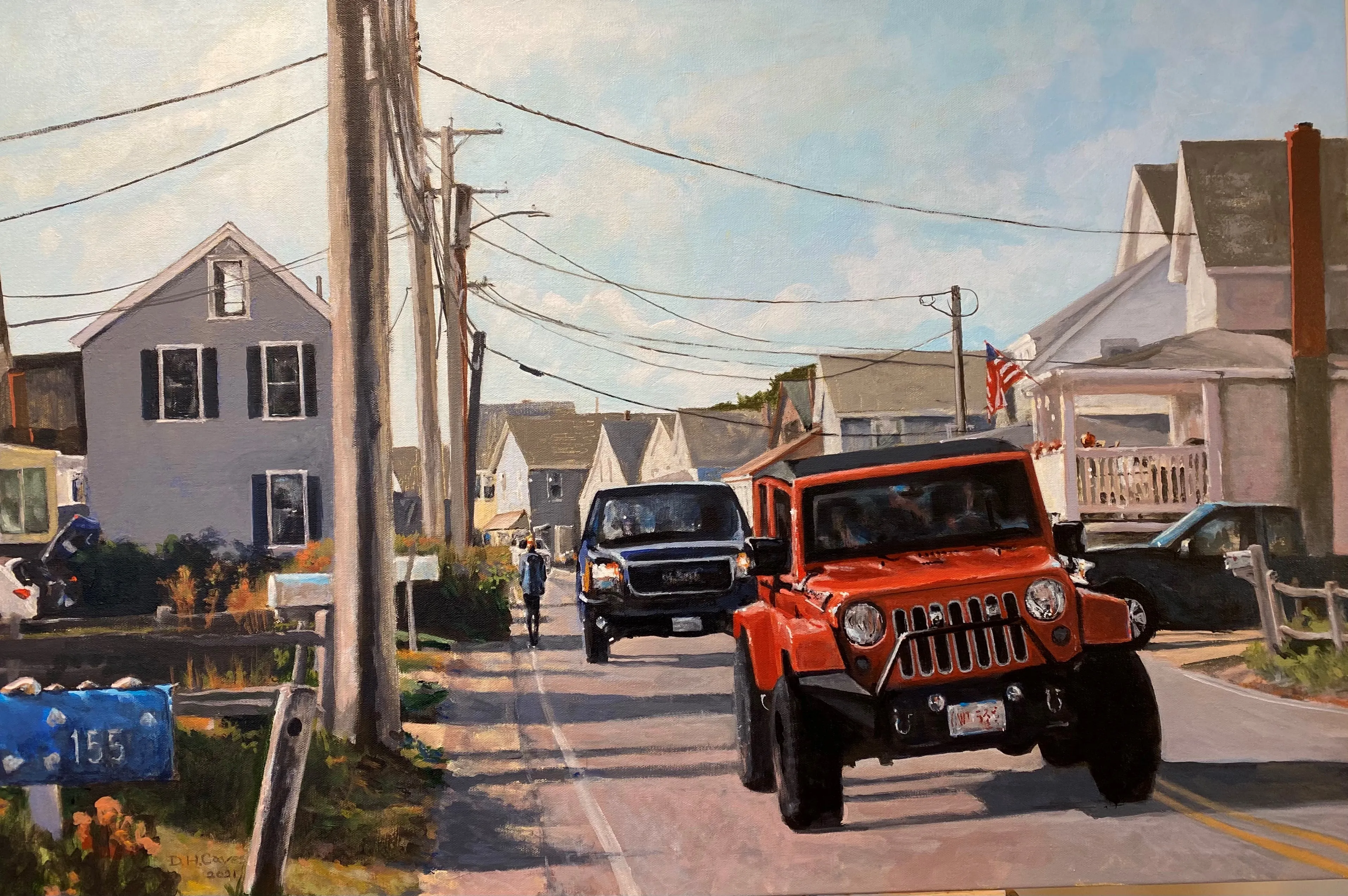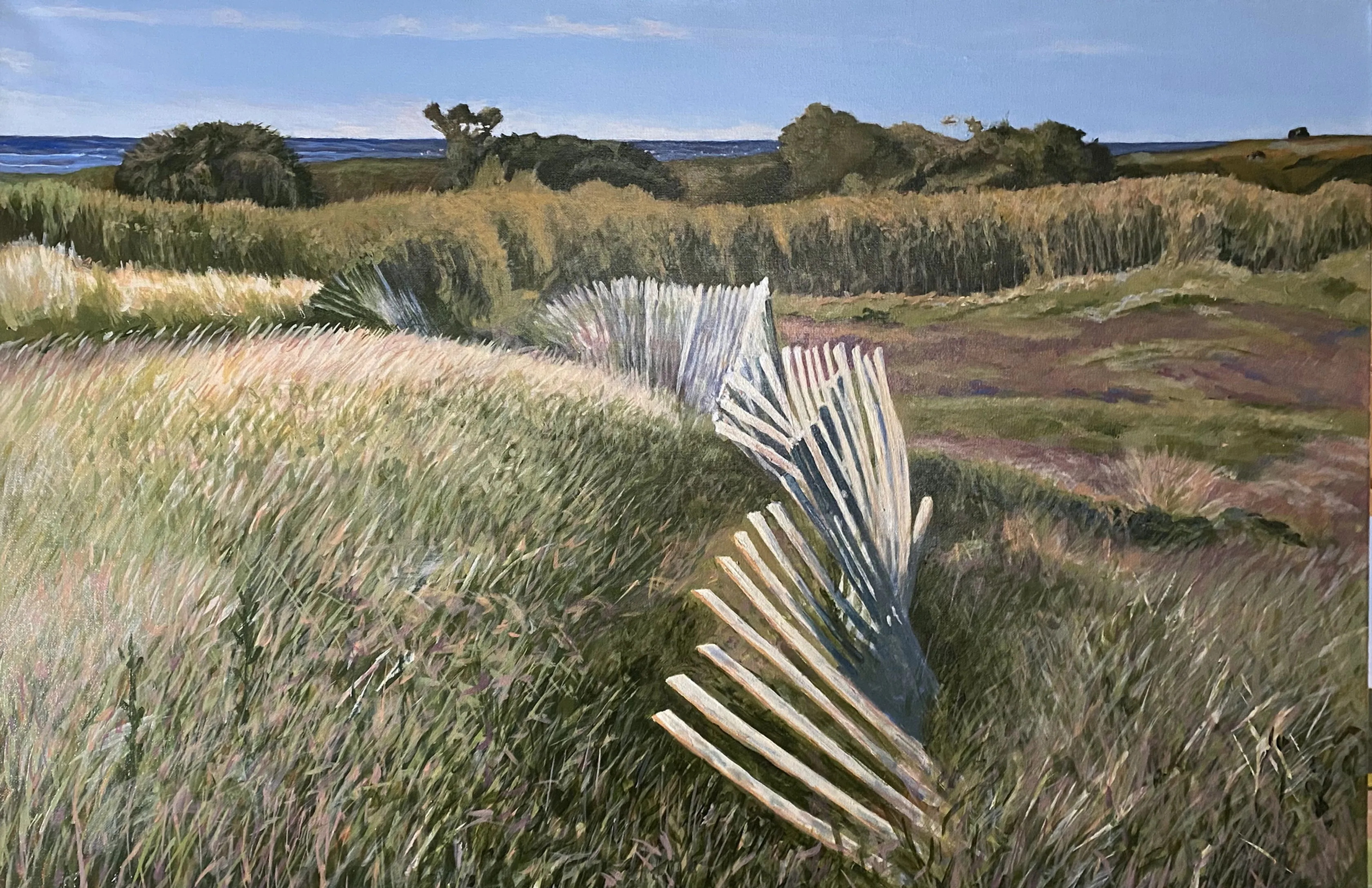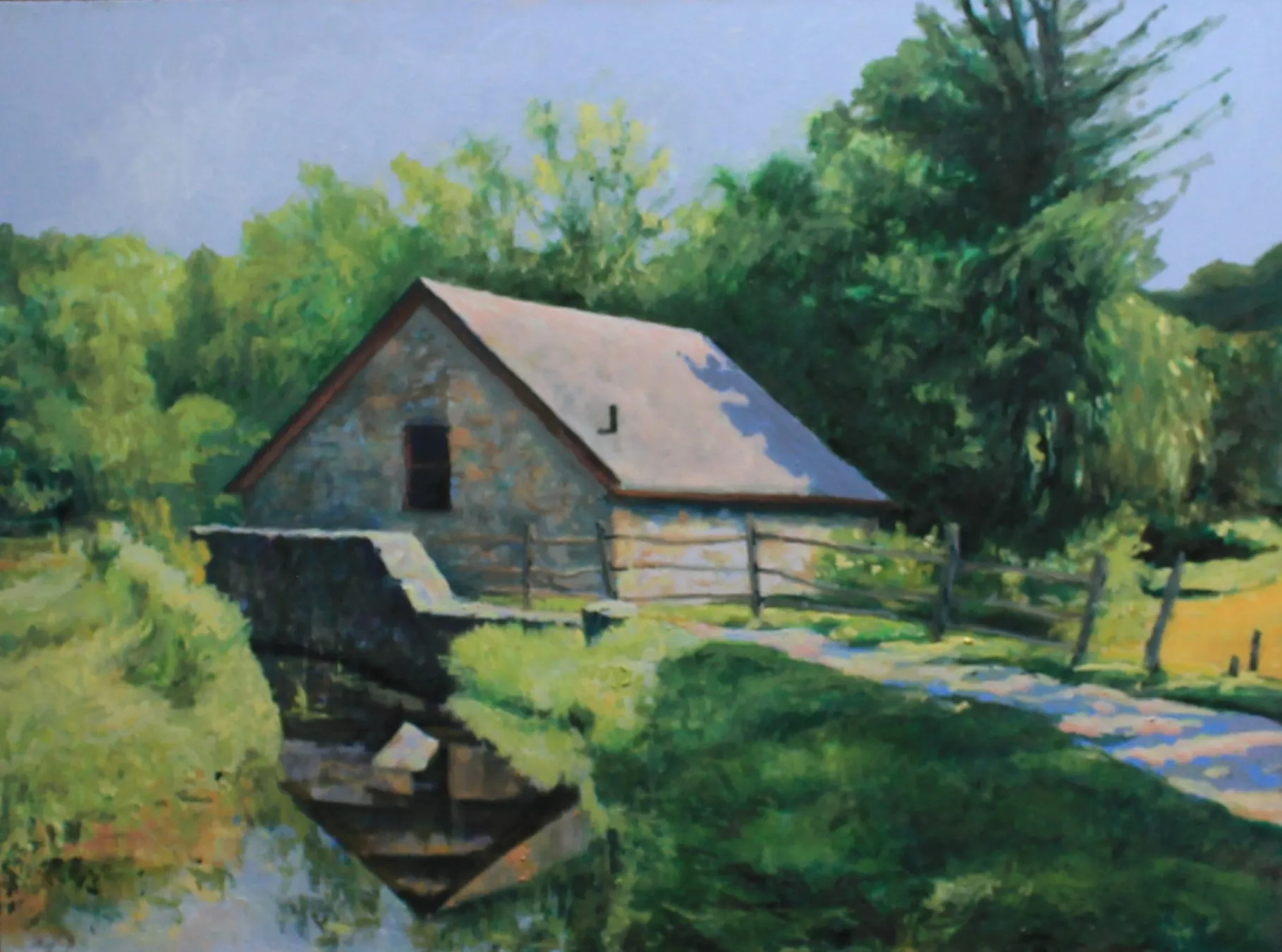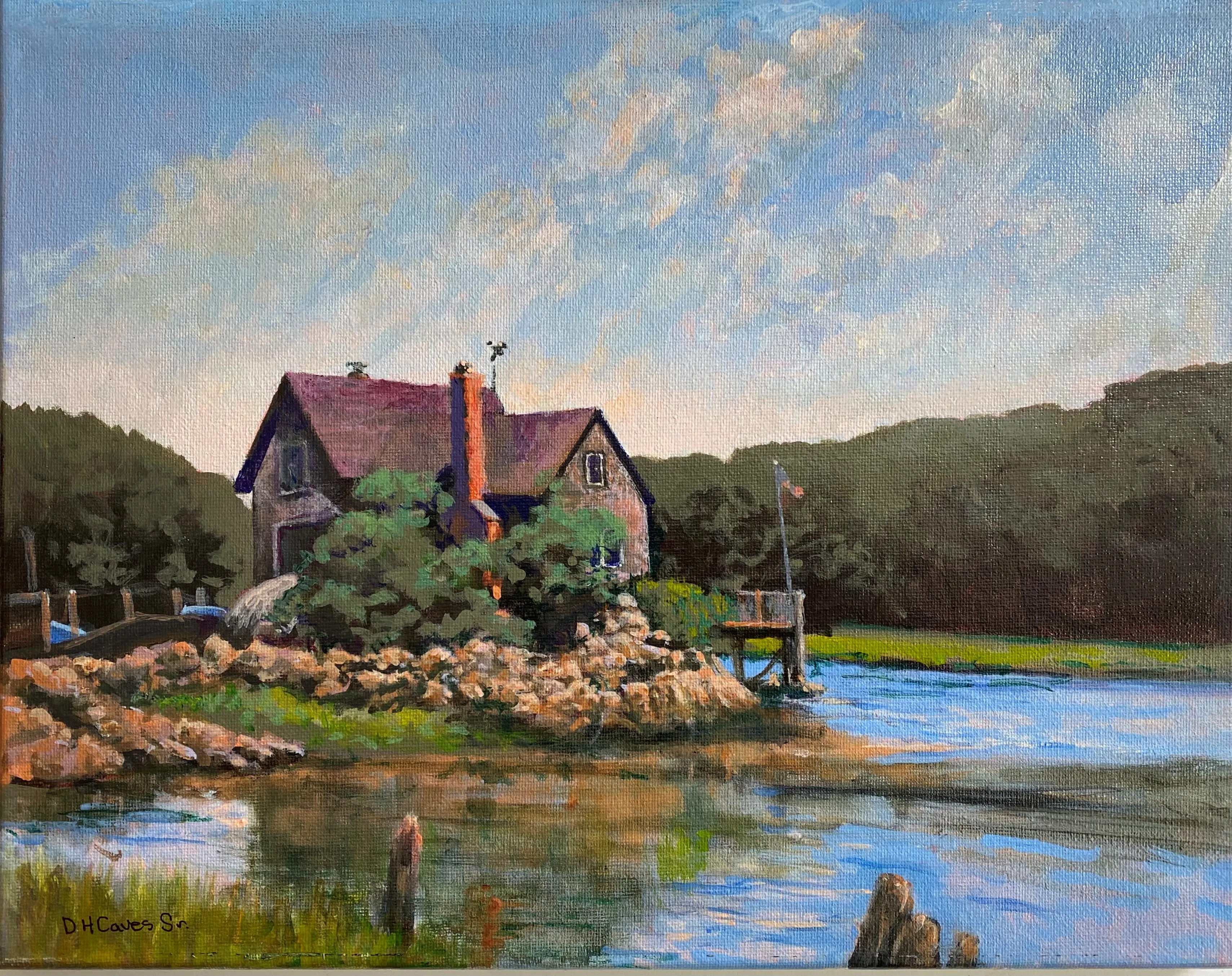
A landscape painting is more than a record of scenery. It is an artist’s decision about where to stand, what to leave out, how light moves through a place, and how that place might feel when you return to it. For a collector, that is why landscape can be such a lasting subject: it carries both a view and a way of seeing.
A painting where place is the main subject
Landscape painting centers on an environment rather than a single person or object. That environment may be a coastline, a farm road, a grove of trees, a city edge, a harbor, or a house set against weather. It can include people, boats, animals, or buildings, but they belong to a larger experience of place.
That definition is broad on purpose. A landscape does not have to be a postcard view, and it does not need to reproduce every detail exactly. The Metropolitan Museum of Art’s history of landscape painting in the Netherlands shows how artists have used nature, local identity, work, leisure, and physical sensation to make meaning. A painting may begin with a particular location, then become an arrangement of color, distance, rhythm, and memory.
For collectors, this breadth is useful. You do not need to recognize a shoreline or name a mountain range for a landscape painting to matter. A work can feel familiar because of its weather, its open distance, a dark tree line, or the small but steady presence of a house.
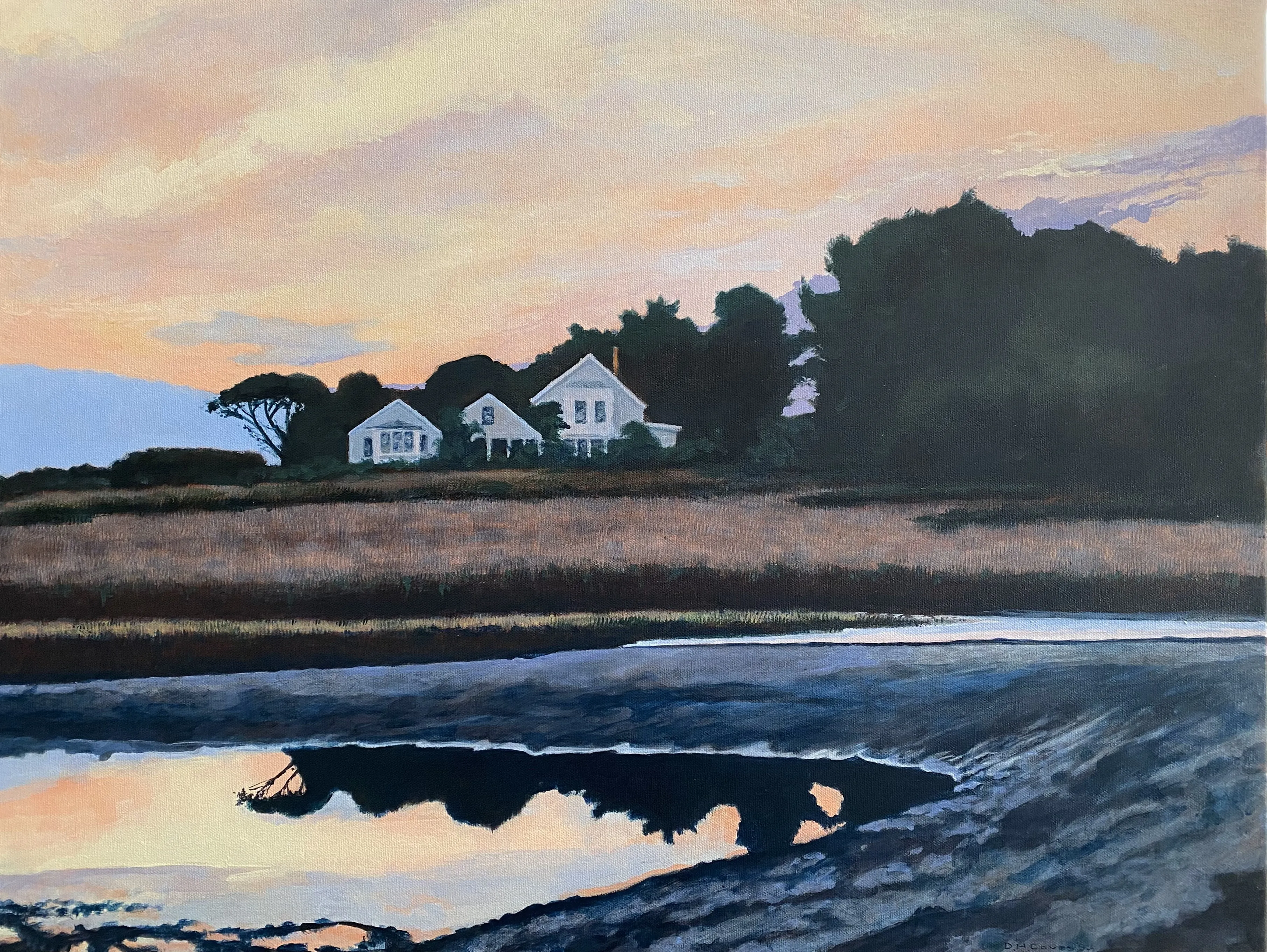
Look for the artist’s choices, not just the subject
Two painters can stand in the same field and make entirely different landscapes. One may open the sky until the land feels quiet and small. Another may push a fence, road, or group of trees forward until the painting feels immediate. One may describe every branch, while another uses a few broad marks to hold the changing air.
When looking at a landscape, begin with its structure. Where does your eye enter? Does it travel toward a horizon, circle around a building, or stop at a band of light? Are the forms calm and horizontal, vertical and architectural, or moving diagonally through the space? These decisions make the difference between a view you recognize and a painting you want to keep living with.
Color does more than identify a season. Warm passages can bring a painting forward, while blue, gray, and green distances can create room to breathe. A painting with a restrained palette may feel still and settled. One with a flash of orange or a sharp dark accent may feel like weather about to change. Notice which kind of energy belongs in the room you have in mind.
Light gives landscape its emotional weather
Landscape painting often turns on light. Early light can make a familiar street feel tentative. A high, hard sun may flatten distance and clarify every edge. Late-day color can make an ordinary building or field feel briefly theatrical. Rain, fog, and snow alter a view even further, softening forms or making a single shape stand out.
This attention to atmosphere has a long history. The Met’s account of the Hudson River School describes how American painters used light and air as central subjects in the nineteenth century, while later artists made the act of painting itself more visible. You can see the same basic question in a contemporary landscape: not merely “what is there?” but “what did it feel like to be there at this moment?”
That is why it helps to look at a painting longer than a first glance allows. Step back for the whole composition, then move closer to notice edges, layers, and the way the surface changes. The most rewarding work usually offers both: a clear feeling from across the room and small decisions that become more visible over time.
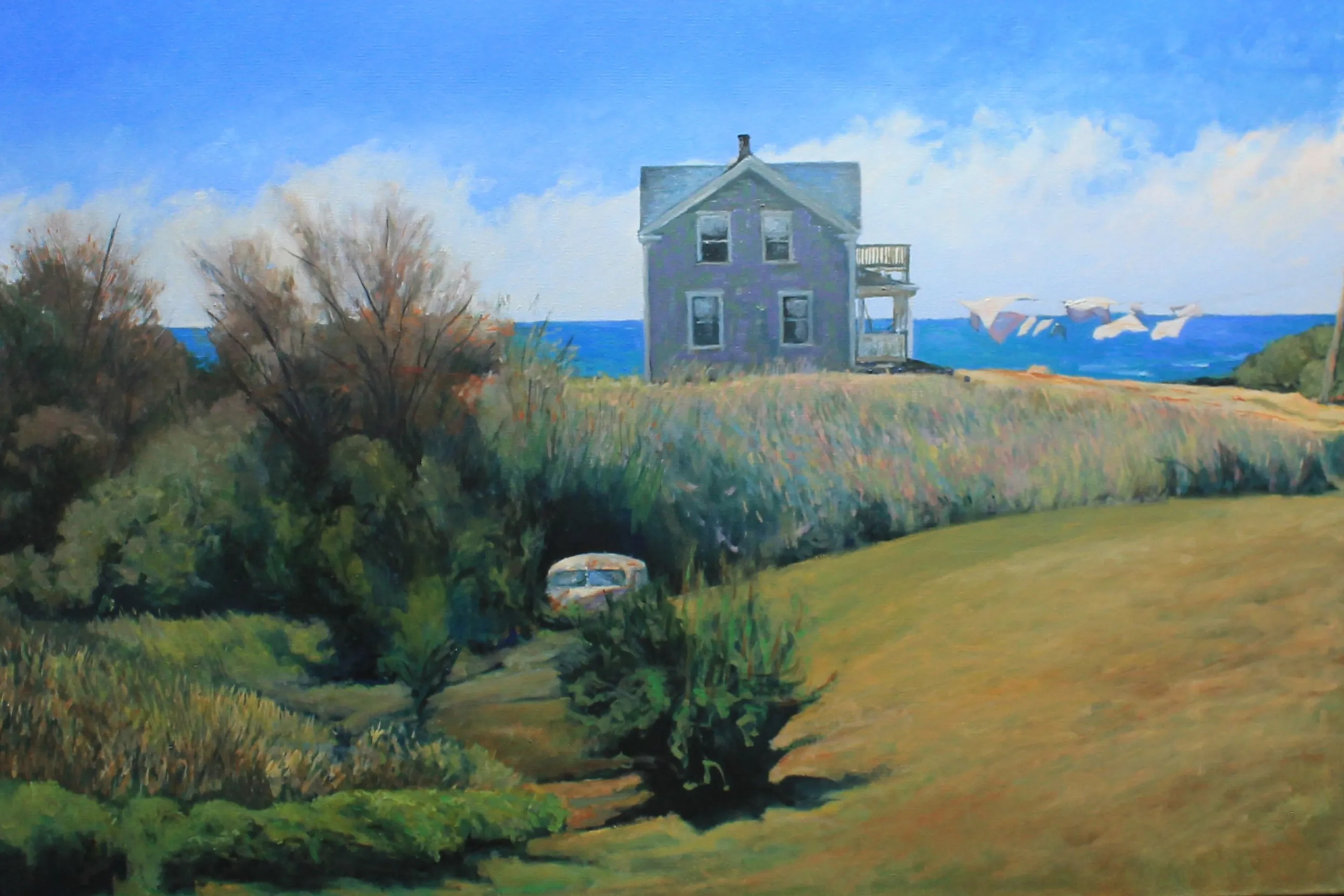
Landscape can be observed, remembered, or imagined
Some landscape paintings come from close observation. The artist may work outdoors, return with sketches, or study a place repeatedly as its conditions change. Others are made from memory, from several locations combined, or from an imagined view. Neither approach is more legitimate. They simply create different kinds of truth.
An observed landscape can carry the specificity of a place: the angle of a road, the shape of a harbor, the particular weight of coastal weather. A remembered landscape can distill what stays after details have faded. An invented one can make room for an emotional response that a literal view might not hold. The important question is whether the painting feels internally convincing.
Collectors sometimes assume a work is “less real” if an artist has adjusted a composition. In fact, editing is part of painting. A horizon may shift to make the sky more present. A house may become simpler so that light can do the work. A tree line may be moved to give the image a stronger rhythm. Those decisions are how a landscape becomes a painting rather than a report.
Why landscapes stay compelling at home
A landscape gives a room a place to look toward. It can extend a view in a city apartment, bring a coastal memory into an inland home, or add a quieter counterpoint to busy furniture and daily routines. Because it often contains distance, it can make even a modest wall feel less closed in.
The subject is also flexible. A coastal painting does not require a beach-house interior. A snowy field can work in a warm room. A landscape with a dark structure can give a pale room needed gravity. Instead of demanding that the painting match a theme, look for a relationship in mood, value, and pace. A painting that echoes the room too exactly may disappear. One that adds a considered contrast can remain alive.
Before falling in love with an image, check the wall. Measure the usable space, note doors and lamps, and view the room from its normal approach. The studio’s guide to choosing a painting for your home explains how to test scale and light, while the painting-lighting guide can help you think through glare and care.
Read a landscape from near and far
Give yourself two ways of looking before you decide. From across a room, notice the large shapes first: the horizon, the weight of sky and land, the brightest area, and the route your eye takes through the image. This is the experience you will have most often at home. If the composition feels balanced from the doorway, it is likely to hold the room well.
Then move closer. Look for the physical evidence of the painter’s work. Are edges softened or sharply stated? Is paint layered, scraped, transparent, or dense? Do small passages of color change the temperature of a larger area? These are not details reserved for specialists. They are part of what makes an original painting distinct from a reproduction, and they can become more rewarding after the painting has been with you for a while.
It can help to compare a few works without trying to rank them. One may feel immediate but reveal little after a minute. Another may take longer to understand, yet keep offering new relationships between sky, structure, and surface. Neither response is wrong. The useful question is simple: which painting has the kind of visual company you want in your everyday life?
If you are viewing online, ask for the information a screen cannot supply. Confirm dimensions, medium, availability, framing, and a close view of the surface. The studio’s guide to buying original art outlines the practical questions worth asking before a work comes home.
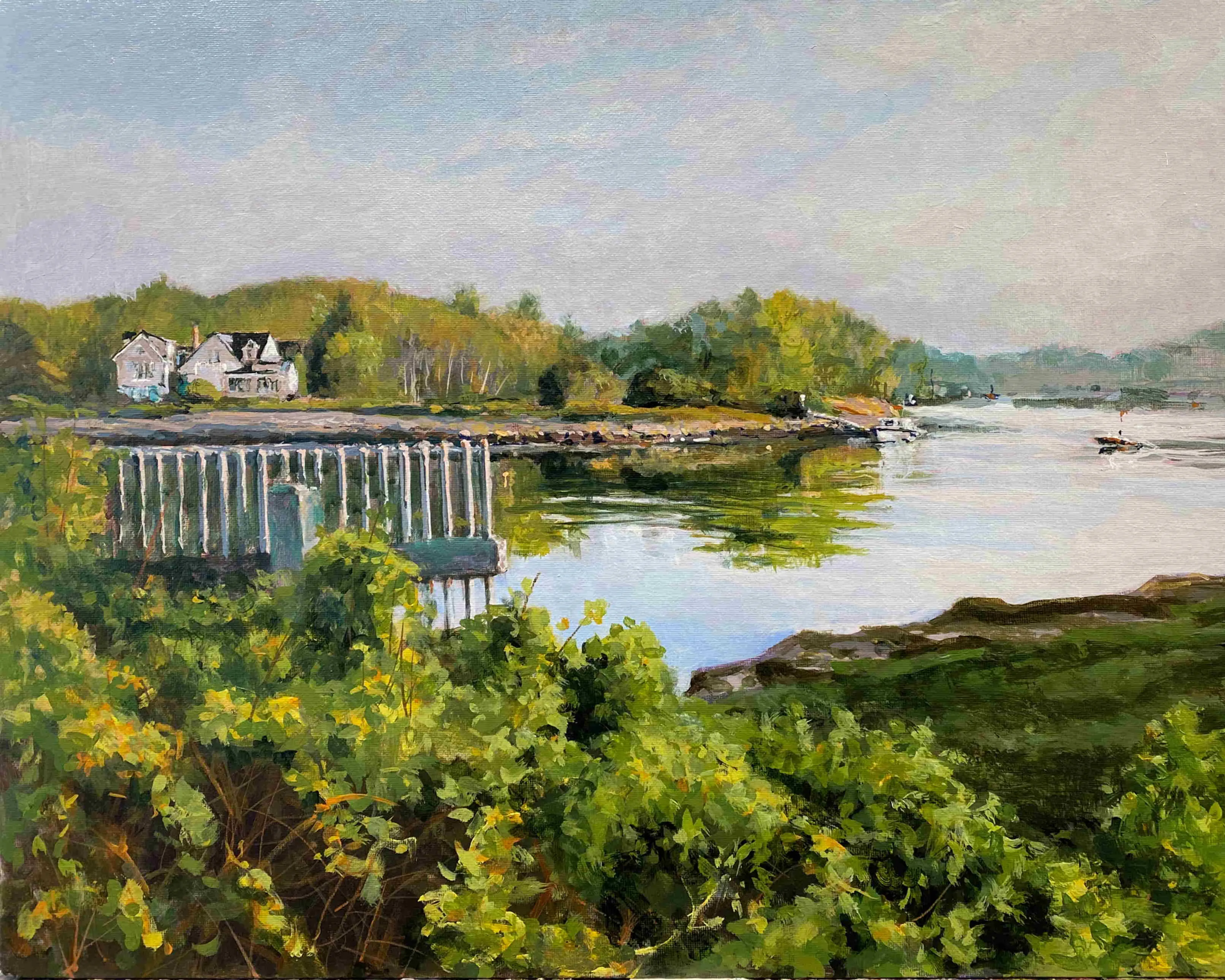
Choose the kind of landscape you want to live with
When you browse, make your first choice about feeling rather than size. Do you want an open horizon or an intimate view? A familiar architecture, a working waterfront, woods, fields, or a road that suggests movement? Do you respond to bright air, heavy weather, a calm shoreline, or a composition with more tension?
Then bring the practical questions back in. Compare the work’s dimensions with the furniture or wall around it. Ask whether the listed size includes the frame. Consider the medium and surface: oil, acrylic, work on paper, and printmaking each have their own physical character. If you are considering a substantial painting, make sure the wall and hardware can support it. The hanging guide gives a sensible place to begin.
Finally, give yourself permission to be selective. A landscape should not merely fill an empty rectangle. The right work often keeps changing slightly as the day changes, and it rewards the attention you give it. That is a stronger reason to buy than a perfect color match or a momentary trend.
Landscape painting in Doug Caves’s work
Doug Caves paints the weather, architecture, roads, shorelines, and working landscapes of New England with an eye for the moment when ordinary places become charged by light. The studio’s paintings are not generic scenery. They make room for particular structures, changing skies, and the feeling of being in a place long enough to notice what gives it character.
Explore the New England landscape collection or browse available paintings to see current originals and signed editions. For a wall tied to a remembered house, shoreline, or view, the studio’s commission process offers a way to begin with the place that already matters to you.
Frequently asked questions
What makes a painting a landscape painting?
A landscape painting makes a view of the natural or built world its main subject. It may show shore, weather, fields, woods, streets, houses, or water. People and animals can appear, but the sense of place, space, and atmosphere carries the picture.
Do landscape paintings have to look realistic?
No. Some are closely observed, while others simplify, exaggerate, or rearrange what the artist saw. A landscape can be expressive, abstracted, or imaginary and still be rooted in a feeling for place.
How do I choose a landscape painting for my home?
Start with the wall, the usual viewing distance, and the mood you want the room to hold. Then look for a painting whose light, pace, and scale keep your attention. Check the dimensions, medium, frame, and the conditions where it will hang before deciding.
Are seascapes a kind of landscape painting?
Yes. A seascape is a landscape painting centered on the sea, coast, harbor, or shore. It shares landscape painting’s concern with distance, weather, light, and the relationship between a viewer and a place.