A hallway is not just the space between rooms. It is the first sequence you move through at home, and often the first glimpse a visitor receives. The right painting can give that passage a destination. The wrong one can feel cramped, vulnerable, or easy to pass without seeing. Start with the route people take through the space, then choose art that can live there well.
1. Read the hallway as a route, not a blank wall
Before choosing hallway wall art, walk the path as you normally do. Come in through the door with a bag. Open the nearby doors. Notice where coats, shoes, umbrellas, or a chair collect. Look at the wall from the room at either end. A long, quiet passage and a busy entry hall may both have open walls, but they ask different things of a painting.
Measure the usable wall after allowing for switches, doors, trim, furniture, and the frame itself. In a narrow hall, the depth of a frame matters as much as its width. A substantial painting that projects into the path can be more exposed than it appears on a floor plan. The Canadian Conservation Institute advises against placing paintings where passers-by can brush against or touch them, especially in narrow corridors and stairwells. Its guidance on displaying paintings is a useful reminder that a beautiful wall is not always a safe wall.
That does not mean a hall must stay empty. It means the painting needs a role and a margin. A protected wall at the end of a passage can hold one work with real presence. A broader entry hall may support a group that creates rhythm as you move through it. A tight route may be better served by a small, well-framed work that rewards a closer look.

2. Choose a scale that gives the painting room to breathe
Hallway art is often seen in motion. That makes the overall shape of the work especially important. A vertical painting can echo the upward movement of a doorway, stair, or narrow wall. A horizontal landscape can slow a long passage and pull the eye toward a distant horizon. Neither format is inherently better. The best choice is the one that relates clearly to the available wall without turning the passage into an obstacle course.
Use painter's tape to mark the outside dimensions of the framed work. Then look from both ends of the hallway, not only from directly in front of the tape. Does the outline feel too small to register? Does it crowd a light switch, door casing, or console? Can someone walk past it with a coat or bag without worrying about the frame? These simple checks are more reliable than trying to judge scale from a product image alone.
One painting is often the clearest solution in a narrow hall. It creates a focal point without adding visual chatter. A pair or a small sequence can be right for a longer wall, especially when the works share a relationship in scale, subject, frame, or colour. Treat the entire grouping as one shape, as you would a collection on a larger wall. The studio's guide to arranging paintings on a wall can help you test spacing before making holes.
Small work deserves serious consideration here. Hallways are close-viewing spaces, so a compact painting can have more intimacy than it would above a sofa. A thoughtful frame and clear placement can give it enough presence. Browse the studio's small original paintings when the wall wants a concentrated visual pause rather than a large statement.
3. Hang for the view people actually have
Eye level is a helpful starting point, not a rigid rule. In a hallway, visitors may first see the work from an angle, while walking, or through an open doorway. Stand at the normal approach points and see where the painting's visual centre lands. A work placed too high can feel detached from the house. One hung too low may be easy to bump and hard to see over furniture or bags.
When there is a console, bench, or narrow cabinet below the work, treat it as an anchor. The painting and furniture should read as an intentional arrangement, with enough space between them to avoid a cramped look. On an uninterrupted wall, give the bottom edge enough clearance from everyday traffic. A child, pet, handbag, or laundry basket should not repeatedly meet the same corner of the frame.
Measure the actual hanging point, not only the top of the frame. Wire, D-rings, and the frame's depth all change where the hook needs to sit. For a step-by-step approach, the studio's painting-hanging guide explains how to work from the frame's centre and use hardware that suits the work's real weight. If the wall is plaster, masonry, unfamiliar construction, or the piece is substantial, a qualified installer is a sensible choice.
The Canadian Conservation Institute recommends selecting hardware for the combined weight of the painting and frame, using two points of attachment for most moderate-weight work, and checking wires and hardware over time. Its painting-care guidance makes the point plainly: even a light work deserves secure support. A hallway offers plenty of accidental contact, so the hanging plan is part of the visual plan.

4. Let the hallway introduce the mood of the home
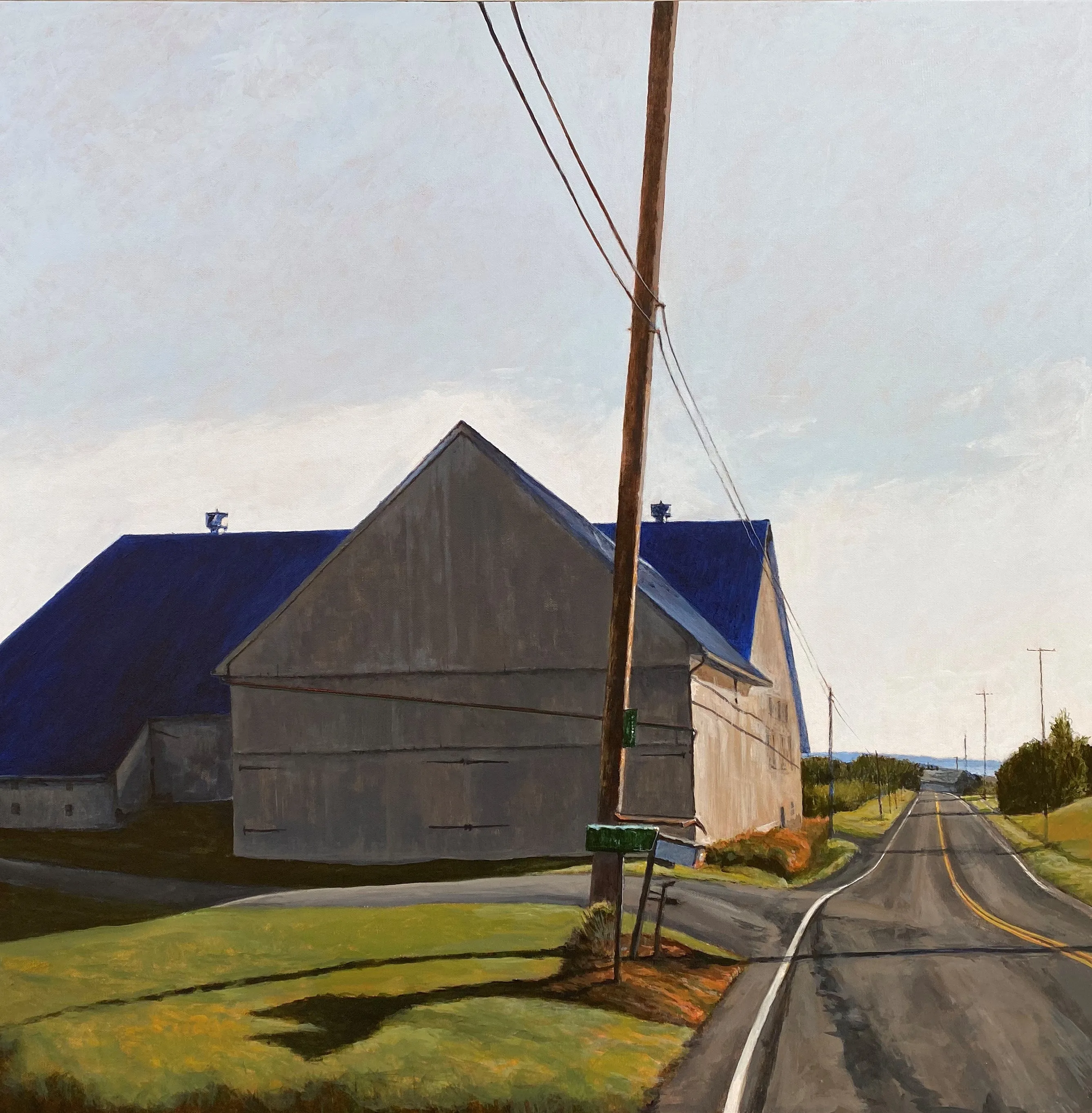
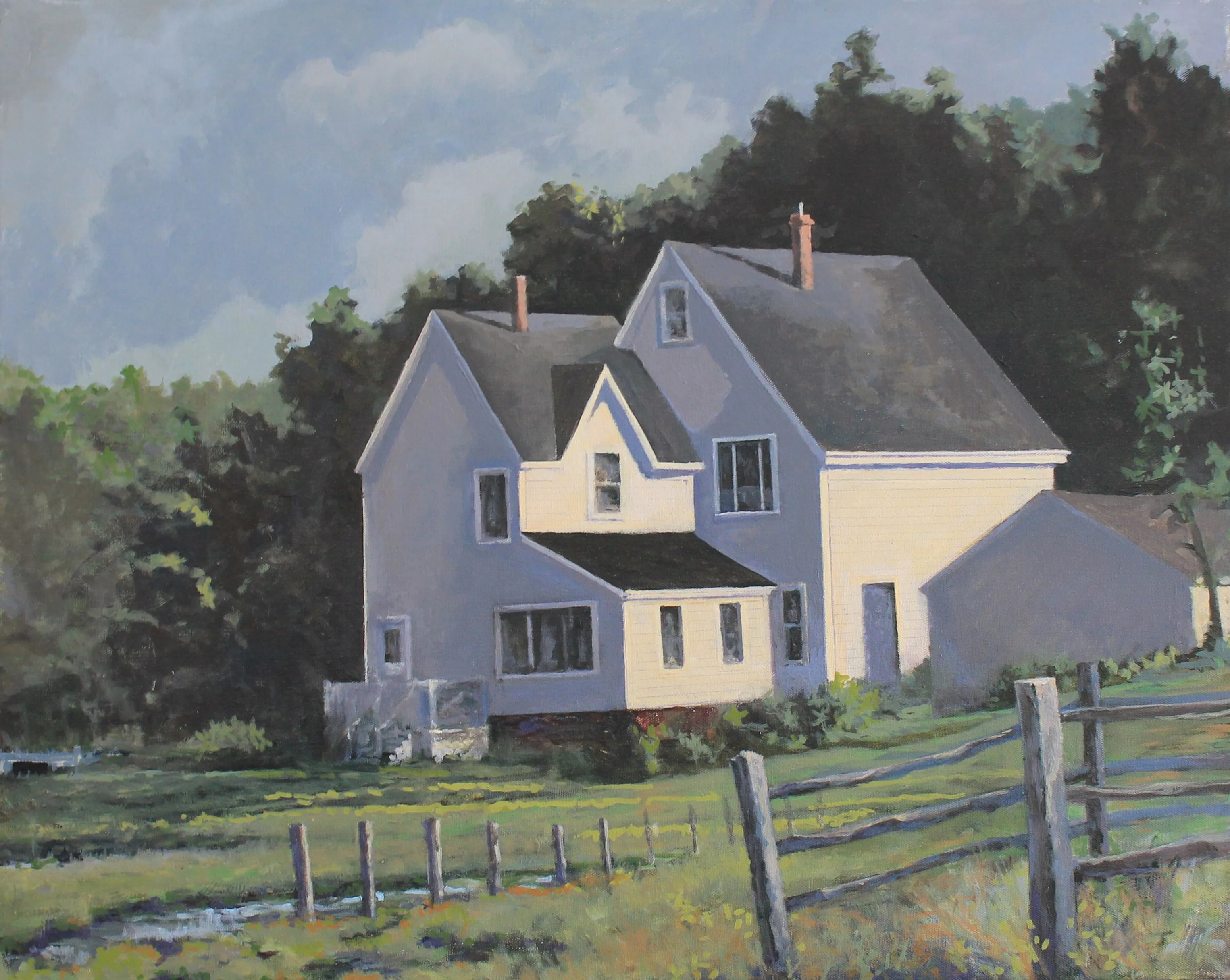
A hallway need not preview every room exactly. Its job is simpler and more interesting: it can set a tone. A bright shoreline can make a dim entry feel more open. A weathered house or a road through a field can give the first few steps through the home a sense of place. A quieter painting can slow the transition from outdoors to indoors.
Choose a relationship rather than a colour match. Look at the temperature of the nearby walls, woodwork, and light. A painting with cool sky and water may give warmth-rich woods some relief. A work with late sun can bring life to a pale, restrained entry. The important thing is that the painting feels deliberate from the first room and remains interesting as you pass it each day.
Hallway lighting deserves a real test. Many halls rely on a ceiling fixture, so a painting may look very different by day and at night. Watch for glare from a glass-fronted frame, a window at the far end of the hall, or a bright fixture opposite the wall. The guide to lighting a painting offers practical ways to assess reflected light, angle, and gentle illumination. Avoid aiming a hot or intense light directly at an original just to make it more visible.
Direct sun, vents, radiators, and exterior walls can also turn a promising location into a poor long-term home for a painting. The Smithsonian's painting-care advice recommends a secure wall away from heat and direct sunlight, with relatively stable humidity. These are not gallery-only concerns. They are simple ways to let an original keep its colour, surface, and presence in the home.
5. Protect the painting from the life of the hallway
Hallways collect motion. Doors swing open, guests arrive with coats, children run through, and furniture occasionally has to make its way past the wall. That activity is part of what makes the space useful, but it should affect what you hang and where.
Keep a painting clear of doors, hooks, furniture corners, umbrellas, and the spot where bags naturally land. If the only open wall is beside a coat rack or opposite a narrow turn, a reproduction or more durable decorative object may be the sensible choice. Save the original for a wall where it can be seen without becoming the thing everyone carefully squeezes around.
Frames provide physical protection and visual definition, but they do not make a painting invulnerable. A sturdy frame with secure hardware helps, while a light, stable, indirect location does the larger job. The studio's guide to framing a painting can help you think about proportion, support, and the role of the frame in a real room.
Give the work one last practical review after it is installed. Open the nearby doors fully. Carry a bag through the hall. Look at the wall in morning and evening light. If the frame feels exposed, catches a glare, or makes the route tighter than expected, move it early. A painting has more than one possible home, and the best location is the one where it can be enjoyed without constant concern.
6. Build a hallway around a painting worth returning to
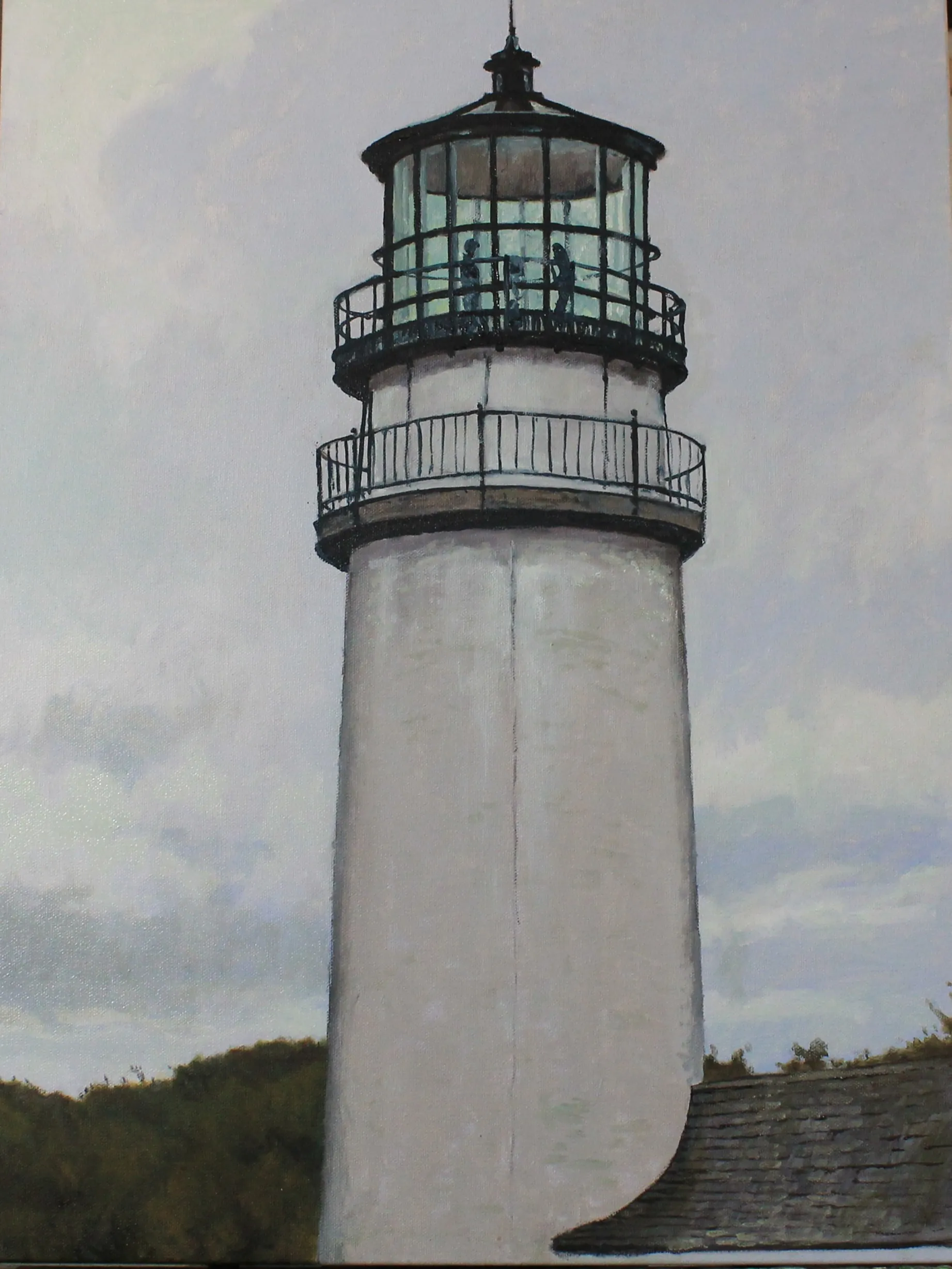
The strongest hallway art does not try to explain the whole house in one glance. It gives the eye somewhere to go. A painting of New England weather, a familiar house, a road, or a stretch of water can make a passage feel less like leftover space and more like a considered part of the home.
Doug Caves's paintings are shaped by changing light, working landscapes, coastlines, and houses with their own quiet history. Those subjects can bring depth to an entry or corridor without requiring a themed room. Start by looking for the work that keeps your attention, then test it against the wall, light, and traffic of the hall.
Explore the available paintings for current originals and signed editions. If you are choosing between works, the studio can help compare framed dimensions, scale, and placement. Contact the studio with a photograph of the hallway and the wall measurements, and the conversation can begin with the real space rather than guesswork.
Frequently asked questions
What size art works best in a hallway?
Start with the usable wall, not the total length of the corridor. A single painting should leave clear breathing room around its frame and should feel readable from the approach. In a narrow passage, a smaller vertical work or a carefully spaced group is often more convincing than one oversized piece.
How high should hallway wall art hang?
A useful starting point is to place the visual center near ordinary eye level, then adjust for the architecture and the way people move through the hall. Check the view from both directions, and make sure the lower edge is not at the height of bags, furniture, or a swinging door.
Can I hang an original painting in a narrow hallway?
Yes, if the work has enough clearance from people, doors, furniture, and coat hooks. A narrow corridor can be a risky setting for a projecting frame or a large canvas. Choose a protected wall, use sound hardware, and consider a less vulnerable work when traffic is constant.
Should hallway art match the rooms nearby?
It should relate, not match. A hallway can introduce the feeling of the home before a room opens up. Look for a connection in light, scale, colour temperature, subject, or mood, rather than trying to repeat every finish and colour in the adjacent rooms.