An entryway asks a painting to do a particular job. It meets you at the change from outside to inside, gives visitors their first feeling for the home, and has to hold its own among doors, coats, keys, light switches, and everyday motion. The right work makes the arrival feel considered. Start with the route through the room, then choose a painting that can welcome people without getting lost or put at risk.
1. Look at the entryway from the front door
Stand at the threshold before measuring anything. What wall does the eye meet first? What do you see after the door opens? Is there a console, bench, stair, or doorway that already gives the space a strong direction? An entryway is rarely a blank rectangle. Its architecture and the way people move through it should decide where art belongs.
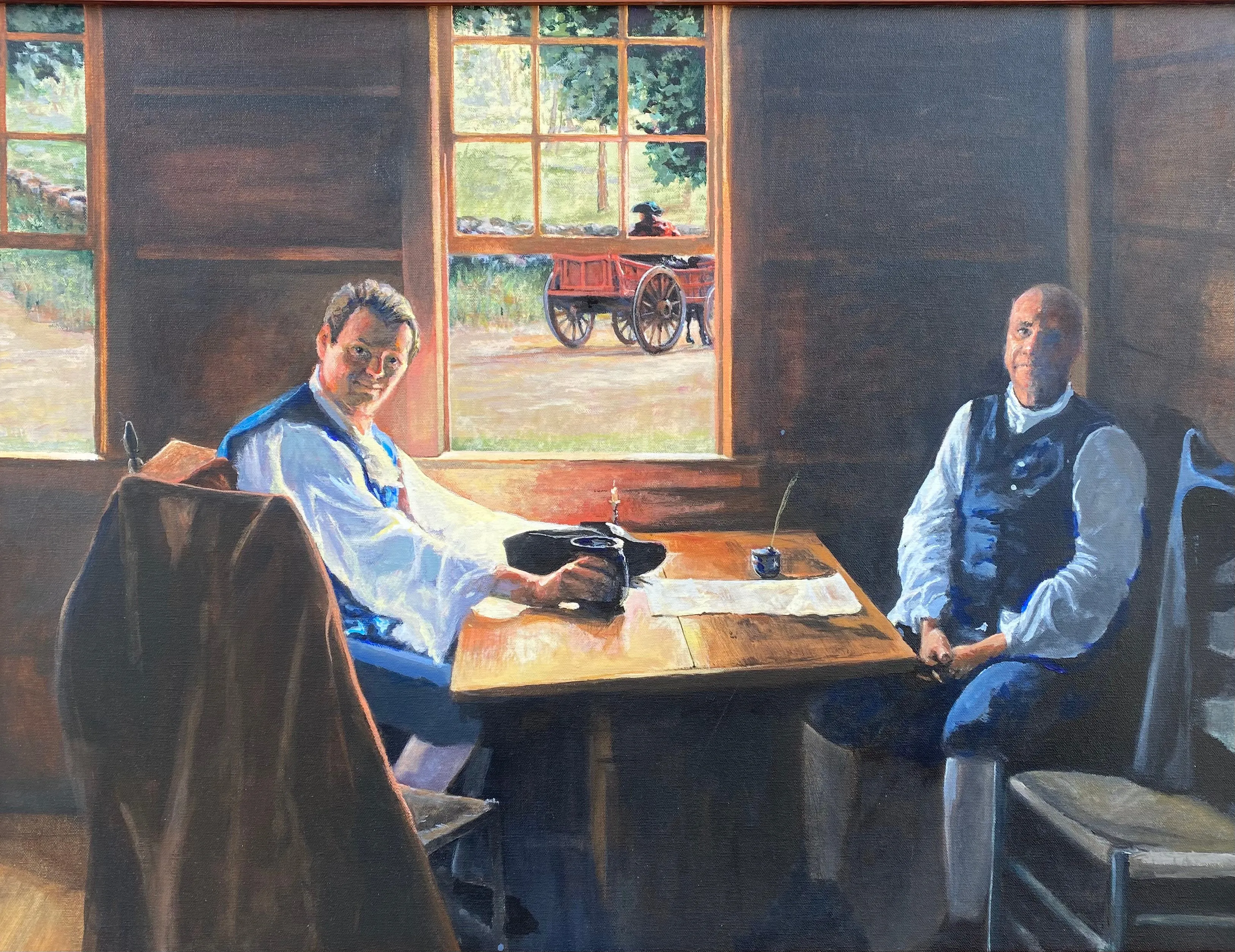
One painting on the wall opposite or beside the door can give the arrival a clear focal point. A work near a bench or console can create a small, settled composition. A tall, narrow wall may want a vertical painting that acknowledges the height of the space, while a broad wall can carry a horizontal landscape that gives the eye somewhere to travel. The goal is not to fill every open surface. It is to give the first view a sense of intention.
Before committing, open the door fully and walk in carrying the things you usually carry. Check the view from the threshold, from the path to the next room, and from the stairs if they meet the entry. The work should be visible where it matters, not hidden behind an open door or crowded by a coat rack. This first walk-through is more useful than any universal decorating rule because it reflects the entryway you actually live with.
2. Choose scale from the usable wall
Entryway wall art often looks too small because people measure the whole room instead of the visible wall. Measure the space that remains after doors, trim, switches, furniture, and lamps have taken their place. Then think about the outside dimensions of the framed work, not only the image itself. A frame changes both the visual scale and the physical clearance a painting needs.
Painters and designers often use proportions as a starting point, but an entryway is too specific for a formula to make the decision alone. A large, open wall may suit one confident painting. A tight wall between doors may feel better with a smaller work that has generous margins. If a console sits below, treat the furniture and painting as one arrangement. The work should feel connected to the furniture without appearing pinned too close to it.
Make a full-size paper or painter's-tape outline of the framed dimensions. Leave it up for a day or two, then see it in morning light, evening light, and during an ordinary arrival home. Does the outline hold the wall from the door? Does it compete with a mirror, lamp, or stair rail? Does the space still feel easy to use? The outline reveals problems before the first hanging hole is made.
For a larger wall, a broad landscape can make an entry feel more generous by offering distance beyond the architecture. For a compact space, a smaller painting can be remarkably strong because it is seen at close range. The studio's small original paintings are worth considering when the entry needs a close, quiet point of focus rather than a large statement.
3. Let the painting set the mood, not match the doormat
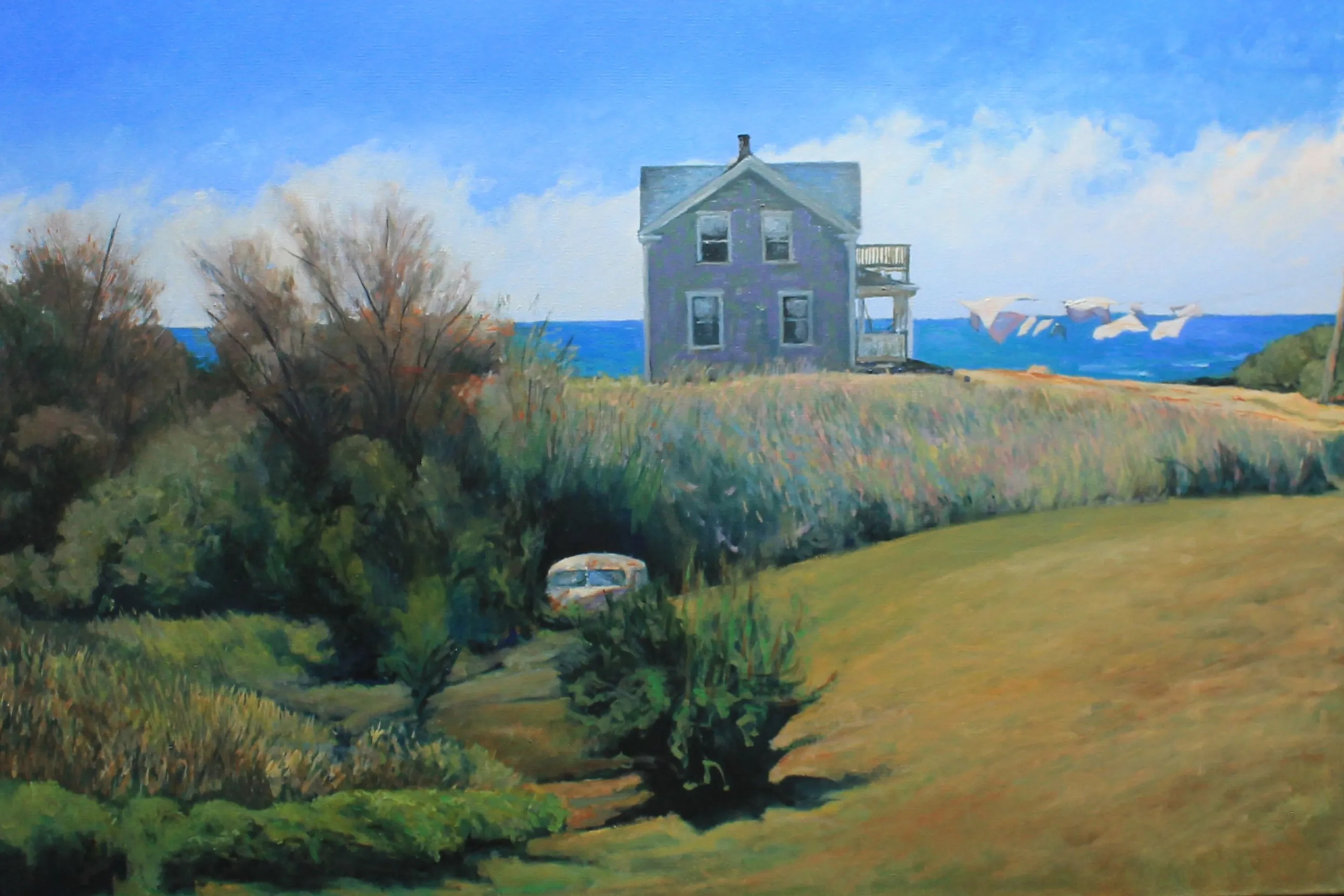
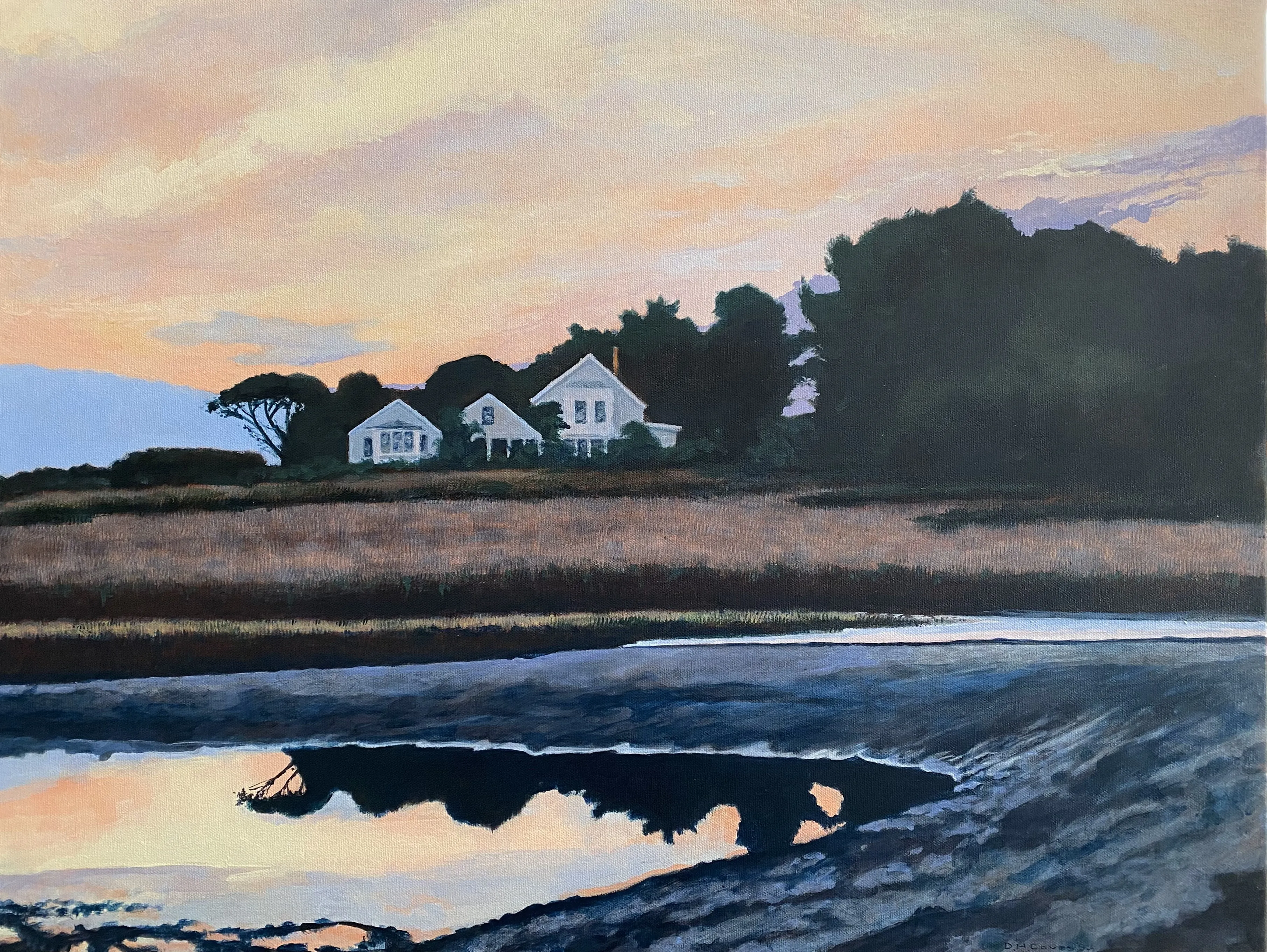
An entryway introduces the home, so its art can establish an emotional direction before a visitor reaches the living room. A bright shoreline can make a shadowed entry feel more open. A familiar house, road, field, or weathered building can make the space feel rooted. A quieter work can create a pause after the noise of the street.
Do not ask the painting to repeat every finish in the room. Exact matching can make art feel like an accessory rather than something worth returning to. Look instead for a relationship in light, value, texture, or mood. Cool blues and greys may give warmth-rich wood a little air. A painting with late sunlight can give a restrained white or stone entry a needed note of warmth. A dark work can make a bright wall feel deeper, provided it remains visible from the door.
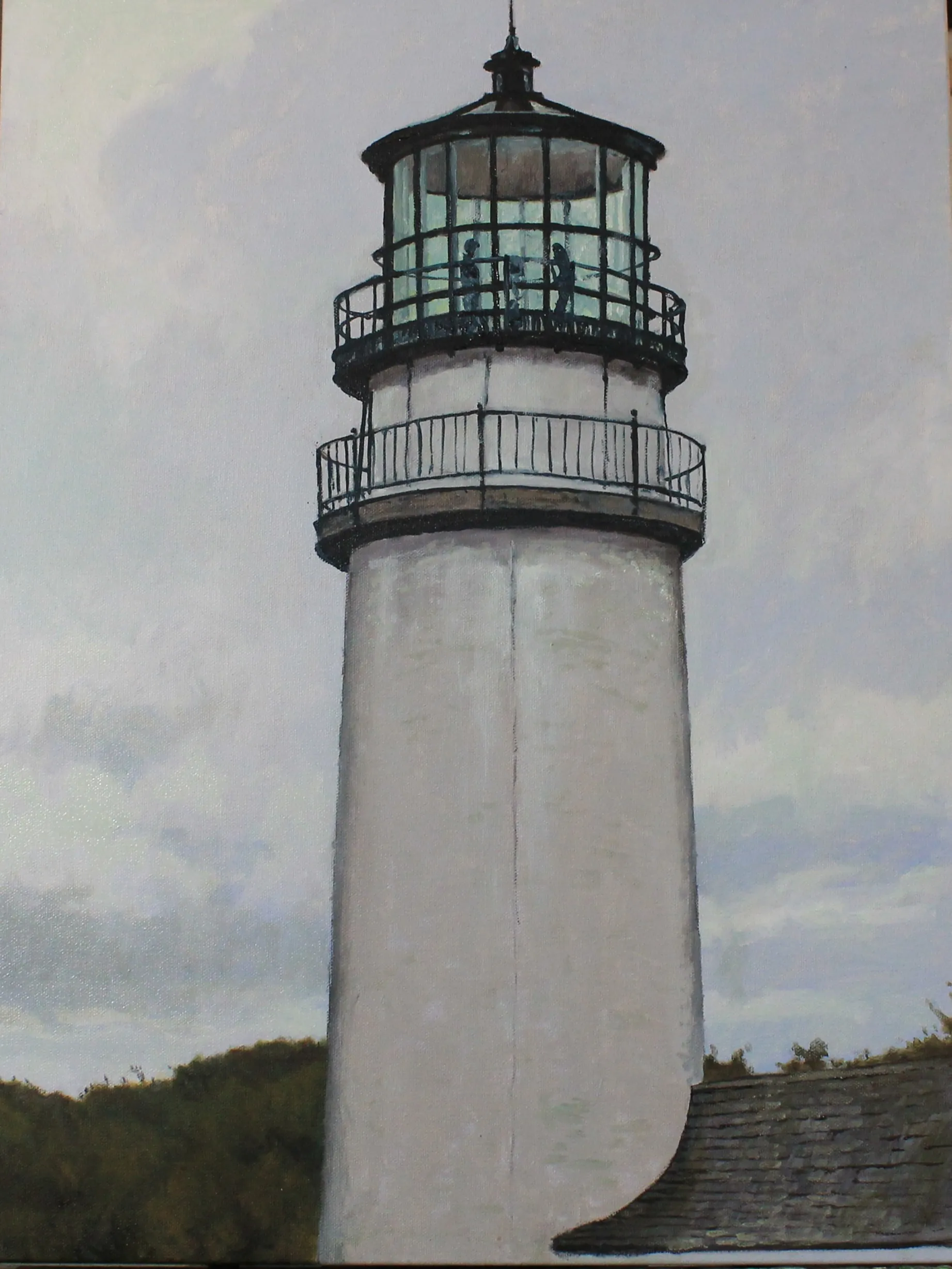
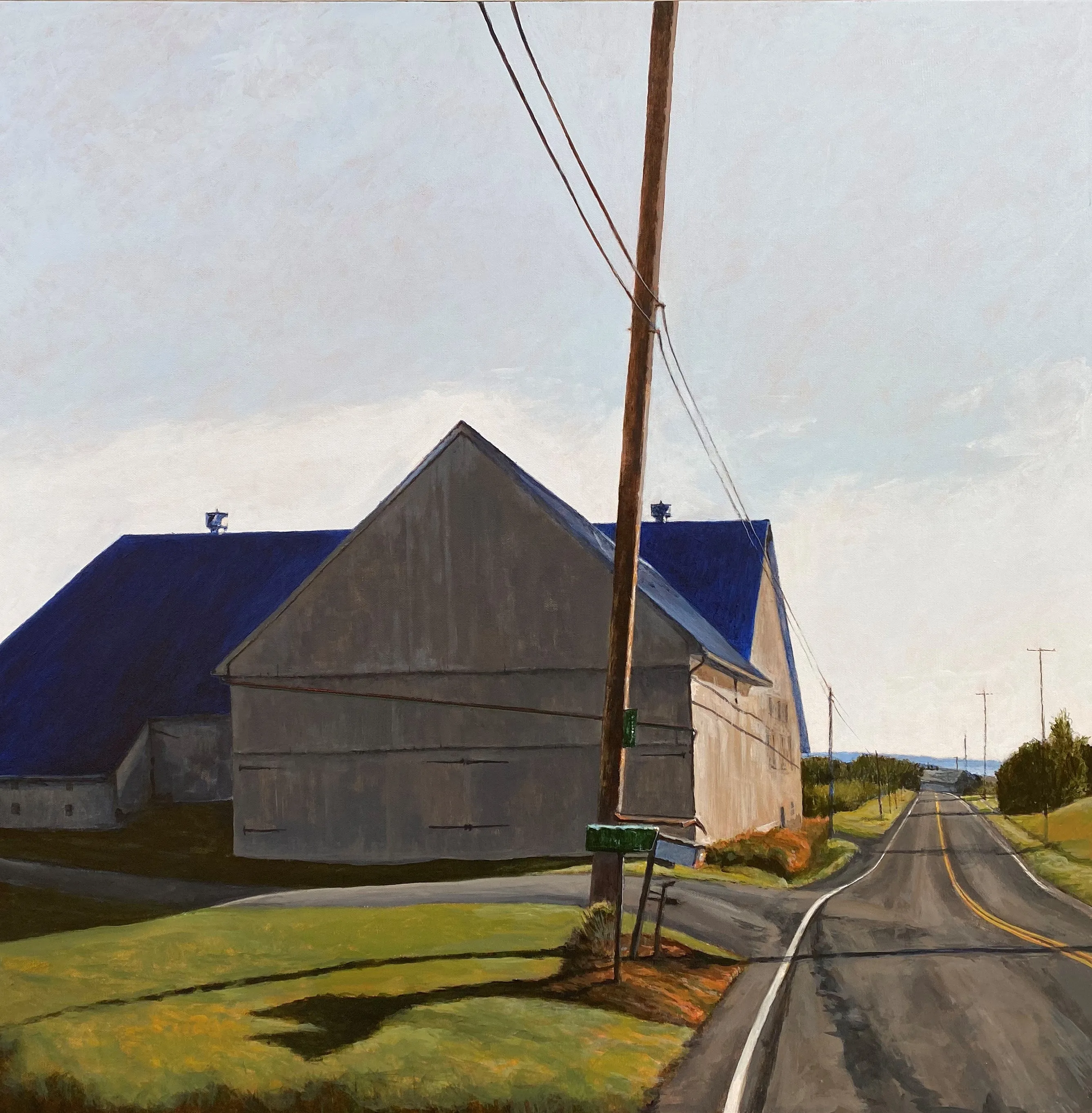
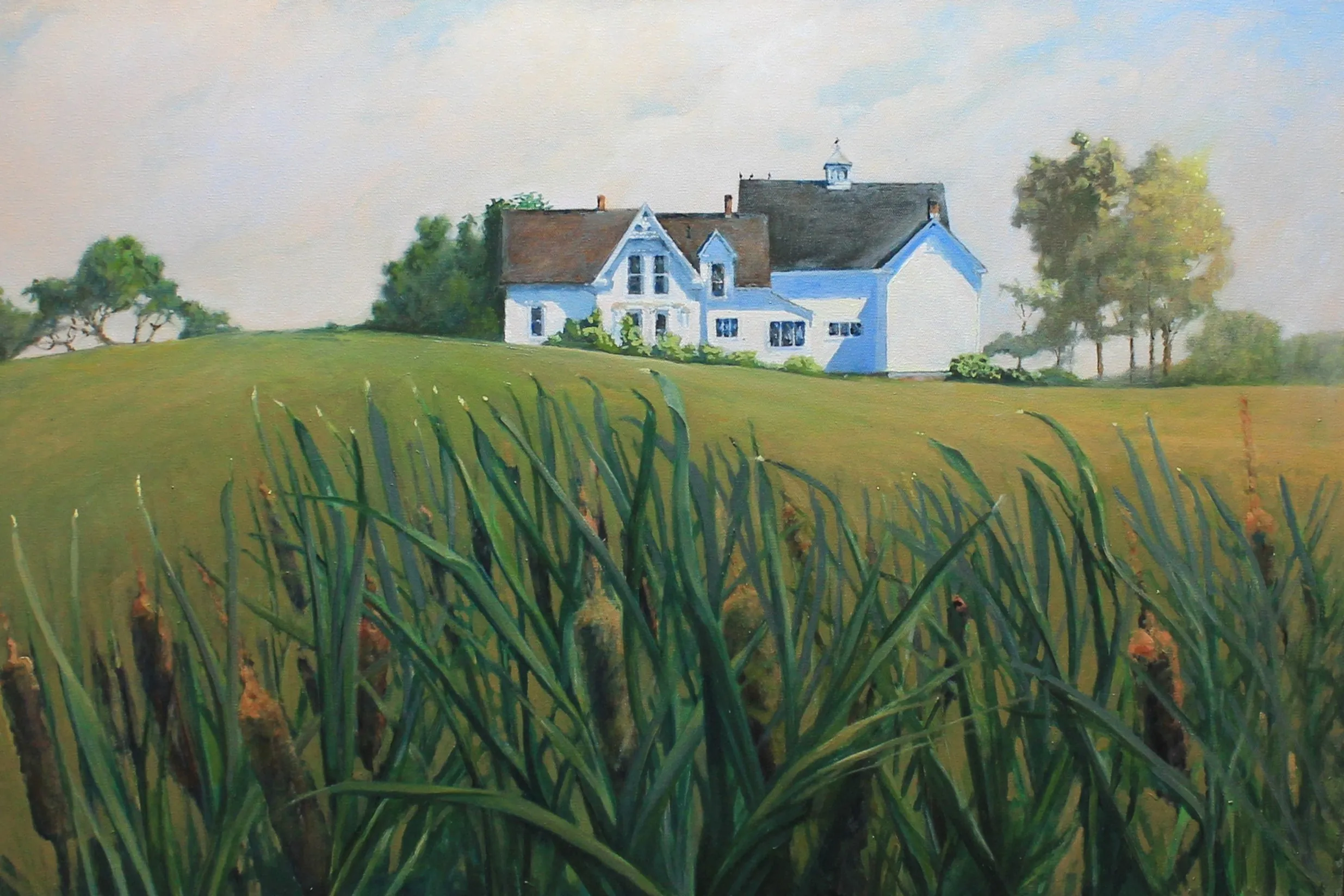
Think about the rooms beyond the entryway, too. The painting does not need to match them, but it can make the transition feel intentional. Doug Caves's work draws on New England coastlines, roads, fields, changing weather, and buildings with their own history. Those subjects can bring a sense of place to an arrival space without turning it into a theme room. Browse the studio's original landscape paintings when you want a work that can open the entry outward.
4. Test the light before you choose the wall
Entries can change dramatically through the day. A glass front door may throw strong light across one wall in the morning. A window, sidelights, or a bright fixture can create glare on a framed surface at night. Visit the proposed wall at the times you actually use the space, then look at it from the door and from the usual approach.
Direct and excessive daylight can be hard on artworks over time, even when a work is framed behind ultraviolet-filtering material. The Museum of Modern Art recommends avoiding direct, excessive daylight and keeping art away from locations with high humidity, leaks, or sharp changes in temperature. Its conservation guidance is especially useful for entry walls near exterior doors, windows, and heating or cooling equipment.
Look for a wall with stable, indirect light rather than solving a difficult location with a stronger lamp. If you use a picture light, aim it so it reveals the image without a hot spot or reflection. The studio's guide to lighting a painting explains how to check angle, glare, and heat before you install a fixture. A painting should remain easy to see in the evening without becoming the brightest object in the room.
Also pay attention to the condition of the wall itself. A cold exterior wall, a radiator, a vent, or a damp corner deserves extra caution. Stability is more valuable than a dramatic location. If the most visible wall has persistent moisture, direct sun, or heat, move the original to a safer location and let another object take the exposed spot.
5. Protect the painting from daily arrivals
An entryway is also a working part of the house. Wet umbrellas, bags, boots, keys, pets, guests, and swinging doors all pass through it. That does not rule out original art. It means placement and hanging hardware matter as much as visual taste.
Choose a wall that keeps the frame clear of doors, coat hooks, furniture corners, and the natural path of a person carrying a bag. The Canadian Conservation Institute advises against hanging paintings where passers-by can brush against them and recommends avoiding contact with doors, curtains, furniture, radiators, vents, and fireplaces. Its display guidance for paintings makes a useful distinction for a home: a visible wall is not automatically a safe wall.
Hang the work securely for its actual framed weight and the wall material. Use the studio's painting-hanging guide to calculate the right hook position instead of guessing from the top edge of the frame. If the wall is plaster, masonry, or unfamiliar construction, or if the work is substantial, an experienced installer can save both the painting and the wall from an avoidable mistake.
Give the installed painting one final test. Open doors fully. Bring in groceries or a suitcase. Look at the lower frame edge from the normal route. If you find yourself protecting it every time you enter, the painting needs a different wall. An original should become part of daily life, not a fragile obstacle at the front door.
6. Choose a painting that rewards the return home
The best entryway wall art does not need to explain the whole house. It needs to make the first few steps feel more personal. Choose the work that holds your attention after the initial glance, then make sure the wall gives it the scale, light, and protection it deserves.
A landscape can be especially generous in this setting. It can turn a small arrival space into a view of water, weather, road, or field, and it can continue to change as the daylight changes around it. If a particular place, house, or remembered view belongs in the entryway, a commissioned painting can begin with that connection and the exact dimensions the wall requires.
Explore the current collection for available originals and signed editions. To compare framed dimensions, placement, or the character of two works, contact the studio with a photograph of the entryway and its measurements. The best choice begins with the real threshold you cross every day.
Frequently asked questions
What size wall art works best in an entryway?
Start with the wall and the furniture that shares it. A painting should be large enough to register from the door while leaving clear space around the frame, switches, trim, and nearby furniture. Mark the framed dimensions with painter's tape and look at the outline from the threshold before deciding.
Where should I hang a painting in an entryway?
The strongest location is often the wall that is naturally visible from the front door or the place where the eye comes to rest after entering. Avoid a wall that a door covers when open, a route where bags and coats repeatedly brush the frame, or a spot near direct heat, dampness, and strong sun.
Should entryway art match the rest of the house?
It should make a connection, not a perfect match. An entryway painting can introduce the light, colour temperature, or sense of place that carries through the home while still having enough character to feel memorable on its own.
Can I put an original painting near a front door?
Yes, when the wall stays dry, stable, and clear of swinging doors, wet coats, and constant contact. If rain, snow, muddy shoes, or crowded arrivals make the area unpredictable, choose a more protected wall for an original and reserve the exposed spot for a less vulnerable piece.