A fireplace naturally becomes the centre of a room, so the wall above it is tempting territory for a painting. It can be a beautiful place for art, but it is also a location where decoration and preservation have to agree. Before choosing the frame or reaching for a drill, find out what the fireplace does to that exact wall. An original painting deserves a decision based on the room you have, not a rule borrowed from someone else’s mantel.
1. Start with the fireplace, not the blank wall
Look at the fireplace on an ordinary day and on a day when it is actually in use. Is it wood-burning, gas, electric, or decorative? Does it have a substantial mantel that directs heat forward, or does the wall rise directly from the opening? Does the room ever smell of smoke after a fire? The answers matter more than the size of the empty space above the surround.
For an original painting, the safest answer is often another wall. The Canadian Conservation Institute’s guidance for caring for paintings advises avoiding direct sunlight and sources of heat, and stresses the value of stable conditions. A fireplace can introduce heat, soot, and shifts in the nearby air, even when it looks like the obvious focal point. A painting is not just an image on a wall. Its canvas, panel, paint layers, varnish, frame, and hanging hardware all respond to the environment around them.
That does not mean every fireplace wall is automatically unusable. Some electric units stay cool at the wall, and some carefully designed gas installations move heat well away from the overmantel. But that is a feature of the specific appliance and installation, not a promise made by the word “fireplace.” Check the manufacturer’s guidance for the unit, and do not treat a clearance intended for building materials as proof that an original painting will enjoy the location.
If the fireplace is active, run it as you normally would. After it has been on for a while, carefully assess the intended frame area. If the wall feels warm, the space is not the right home for a valued original. The simplest solution is also the best one: give the painting a stable wall elsewhere in the room, where it can become a focal point without accepting a hidden conservation risk.
2. Choose what belongs over a working fireplace
There is a useful difference between what can make a mantel look finished and what is wise to place above a heat source. A prized original, an older family painting, work on paper, or a painting with a vulnerable surface deserves the most stable place available. Do not make the fireplace wall its proving ground.
If the wall runs warm, receives smoke, or changes noticeably when the fire is lit, choose another focal point. A mirror can work well when it reflects a window, a garden, or another view worth bringing into the room. A replaceable decorative object may be suitable when the visual goal matters more than long-term permanence. Sometimes the best decision is to leave the overmantel clear and let the fireplace’s material, stonework, or architectural line do its own work.
When the overmantel is demonstrably cool and stable, use the same care you would use for any painting wall. Avoid direct sun, check for glare after dark, and keep picture lights from heating the frame or making the surface hard to see. The Canadian Conservation Institute’s notes on light damage explain that heat sources and fireplaces can contribute to damaging environmental fluctuations. That is why a wall test is more useful than a decorator’s general reassurance.
Be especially cautious with a wood-burning fireplace, a fireplace with no meaningful mantel, or a location where soot is visible. Smoke deposits and dry, heated air make a poor partnership with an original surface. A room can still have art. Move the important painting to the adjacent wall, then use the fireplace wall for an option whose loss would not change the collection.
3. Find the right scale before choosing a height
Once the wall passes the practical test, scale is the next decision. The fireplace, mantel, and chimney breast already form a strong shape. Art above them needs enough presence to belong to that shape rather than looking like an afterthought. The most common visual problem is not art that is too large. It is a small work floating above a broad mantel with too much blank wall around it.
Start by measuring the mantel, firebox, and usable overmantel area. Then mark the outside dimensions of a prospective framed work with painter’s tape. Include the frame, not only the painting itself. Stand in the doorway, sit in the main seating position, and look at the room from the angle where you see the fireplace most often. The paper outline will show whether the work feels connected to the architecture or marooned above it.
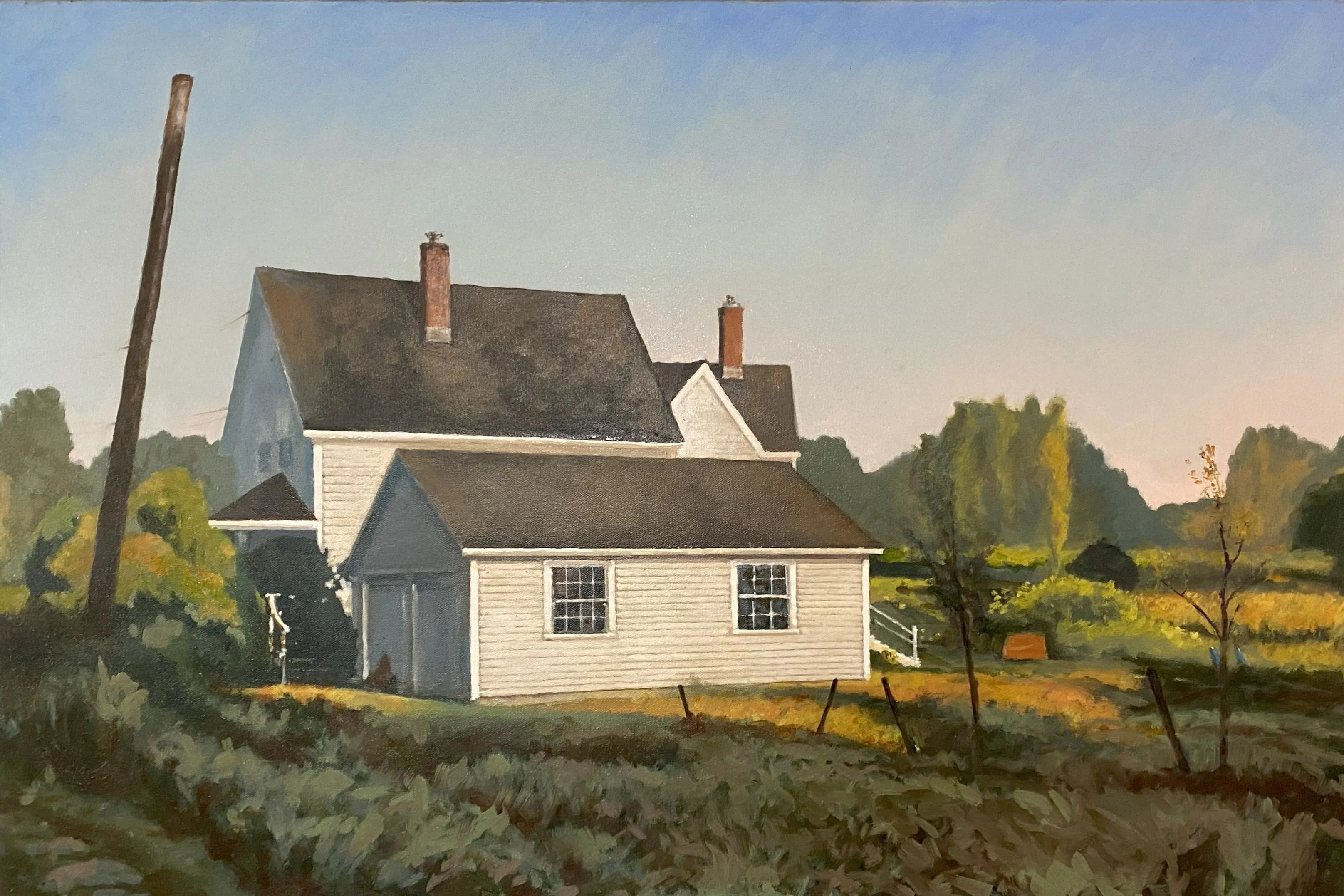
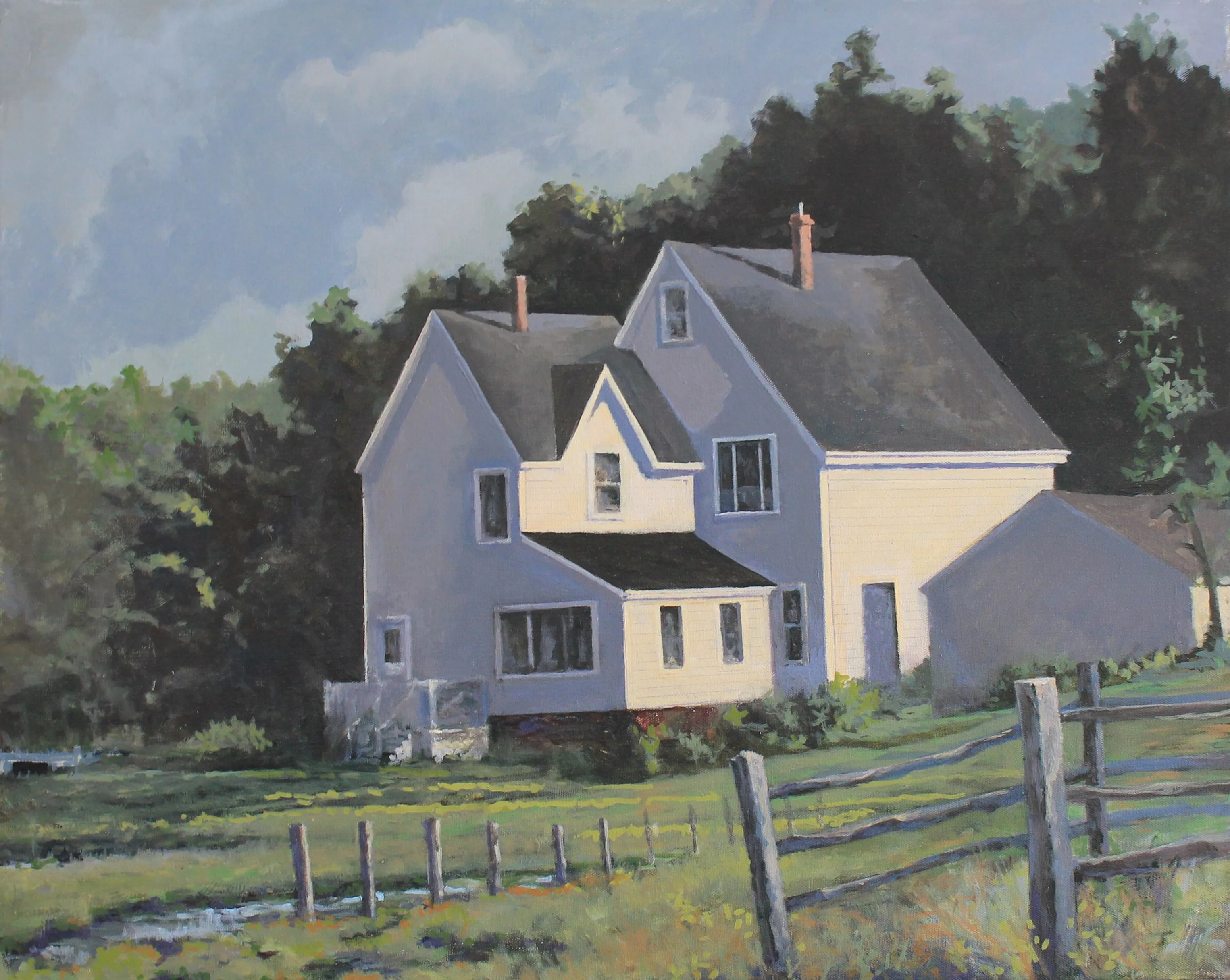
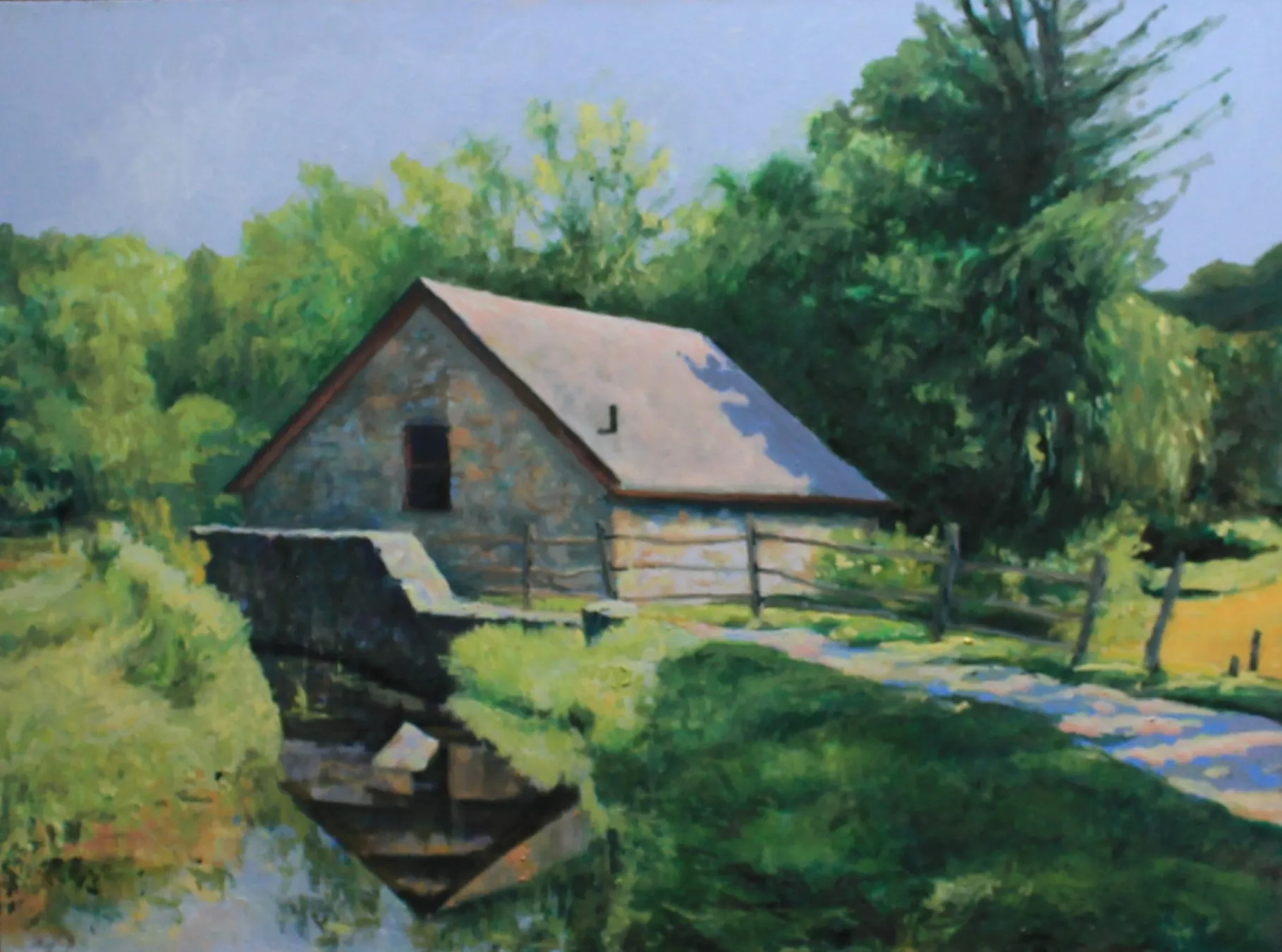
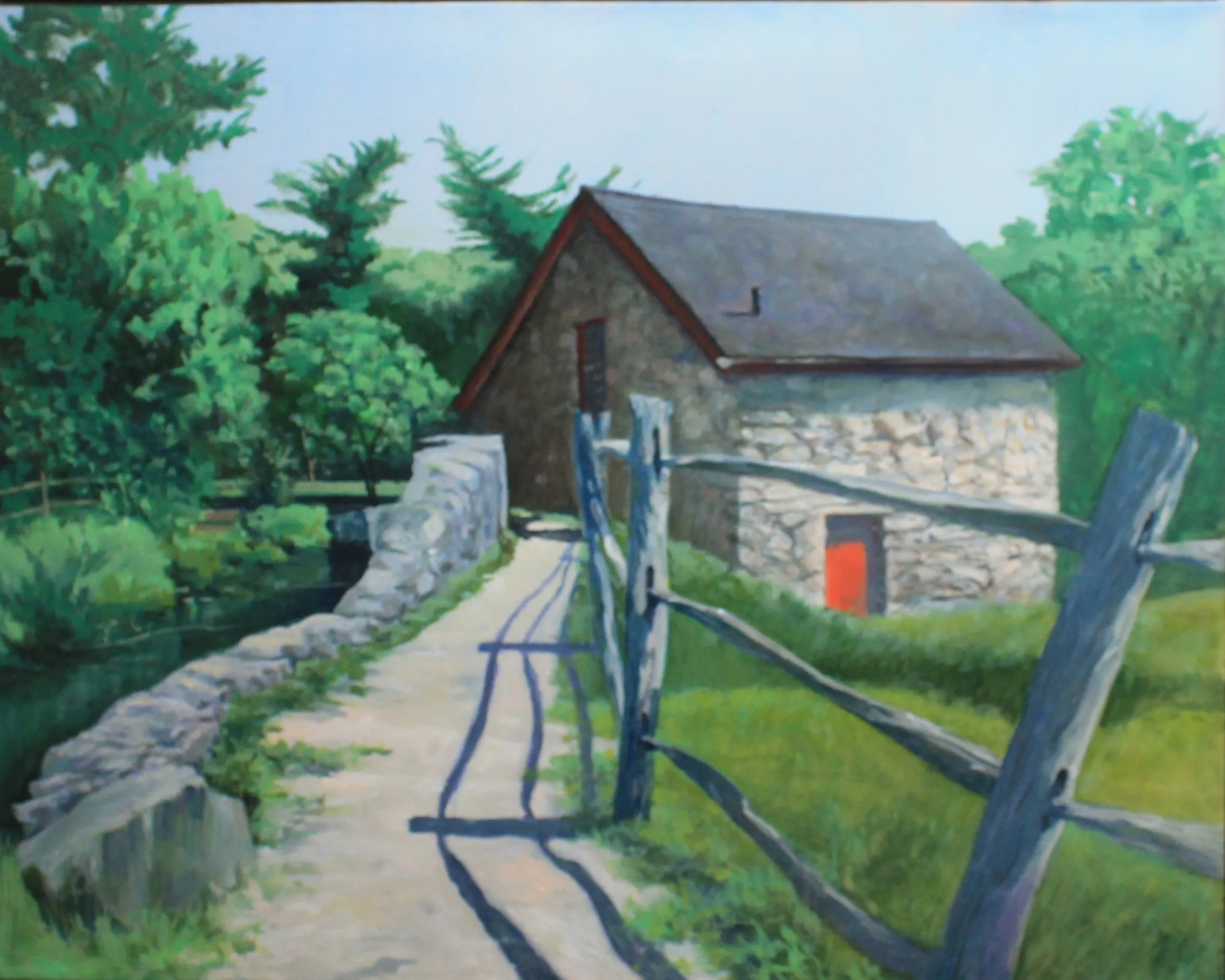
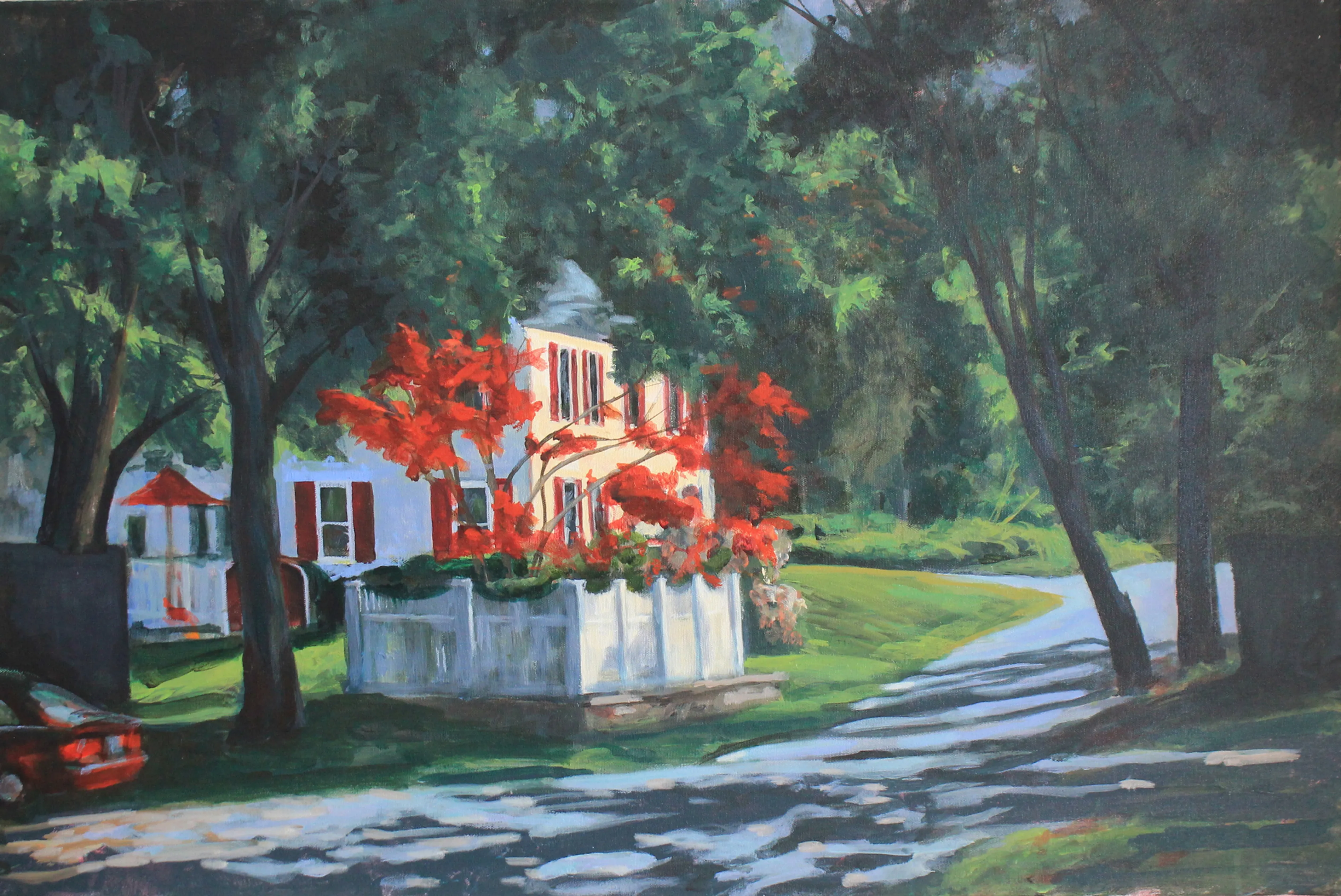
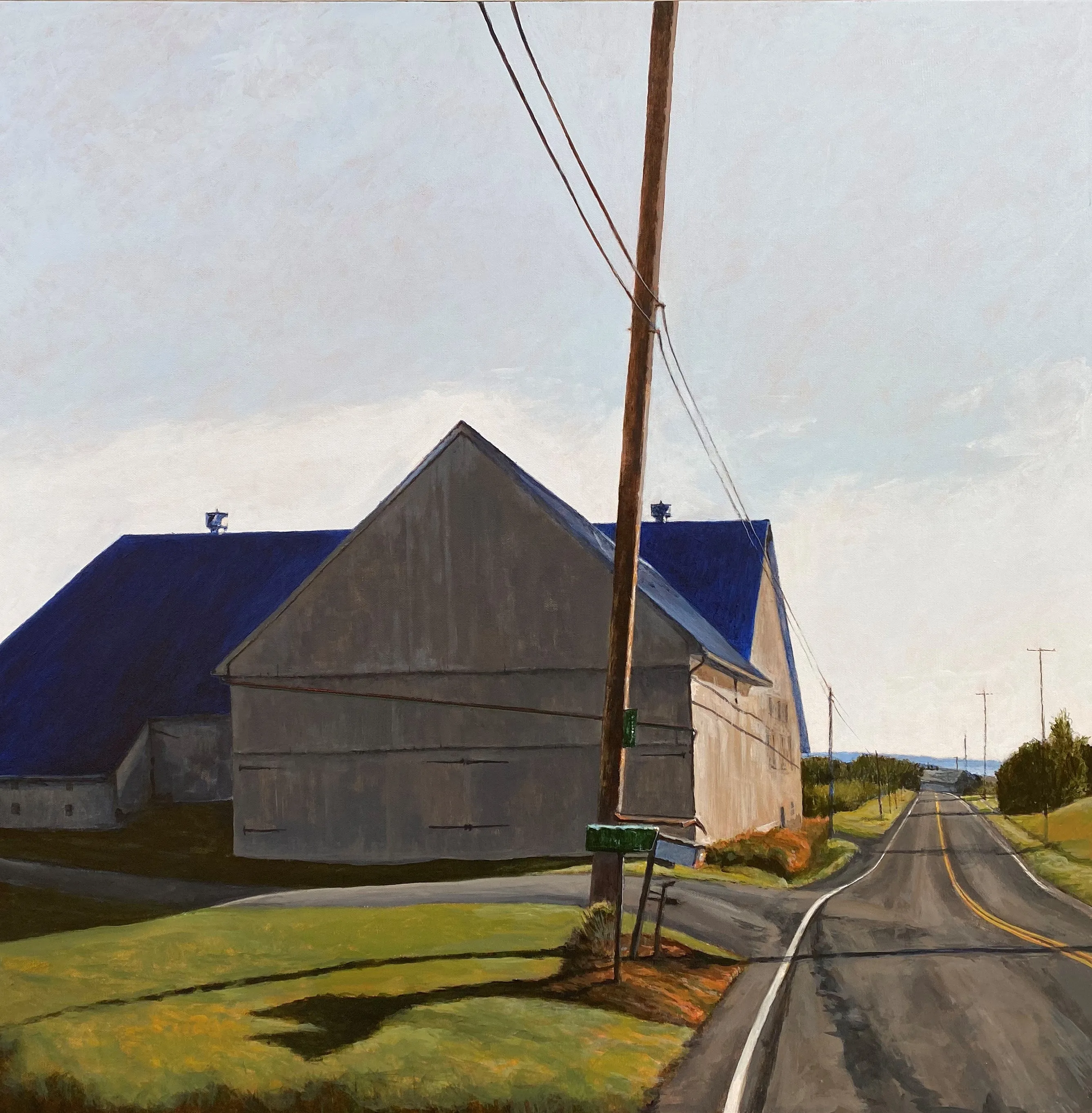
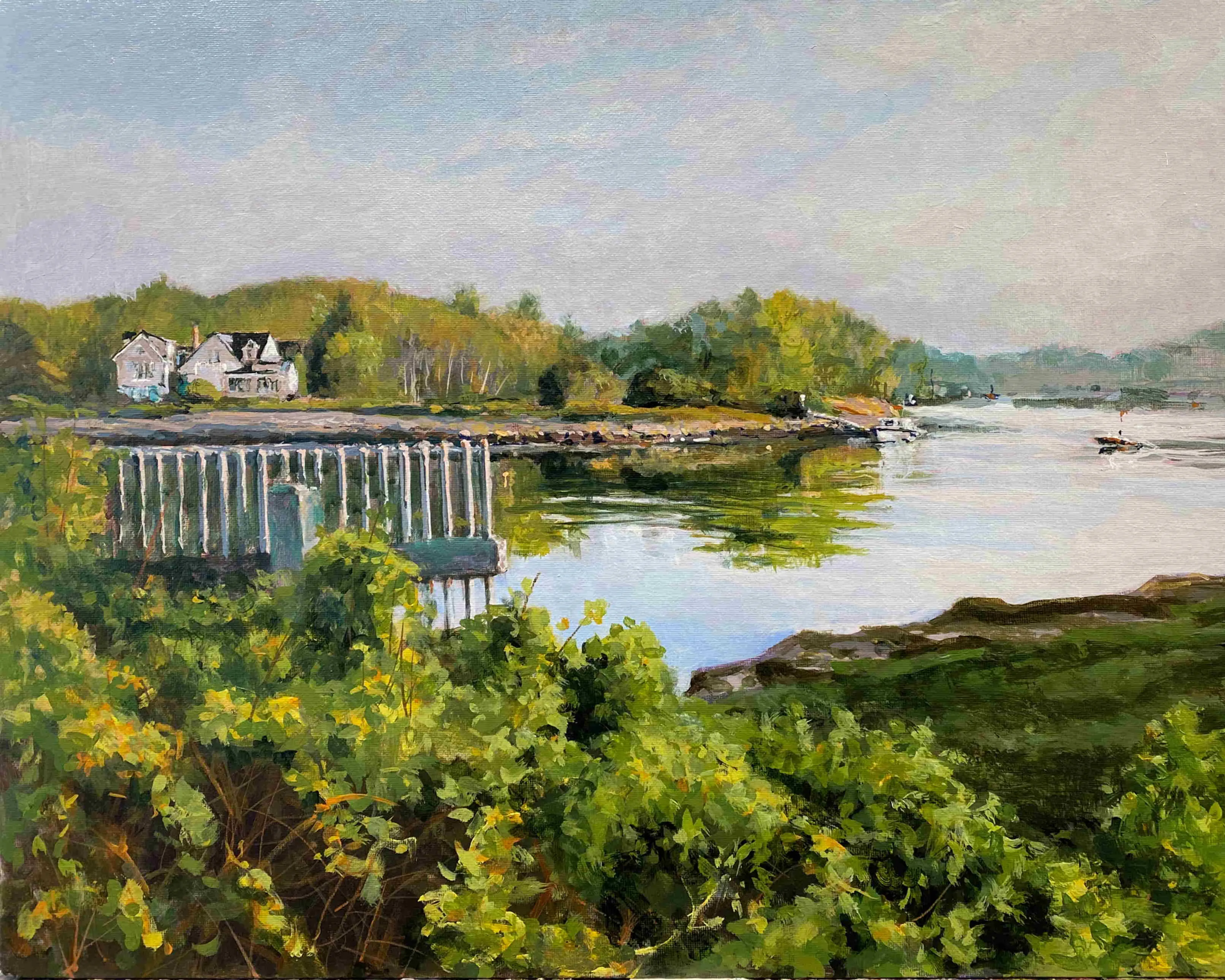
For a wide mantel, a horizontal landscape can create a calm, generous line. A tall, narrow chimney breast may call for a vertical composition or a different wall altogether. Do not force a familiar size into a space that wants another proportion. The studio’s large landscape paintings can give a substantial fireplace wall the visual weight it needs, while the small original paintings may be much better on a flanking wall, shelf, or intimate reading corner.
Keep mantel objects in the test. A clock, vase, candlestick, or family photograph changes the visual gap beneath the frame. The goal is not an exact formula. It is a composition that feels deliberate from the room’s normal viewing distance, without making the painting compete with the objects below it.
4. Hang from the mantel line, not ordinary eye level
Over a sofa or a console, art often works near a comfortable standing eye line. Above a fireplace, the mantel changes the composition. The work will naturally sit higher because the architectural feature below it is higher. That is not a mistake. The question is whether the bottom edge has a comfortable relationship to the mantel and whether the whole arrangement still reads as one focal point.
Begin with a modest visual gap between the mantel shelf and the frame. Too little space can make the painting crowd objects on the mantel. Too much creates a detached strip of blank wall and leaves the work feeling as though it drifted upward. Tape the outline at two or three heights, then take a photograph from the main seating area. A photograph makes it easier to see the overall proportions without being distracted by the work’s subject.
Do not rely on a standard centre-height formula in this location. The mantel, not the floor, is the more useful reference point. If the fireplace wall is exceptionally tall, resist the urge to keep raising the art merely to fill it. A painting placed too high will be hard to enjoy, especially while seated. A stronger alternative may be a larger work, a different orientation, or a decision to treat the wall as architecture rather than a canvas for filling.
If a television already occupies the overmantel, do not stack art above, beside, or around it simply to make the wall work harder. The resulting composition usually makes both the screen and the art less satisfying. Let the television own that wall, then give the painting a clearer destination where it can be seen at a more natural height.
5. Secure the work for the wall you actually have
A fireplace surround can be built from drywall, plaster, brick, stone, tile, or a combination of materials. The visible surface does not always tell you what will hold the weight behind it. Before installing an original, identify the wall construction and select hardware rated for the framed work. If the work is substantial or the wall is masonry, a qualified installer is a sensible investment.
Use two points of support when appropriate, so the frame is less likely to shift out of level. Make sure the hanging hardware is rated for the actual framed weight, not a rough guess based on the canvas size. The Canadian Conservation Institute recommends secure wall hanging and two points of contact as practical safeguards for paintings. That is especially valuable above a mantel, where a tilted frame is immediately obvious and where the hearth below makes an avoidable fall more consequential.
Do not drill into a fireplace surround, chase a wire through stone, or use an adhesive solution without understanding the material and the fireplace installation behind it. Fireplace walls can conceal vents, flues, electrical runs, and construction details that are not visible from the room. When in doubt, stop at the measurement stage and ask someone qualified to assess the wall.
The studio’s painting-hanging guide can help with the practical relationship between frame, hardware, and wall. It is a good companion once the fireplace location itself has passed the heat and stability test.
6. Watch for heat, glare, and smoke after the room is lived in
Hanging day is not the end of the decision. Watch the painting over the first few weeks of ordinary use. See the wall in afternoon sun, on a dark evening, and while the fireplace is on. Is the surface easy to see, or does it disappear into glare? Does the wall stay cool? Does the mantel throw heat toward the frame? Is there any smell of smoke or visible deposit after a fire?
Those checks are not fussy. They are what separate a beautiful placement from a convenient one. If conditions are not right, move the painting before a small concern becomes a long-term problem. Original art is more flexible than a room plan. A different wall may give the work better light, a better viewing height, and more everyday attention than the overmantel ever could.
Direct sunlight deserves the same caution as fireplace heat. A wall may be perfectly cool in the evening but receive hard afternoon sun through part of the year. The studio’s guide to lighting a painting explains how to judge glare, daylight, and artificial light without treating the home like a gallery.
Finding the right painting for the room
Doug Caves’s paintings of weather, coast, roads, houses, and New England light can give a living room a lasting focal point without turning it into a staged display. The right location lets that changing surface and atmosphere do its work over time. It should be a place where the painting is visible, comfortable in the room, and protected from the conditions most likely to shorten its life.
Explore the current paintings catalogue for available work, or browse the original landscape collection when the room calls for one clear horizon. For a particular fireplace wall or an adjacent wall you are considering, contact the studio with a photograph, the usable dimensions, and the paintings that interest you. The studio can help clarify framed size, availability, and the practical questions worth resolving before you decide.
Frequently asked questions
Can I hang an original painting above a working fireplace?
Sometimes, but it is not the default recommendation. An original needs a stable wall away from heat, smoke, direct sun, and sharp swings in temperature or humidity. If the wall becomes warm while the fireplace is running, choose another location for an original painting.
How high should art hang above a mantel?
Start with the mantel rather than ordinary eye level. In many rooms, a gap of several inches between the mantel and the frame helps the art read as part of the fireplace composition, but the exact placement depends on the mantel height, frame, and fireplace. Test a paper outline before drilling.
What size art looks right above a fireplace?
The work should relate to the mantel, firebox, and chimney breast rather than look stranded above them. A painting that is too small is usually the larger visual problem. Mark the framed dimensions on the wall and judge them from the doorway and usual seating position.
What should I put above a fireplace that gets hot?
Choose another wall for an original painting. A mirror, a replaceable decorative object, or leaving the area clear can be a better choice when the fireplace creates noticeable heat, smoke, or rapid environmental change.