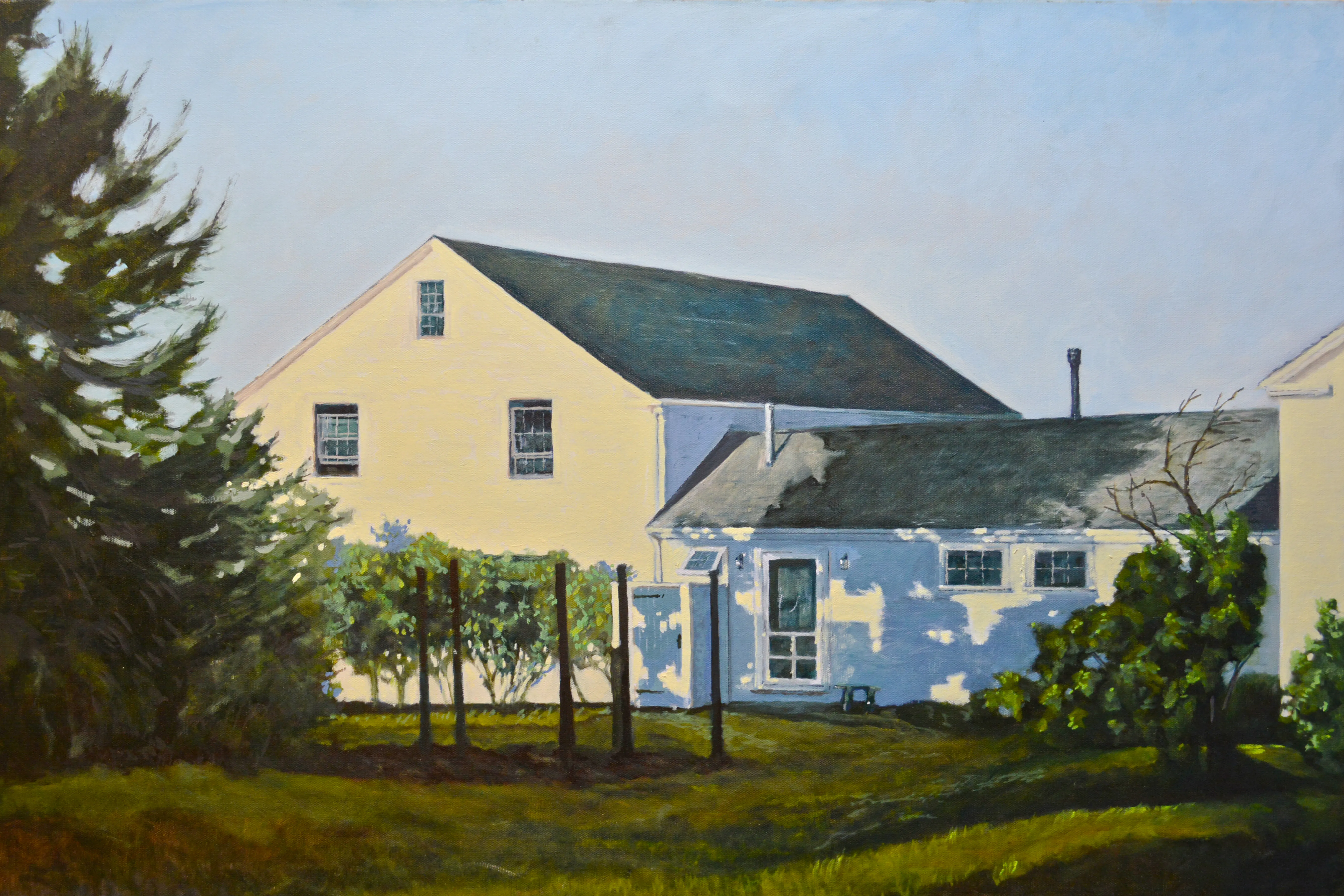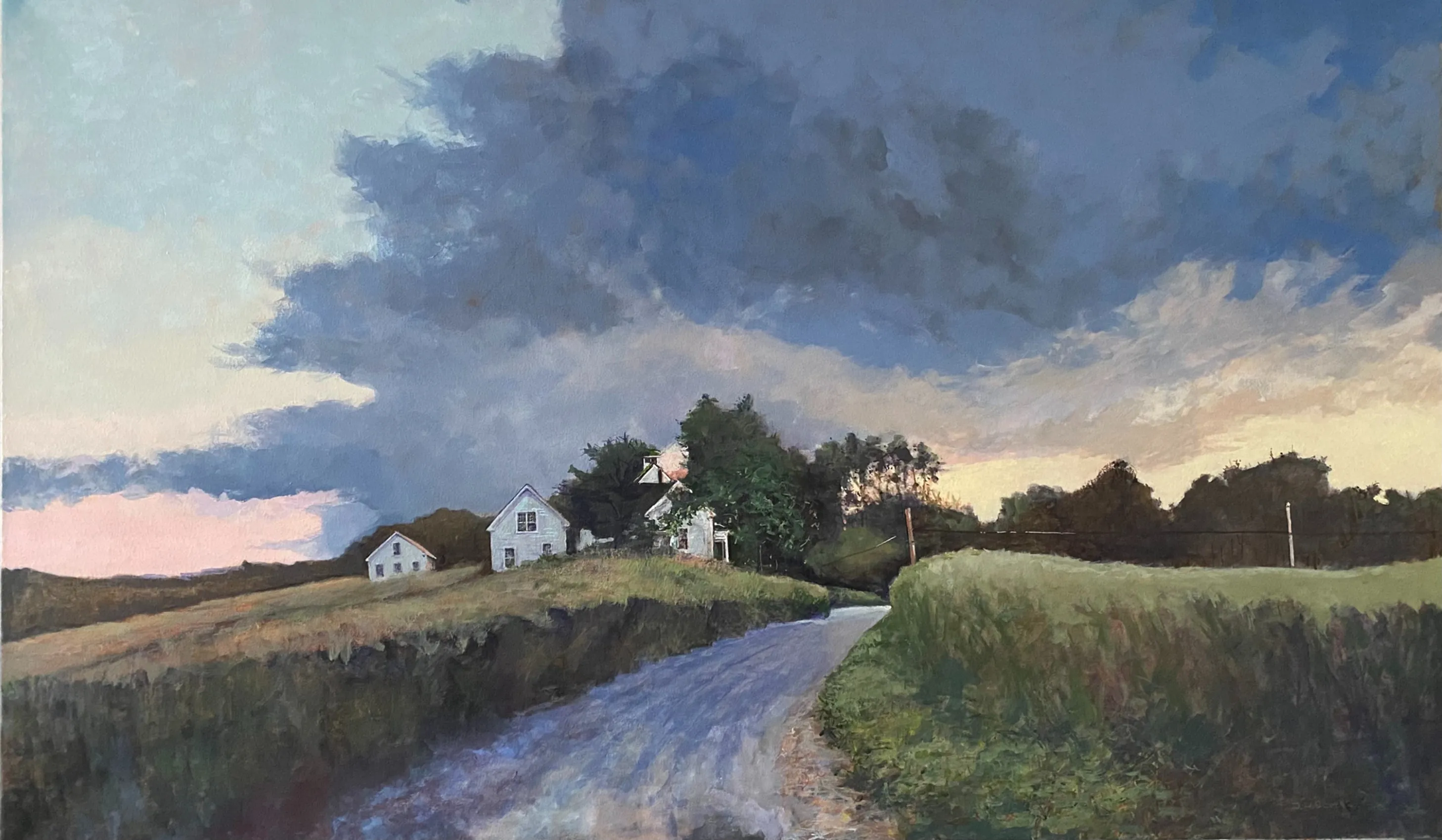
Approaching
Acrylic on canvas · 36 × 60 in
$4,250Available Original Work
Wide original paintings that give weather, distance, and the particular character of a place room to unfold.
A Wider Point Of View
A wide landscape does more than fill a horizontal wall. Its shape changes the way a scene is experienced. There is room for a road to lead away, a shoreline to open gradually, or a weather front to move across the distance. The painting becomes a place for the eye to enter and return to, rather than a single image taken in all at once.
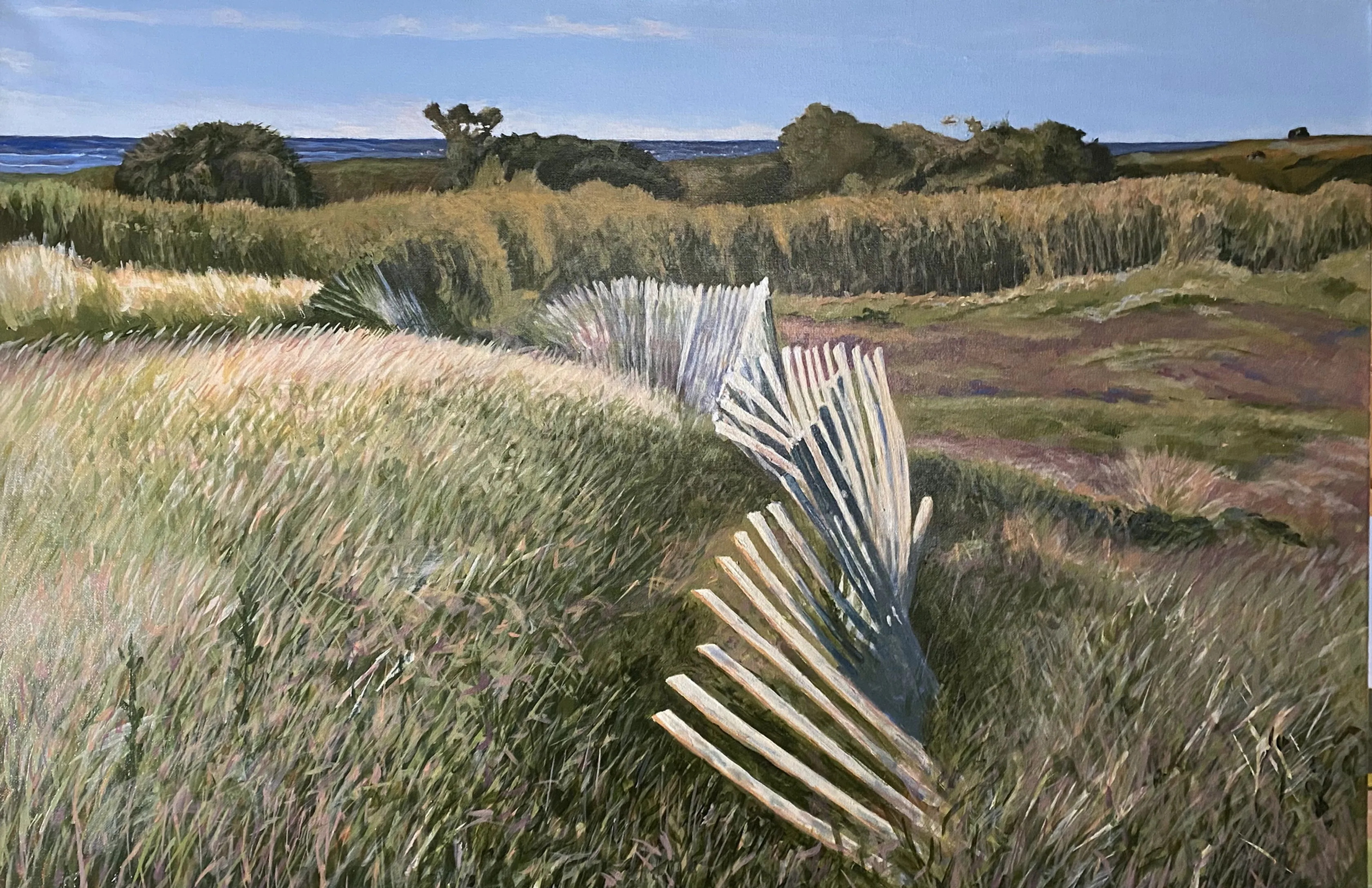
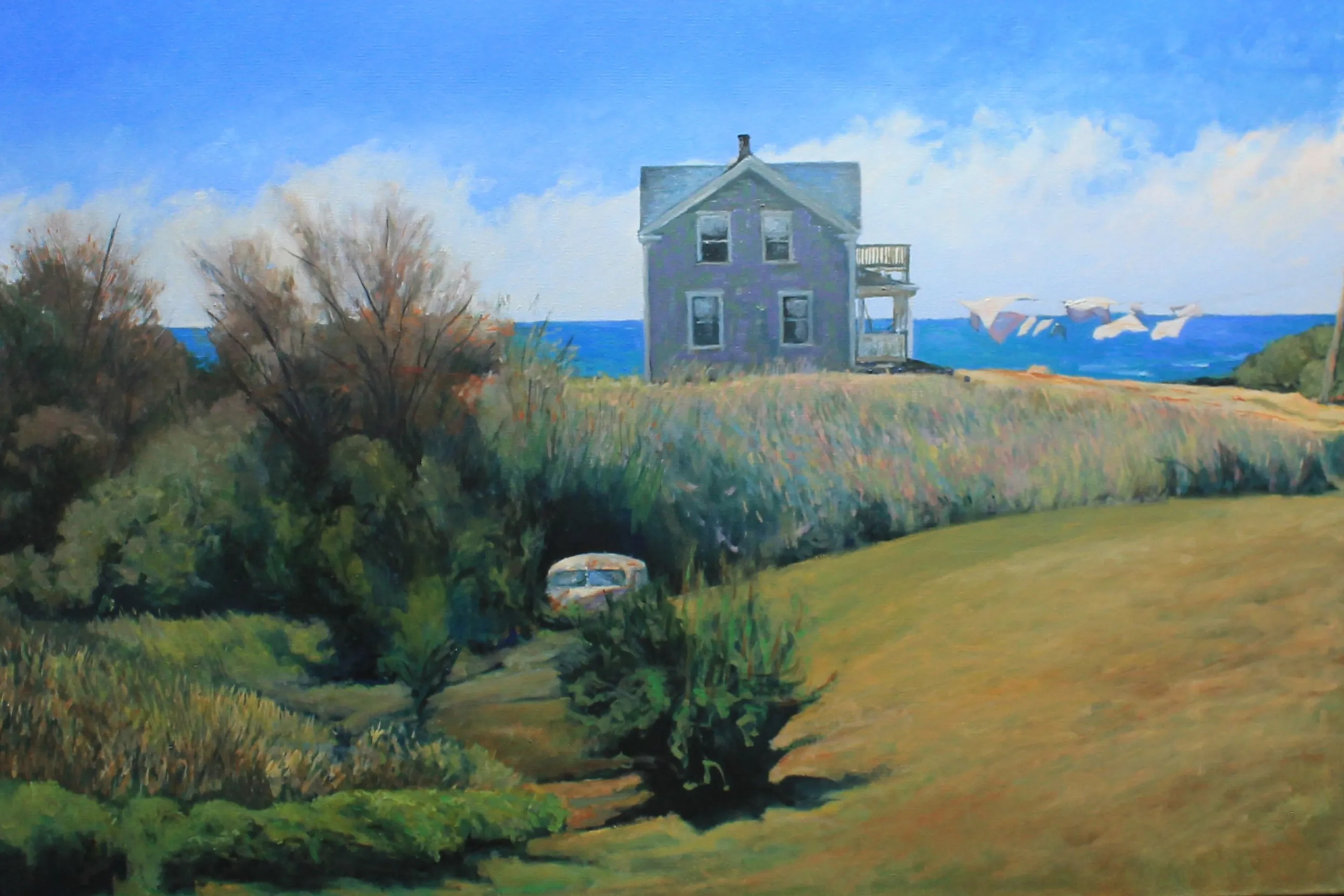
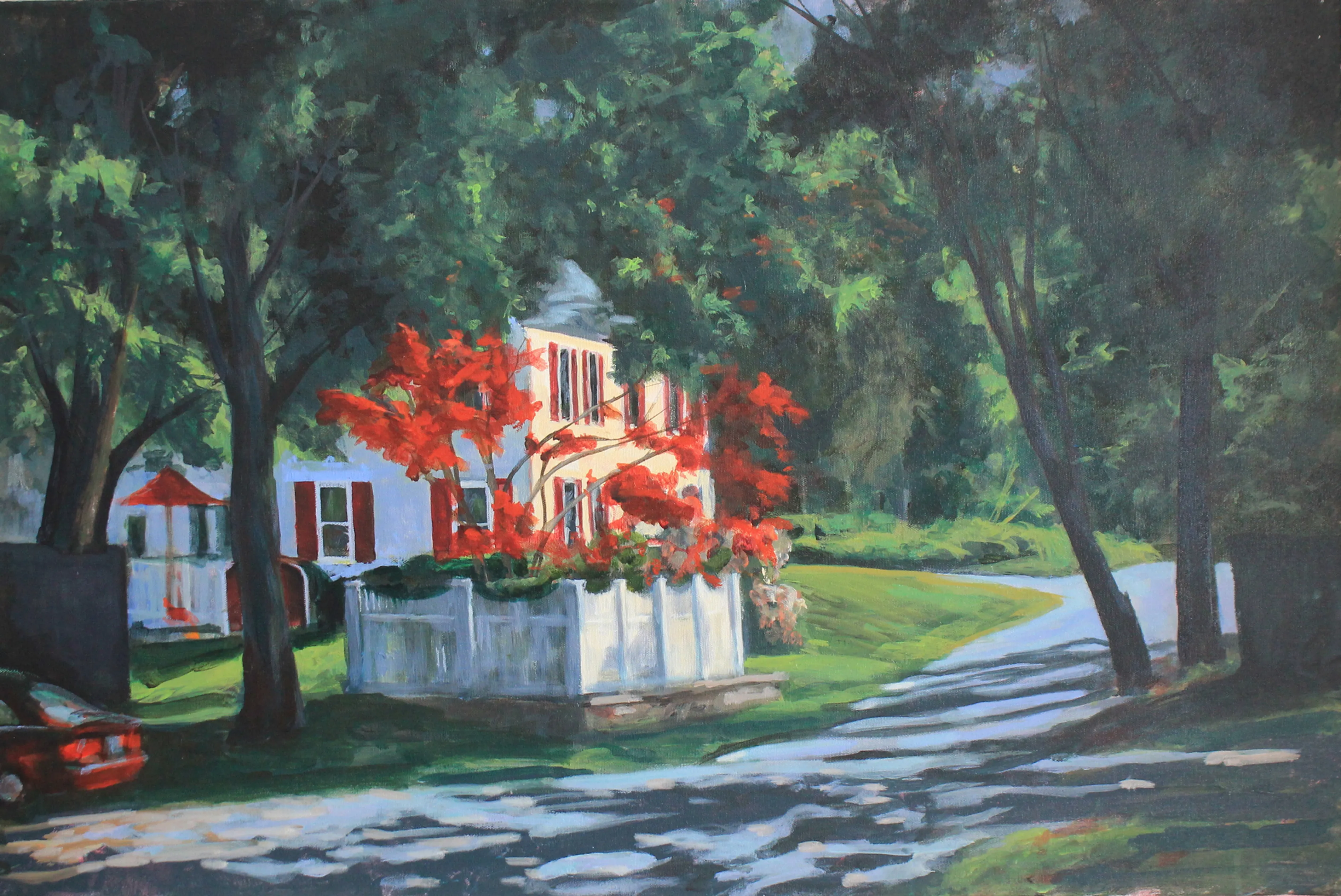
Doug Caves builds these compositions from the things that give New England its particular pulse: a hard line of architecture, a field before rain, a house caught in clearing light, or water extending beyond the edge of the immediate view. The long format gives these elements a shared rhythm, holding both detail and atmosphere in the same frame.
For a collector, a panoramic painting can make a room feel more open without becoming merely decorative. It offers a substantial, complete image, one that changes with the distance and time of day from which it is seen.
Choosing A Panoramic Painting
A panoramic landscape works best when its full width can be understood at a glance. Above a sofa or sideboard, leave enough breathing room at either side for the shape to read clearly. In a hall or entry, think about the approach as well as the destination: the painting may first be seen from down the room, then reveal more as you move closer.
The aim is not to make the canvas match the furniture exactly. It is to give the work a wall where its horizon and visual weight can settle naturally. A room with books, woodwork, family photographs, or an old table can be an especially good companion to a painting with this kind of presence.
Approaching, at 36 × 60 inches, gives a broad sweep of road, land, and sky. Other works here use the 24 × 36 inch proportion, a more compact horizontal format that still carries a clear sense of movement and space. Neither is simply a smaller or larger version of the same experience. The room, viewing distance, and scene itself all shape the choice.
Look first for the painting whose weather, architecture, or open distance stays with you. Dimensions are essential, but the strongest starting point is often the feeling that the scene already belongs somewhere in your daily life.
Wide paintings reward more than one way of looking. From across a room, they establish an atmosphere. From the nearer seat, the paint, edges, and smaller shifts in the image come forward. Before deciding, stand where you normally enter the room and where you usually sit. That simple change of position can show whether the painting has enough room to remain legible and alive.
Consider natural light as well. Avoid a wall with persistent glare or strong direct sun. A more protected wall can give the work a steadier home while still allowing the changing room light to become part of the experience.
Once a painting has caught your attention, the practical details become easier to answer. The studio can provide close views, confirm availability, discuss framing, and talk through collection or delivery. A photograph of the intended wall, plus its approximate width and the height of furniture beneath it, makes that conversation more useful from the start.
If the right wide landscape begins with a view of your own, a commissioned painting offers another path. Doug works from reference material and conversation to make an original response to a meaningful place, rather than a reproduction of a photograph.
A Clear Way Forward
Spend time with the available paintings and notice which one holds your attention beyond the first look. A good wide landscape should feel complete from across the room while continuing to reward a closer view.
Use the listed dimensions to mark a rough rectangle on the wall. View it from the doorway, the main seat, and the places where you pause. This makes scale more tangible than comparing measurements in the abstract.
Contact the studio about a painting’s availability, framing, additional photographs, collection, delivery, or a visit. The conversation can stay focused on the work and the room it may come to inhabit.
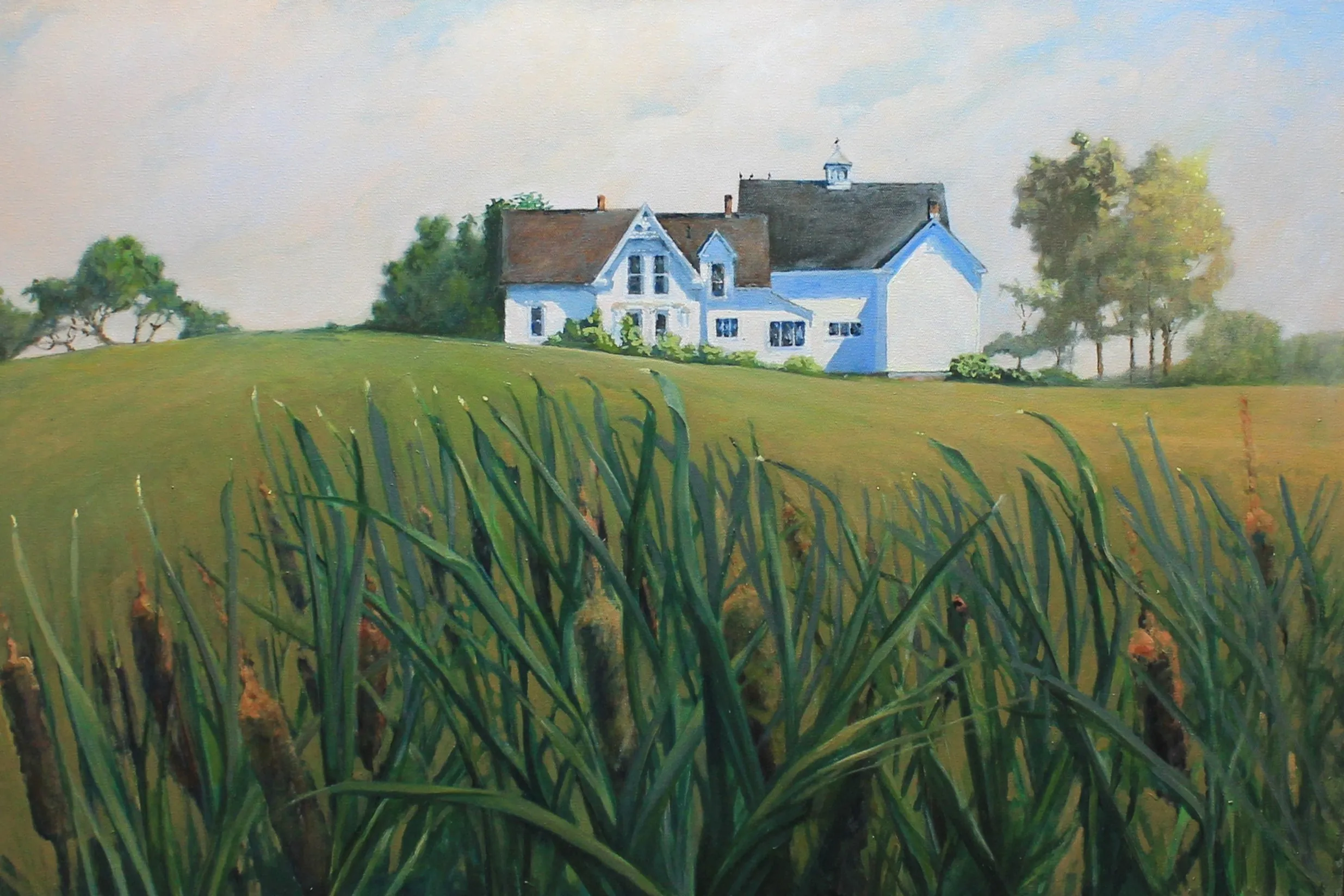
More Original Landscapes
Explore the studio’s full selection of original landscapes, from smaller studies to larger paintings shaped by weather, architecture, water, and familiar places.
Explore original landscapes →A Place Of Your Own
A commissioned landscape can begin with a road, home, shoreline, or field that has a particular meaning in your life. Doug uses conversation and reference material to understand the feeling that matters, then creates an original painting with its own atmosphere and structure.
The future room can be part of that early conversation, too. A wall photograph, approximate dimensions, and a sense of how you want the work to feel at home can help shape the direction from the beginning.
Explore landscape commissions →Questions, Answered
A panoramic painting has a clearly horizontal format that gives the eye room to travel. The works here range from 24 × 36 inches to 36 × 60 inches, with wide compositions that hold a horizon, a road, a shoreline, or a long change of weather.
A wide painting can be especially at home above a sofa, sideboard, console, bed, or mantel, provided the wall and heat conditions suit the work. It can also give an entry or dining room a strong sense of direction.
Start with the listed dimensions, then mark the outer size on the wall with paper or painter’s tape. View it from the doorway and the main seat in the room. The studio can also discuss a particular work with a room photograph and a few measurements.
Yes. Contact the studio about additional photographs, framing, collection, delivery, a studio visit, or a commissioned painting based on a place that matters to you.
Browse available paintings or contact the studio about a work you have in mind.