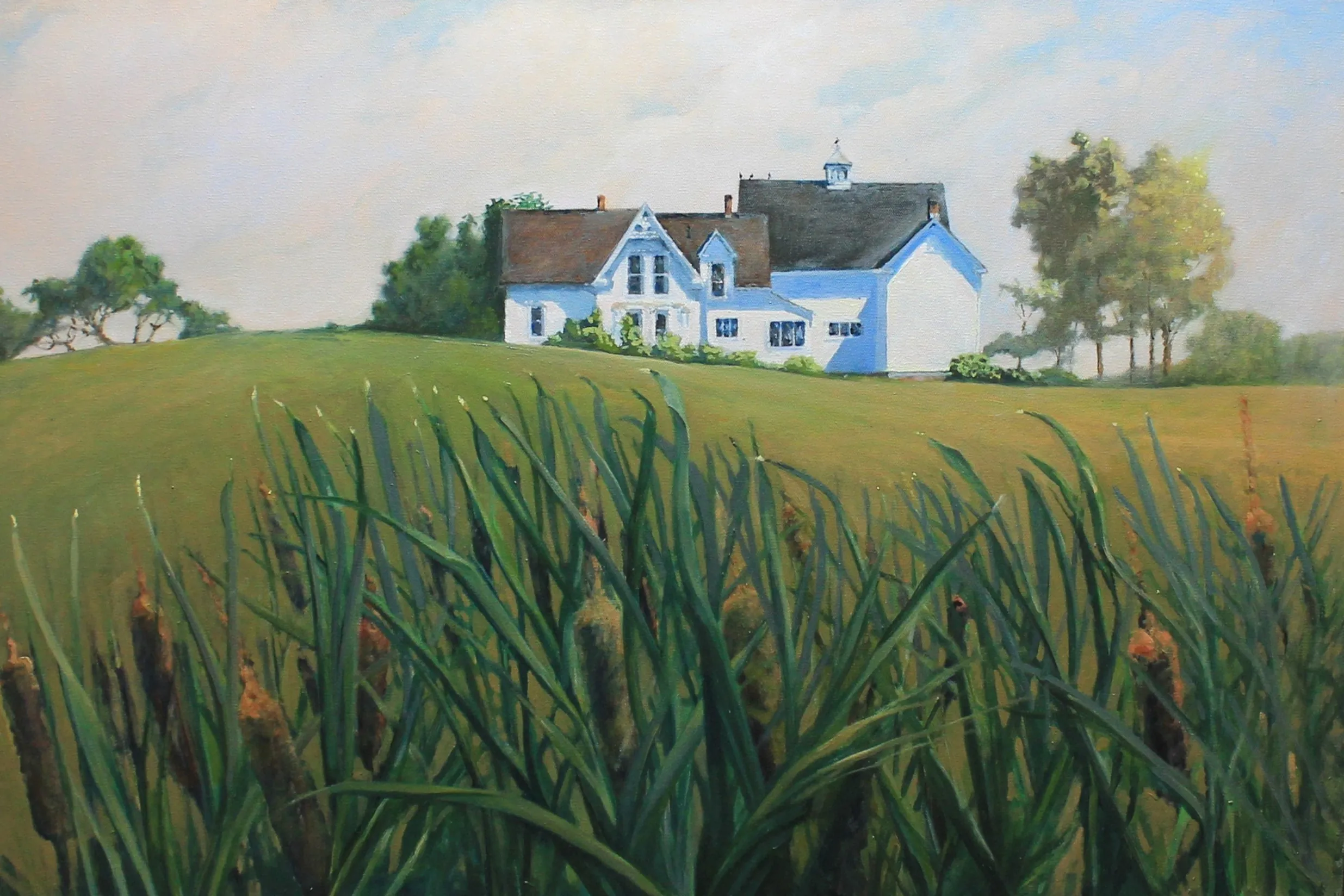
White House at the Bend
Oil on canvas · 24 × 36 in
$3,500Available Original Work
Explore original paintings where a New England house, mill, or roadside building holds its ground against changing weather and light.
Built Places
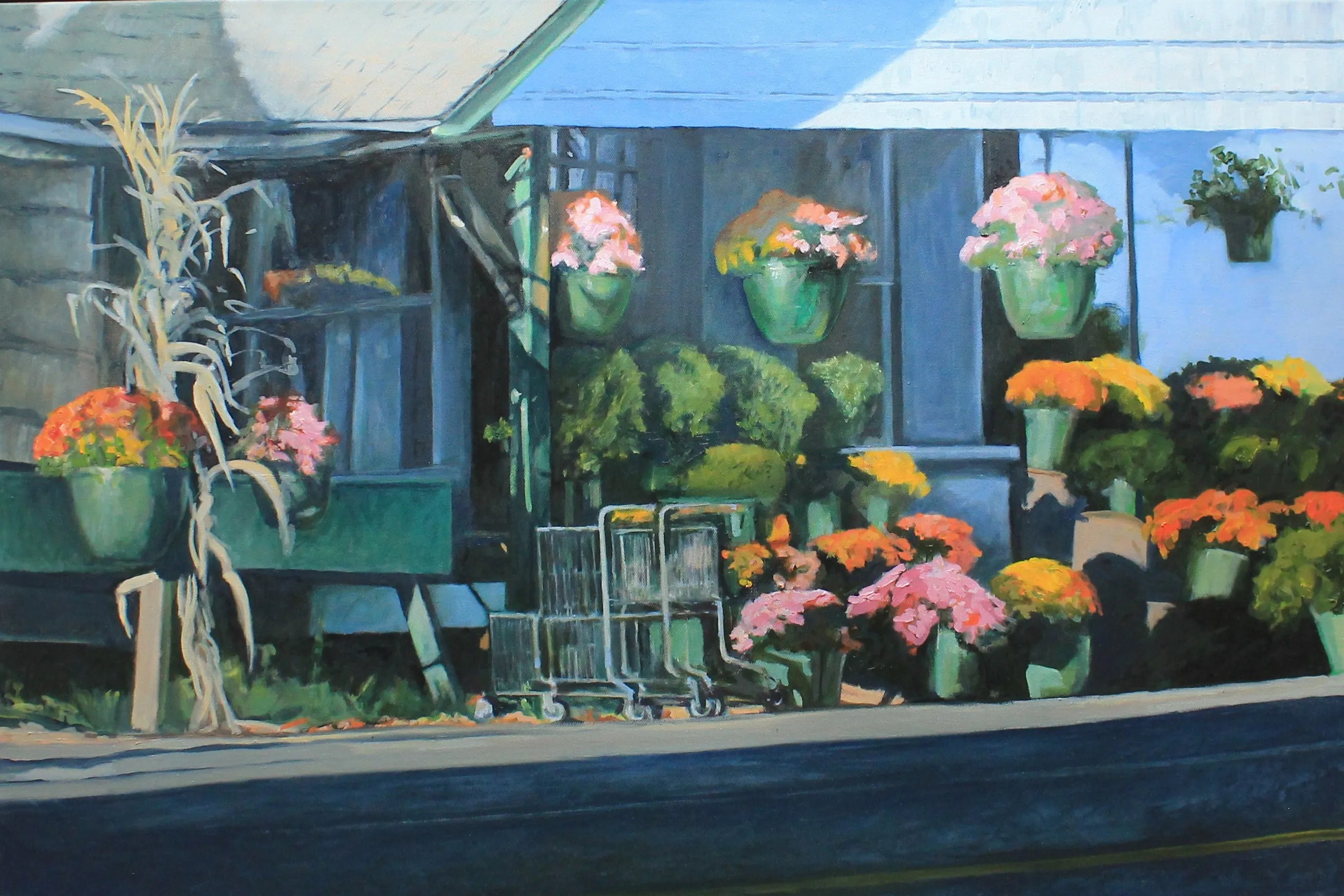
A house in a painting is never only a house. Its roofline can divide a broad sky. A bright wall can hold the last light of the day. A porch, fence, or road can tell the eye where to enter, then leave space for the landscape to keep unfolding around it.
Doug Caves is drawn to the character of ordinary New England buildings: clapboard houses, old mills, farm stands, and structures that have earned their place in a field, on a road, or near the water. He paints them as part of a living landscape, with enough specificity to feel observed and enough atmosphere to leave room for your own memory.
For a collector, these paintings can bring a room both structure and depth. They have the human scale of architecture, but their real subject is the changing relationship between a built place, the land around it, and the weather moving through.
Why These Places Stay With Us
A painted house can suggest arrival, shelter, work, distance, or the life that has happened around it without explaining any of those things directly. In White House at the Bend, the building gives the eye a clear anchor while the road and field let the view continue beyond it. The feeling comes from the relationship, not from a sentimental detail.
That makes this kind of painting especially rewarding over time. From across a room, the shape of the house may be what first holds attention. Up close, the color shifts, brushwork, and changing edges keep the experience from settling into a single reading.
Houses and working buildings have an immediate sense of proportion, which can make them strong on a wall above a console, across from a dining table, or in a study. They bring a human scale to a room without becoming a literal portrait of someone else’s home.
Rather than matching colors first, consider the kind of presence you want. A pale house under a spacious sky can open a room. A darker mill or more tightly framed building can add weight and intimacy. The wall size and the distance from which you see it every day will make the right scale clearer.
These are not idealized village scenes. Doug’s paintings allow a structure to be worn, solitary, bright against a storm, or almost absorbed by the landscape. That honesty is part of their pull. A place can feel familiar because of its light, its angle, or the way it sits beside a road, even when it is not a place you have personally visited.
The work is grounded in the architecture and weather of New England, but it is not limited to a decorative idea of the region. It asks you to notice what makes a built place feel settled in its landscape, then gives you time to bring your own associations to it.
Choosing A Painting
Notice the painting that holds your attention before you try to explain why. It may be the stark shape of a roof, a road that leads toward the house, a warm wall against a cool sky, or the particular atmosphere of the scene. A real response is a better beginning than a checklist.
Use the listed dimensions to think about the wall, nearby furniture, and usual sightline. A painting above a desk has a different job from one seen when you enter a living room. A quick photograph and rough wall measurement give the studio a useful basis for helping with scale and placement.
The studio can confirm availability, share additional photographs, and discuss framing, collection, delivery, or a possible visit. Buying directly means the questions that matter to your room and your decision can be answered plainly by the people closest to the work.
A Place Of Your Own
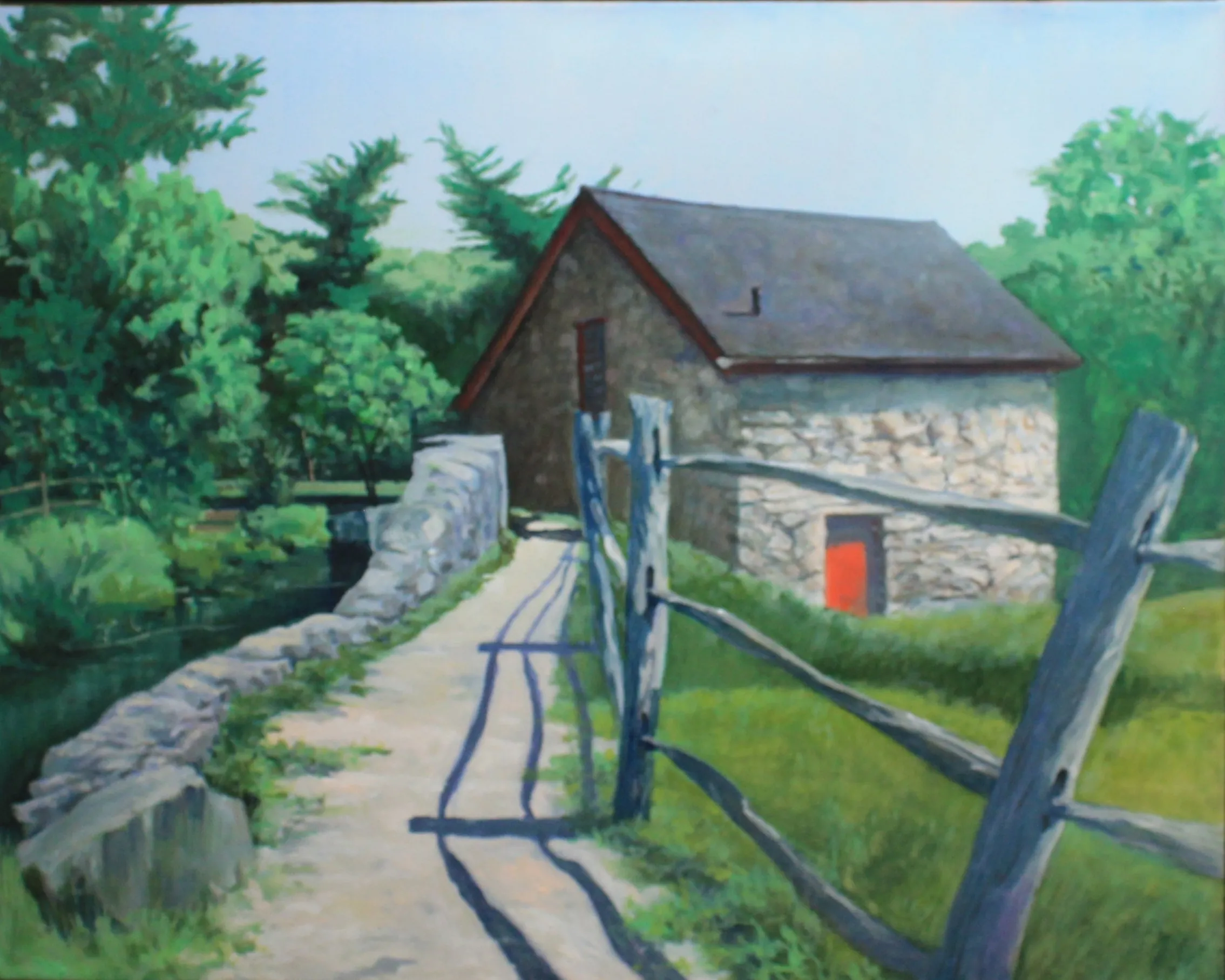
A commissioned landscape can begin with a family home, a familiar road, a working property, or a view you have never quite forgotten. Doug uses reference material and conversation to understand what makes the place yours.
Commission a painting of your house →A Direct Conversation
Choosing an original painting is personal, but the practical questions should be straightforward. If you keep returning to a work, the next useful step may be as simple as sending the studio a note with its title, a room photograph, and the approximate wall size.
That makes it easier to talk through the painting’s presence, its relation to the other work in the room, and the details of bringing it home. If your connection is to a particular place rather than an available painting, the commission process offers a different starting point.
Talk with the studio about a painting →Questions, Answered
Doug’s paintings begin with observation of actual places, including New England houses, mill buildings, and roadside structures. The finished work is not a literal architectural record, but an original response to the light, weather, and feeling of the place.
The page shows paintings that are currently available from the studio. Each individual listing includes the medium, dimensions, price, and current status.
Yes. A photograph of the wall, its approximate measurements, and the paintings you are considering are enough to start a useful conversation about scale, framing, and placement.
Yes. The studio can provide additional views and closer details, as well as information about framing, collection, delivery, or a possible studio visit.
A commissioned landscape painting can begin with a remembered home, family property, familiar road, or other meaningful place. Doug works from conversation and reference material to make an original response to that connection.
Browse the full catalogue or contact the studio about a painting of houses you have in mind.